Saturday, 19 April 2025

Gnoll Leaders and Shamans

Art by Dave Sutherland, from
1st Edition Monster Manual

Previously I have written a post about humanoid leaders and shamans though that post looked at those species with 1HD or less for their basic profile. As the last of the major humanoid races to be covered, in this post I shall go over my version of gnolls. Although their basic profile has 2HD, nonetheless I envision gnolls having a similar progression to orcs, goblins and hobgoblins, with an extra hit dice added. 

Gnoll Warrior

These include the basic gnolls members of a tribe and as they grow in size and experience they gain the same abilities as their goblin counterparts, albeit with an extra hit dice. 

TitleHD (d8)THAC0Special Abilities
Juvenile or Female119Stats for Juvenile or Female
Warrior218As basic monster stats for gnolls
Veteran Warrior317Set Spear vs charge
Clan Leader416Junior Commander
Clan Leader515Inspire Courage
Subchief6142-weapon Fighting
Subchief713Middle Commander
Tribal Chief812Monstrous Mount
Tribal Chief911Inspire Zeal
Warlord1010Senior Commander
Warlord119Two-weapon mastery

Their special abilities are: 
  • Set Spear versus Charge is the same as for human fighters. 
  • Junior Commander - a gnoll warrior of 4HD or higher can reliably command up to 3 normal gnoll warriors per level of the commander. 
  • Inspire Courage - Allies within 30' get +2 to morale checks and saves vs fear.
  • 2-weapon Fighting - The gnoll warrior can use 2 one-handed weapons, at -2 to hit penalty for both. They must be weapons that a human warrior can wield in one hand (e.g. normal sword, hand axe, mace etc, not a two-handed sword or battleaxe). 
  • Middle Commander -  The gnoll warrior can reliably command 1 junior commander for every 2 levels. 
  • Monstrous Mount - The warrior can tame and ride a monster larger than himself, which must have HD equal to or lower than the warrrior and be suitable for riding. Hyaenodons (Dire Hyenas) are often chosen but more exotic creatures might be tamed 
  • Inspire Zeal - Allies within 30' get +2 to hit and damage and +4 to morale and saves vs fear, usable 1 encounter per day. 
  • Senior Commander - reliably command 1 middle commander per two levels. 
  • Two-Weapon Mastery - As per two-weapon fighting, but the gnoll warrior suffers no penalty to hit. 
The weapons, armour and equipment for gnoll warriors is entirely up to the DM, though the default gear for a typical 2HD gnoll warrior is: Scale armour, Morning Star (2d4 damage, wielded in two hands), Dagger. Generally speaking a gnoll gets +1 to damage rolls with any one-handed weapon due to its strength. At the DM’s discretion particularly large and strong gnoll leaders may get more of a bonus to damage, including with two-handed weapons such as morning stars. 

Gnoll Shaman

Gnoll Shaman


Prepared Spells by Level


Title

Level

Hit Dice

THAC0

1st

2nd

3rd

4th

5th

Acolyte

1

2d6

20

1


Acolyte

2

3d6

19

2


Junior Shaman

3

4d6

18

2

1


Junior Shaman

4

5d6

18

2

2


Shaman

5

6d6

17

2

2

1


Shaman

6

7d6

16

3

2

2


Senior Shaman

7

8d6

16

3

2

2

1


Senior Shaman

8

9d6

15

3

3

2

2


Great Shaman

9

9d6+2

14

3

3

2

2

1

Great Shaman

10

9d6+4

14

3

3

3

2

2


Gnoll shamans are essentially clerics, with the same saving throws and spell selections. They can wear any armour but do not use shields. They can use any blunt weapon (like clerics) though prefer using either flails (treat as maces) and morning stars (two-handed weapons, basically spiked clubs,  that do 2d4 damage). 
In terms of spells, gnoll shamans can access spells for chaotic clerics including reversed versions of spells such as Darkness and Cause Disease, and will often pick spells that will either demonstrate their power in combat or protect themselves. Only rarely will a shaman choose spells that aid others, and then only for the benefit of the tribe. 
Gnolls are not particularly devout creatures and have fewer shamans than other species of humanoid. Nonetheless, they have some shamans., who fall into two broad camps - the followers of Chaos and the followers of Yeenoghu. 
Yeenoghu is the patron immortal of the gnolls, and is aligned both to Chaos and to the Sphere of Entropy. He is a vicious, hateful creature that delights in the suffering of others and encourages his followers to do likewise. He is often depicted as an oversized emaciated gnoll wielding a three-headed flail and is the most popular actual immortal among gnolls and their shamans. This is a relatively easy concept for gnolls to grasp (and they are not the most intelligent of humanoids) as many see Yeenoghu as a really big, tough leader of all the gnolls who is giving orders through his shamans. Some gnolls refer to him as The Pack Leader of all Packs. They understand hierarchy within the clans and tribes, and Yeenoghu is at the very top. 
However, other gnoll shamans will follow Chaos as a whole. This is similar to human Chaos Cultists who are more interested in the philosophy and concepts of Chaos than the whims of a single immortal. These chaos gnolls are more likely to ally with other chaotic creatures, such as human chaos cultists. In the Caves of Chaos (module B2: The Keep on the Borderlands) the gnoll clan there has allied itself to the Cult of Chaos led by evil humans, although these gnolls do not have their own shaman. 
Art by Dave Sutherland, from 1st Edition Monster Manual


Saturday, 12 April 2025

Elemental and Para-Elemental Planes in this campaign

In this Mystara campaign I am writing, the Ethereal and Elemental planes are still there beyond the Material Plane, and can be accessed by either powerful spells or interplanar wormholes. The four elements are of course Fire, Air, Water and Earth. This metaphysical map illustrates the inner planes as I am using them here.  It is a modified version of my old one posted back here. 


My previous descriptions of the elemental planes still stand:
The Elemental Plane of Earth is nearly solid stone and earth, with only a few pockets of air, water and lava found. Finding an air (or maybe water) pocket is essential if a human visitor is to avoid being crushed and suffocated. However, if a pocket of air can be found, the plane is tolerable in temperature and not many dangerous inhabitants. A few valuable minerals can also be picked out by those with skill in prospecting and mining. 
The Elemental Plane of Water is like a vast, dimly lit ocean without a surface. There are pockets of air and earth (but no fire pockets). Any visitor who can cope with breathing underwater should be able to stay on this plane for a while. Creatures of seas and oceans of the Material Plane are occasionally encountered here, adding weight to sages' theories of gates between the Elemental Plane of Water and deep abysses in the oceans of Kaelaross. 
The Elemental Plane of Fire has two major problems - firstly the intolerable temperature will kill any mortal creature without some sort of protection. Anyone travelling to this plane must be able to tolerate hot flames, or their death will be a quick one, with cremation rather than burial. Secondly the Plane of Fire is home to some quite dangerous and volatile creatures - Fire salamanders and efreet. Being able to either negotiate or else fight off these creatures is necessary for any extended stay where encounters are inevitable. There are some pockets of clear air, while lumps of rock from the plane of earth either melt into pools of lava or else glow like burning coals. 
The Elemental Plane of Air is in many ways the safest of the elemental planes. The biggest problem is the electrical storms. This plane has no gravity, so everything - clouds, natives and visitors, float around. There are occasional spheres of earth and fire that float around. Any water here tends to evaporate and turn into clouds within a matter of hours, and visitors are recommended to bring water as they are likely to get thirsty. The djinn are found here, but they can be tempermental and fickle in dealing with those who intrude on their domain.

Para-Elemental Planes

As well as bordering the ethereal plane, the elemental planes also touch or overlap with some of each other. This is closer to AD&D elemental planes than BECMI's version, so bear with me.  Although I do not have the stats for para-elementals that might be summoned to the material plane, I believe they were given stats in AD&D 1st edition Monster Manual II. 

Between Fire and Earth is the para-elemental plane of Magma.  It is a land of volcanic eruption and lakes of lava. There are some metals found here - the more easily melted ones (gold and lead) are found in molten pools while the less volatile ones (iron and tungsten) are usually still solid though often glowing with heat. The Efreet’s City of Brass is on the border between the Plane of Fire and Plane of Magma. 

Between Water and Air is the para-elemental plane of Ice and is an arctic wasteland of glaciers, crevasses, ice caves and constant snow. Ice-related creatures such as Frost Salamanders are now associated with the para-elemental plane of Ice not Earth (a change from the BECMI rules). Other cold-based creatures such as white dragons and frost giants are also capable of surviving here even if they are not truly native. The air is so cold as to freeze the lungs of an unprotected human but anyone who can survive the intense cold can 

Between Water and Earth is the para-elemental plane of Ooze which is seems to be a vast and bottomless quagmire with few plants on the surface, filled with sticky, slimy mud and pools of acid. Many ooze creatures are found here, including black puddings, ochre jellies and green slimes.

Between Air and Fire is the para-elemental plane of Smoke. It is a very mysterious plane, and very few creatures live or visit here because of its poisonous fumes. Various levels of toxicity, from mildly irritating to silently lethal carbon monoxide. There are also frequent lightning storms suggesting a link to the quasi-element of Lightning. Sages have no idea what sort of native inhabitants if any are found here as any expedition by mages to investigate have either had difficulty seeing anything or else simply not returned. 


Other quasi-elements may be found on the elemental planes although these quasi-elements do not have their own planes. 
  • Lightning is closely associated with air and also the paraelemental plane of smoke
  • Acid is closely associated with Ooze but also to some extent with both Earth and Water
  • Metal is closely associated with Magma and to some extent with Earth and Fire

Elementalist Mage

Elementalist Mages are magic users, nearly always human, who tap into the powers of these elemental planes. Many spells already use the elements in one form or another, from Fireballs to Ice Storms to conjuring elementals themselves to fight for and serve the caster. Elementalists take this one stage further and specialise in elemental magic. 
This usually means ignoring spells that do not involve the elements - enchantments, illusions and mind-affecting spells are rarely learnt by elementalists. Most elementalists will take a general approach and treat all the elements equally, though some focus on just one element. Most famously there was an ancient rivalry between the Air Elementalists of Alphatia and the Fire Elementalists of Glantri. 
In terms of game rules the Elementalist mages are magic users with the same saving throws, hit points and spell memorisation. They have access to a different spell list that accentuates spells that involve the elements and elemental planes, while ignoring spells that do not. 

Specialists in one element will usually also use spells from one of the neighbouring para-elemental planes. So a Water Elementalist may use spells that involve Water (obviously!) and either acid or ice but not both. Focusing on just one element may seem overly restrictive but any creature targeted by an one-element elementalist will suffer -2 to saving throws against any spell the elementalist cast that belongs to their favoured element. So when a Fire elementalist casts a fireball spell, any creature in the area of effect who needs to make a saving throw suffers -2 penalty on their saves. 

Elementalists who don’t specialise will happily use spells that draw from any of the elemental or para-elemental planes but saving throws against their spells are at normal difficulty. They are often known as pan-elementalists. 

Specialist elementalists require plenty of spells in their selected element in order to function effectively. Low level spells that use either earth or water are really not found in the standard spells of the magical colleges, i.e. the 12 spells per spell level listed in the B/X rules or 13 per spell level in the Rules Cyclopedia. Therefore elementalists tend to work best when they have access to lots of non-standard spells from magical research, i.e. places with large magical institutions and lots of mages such as Glantri and Alphatia. 


BECMI Rules Cyclopedia and AD&D 1st Edition PHB Magic User spells by associated element

Spell NameSourceLevelElement
Affect Normal FiresAD&D1Fire
Burning HandsAD&D1Fire
Create WaterAD&D1Water
Dust DevilAD&D2Air
Endure Cold/HeatAD&D1Cold
Feather FallAD&D1Air
LightB/X1Lightning
Magical StoneAD&D1Earth
Predict WeatherBECMI1Air
Shocking GraspAD&D1Lightning
Continual LightB/X2Lightning
Faerie FireBECMI2Lightning
Fog CloudAD&D2Air
Fools GoldAD&D2Metal
Heat MetalAD&D2Metal
LevitateB/X2Air
Melf's Acid ArrowAD&D2Acid
Resist ColdAD&D2Cold
Resist FireAD&D2Fire
Stinking CloudAD&D2Air
Acid BallBlog Post3Acid
FireballB/X3Fire
Flame ArrowAD&D3Fire
FlyB/X3Air
Gust of WindAD&D3Air
Lightning BoltB/X3Lightning
Meld into StoneAD&D3Earth
Protection from Normal MissilesB/X3Air
Water BreathingB/X3Water
Water WalkAD&D3Water
Explosive RuneAD&D4Fire
Ice StormB/X4Cold
StoneskinAD&D4Earth
Wall of FireB/X4Fire
Wall of IceB/X4Cold
CloudkillB/X5Air
Cone of ColdAD&D5Cold
Conjure Air ElementalB/X5Air
Conjure Earth ElementalB/X5Earth
Conjure Fire ElementalB/X5Fire
Conjure Water ElementalB/X5Water
Rock-Eating SlimeBlog Post5Acid
StoneshapeAD&D5Earth
Transmute Rock to MudB/X5Earth
Wall of StoneB/X5Earth
Chain LightningAD&D6Lightning
Invisible StalkerB/X6Air
Lower WaterBECMI6Water
Wall of IronBECMI6Metal
Weather ControlBECMI6Air
Delayed Blast FireballBECMI7Fire
Otiluke's Freezing SphereAD&D7Cold
StatueBECMI7Earth
Explosive CloudBECMI8Fire
ImprisonmentAD&D9Earth
Meteor SwarmBECMI9Fire

Note that this list is by no means exhaustive and there are many other spells out there in official, third-party and fan-made sources that could fit into this table. For example my Slimy Spells of the Arvorians would suit a Water mage or an Earth mage.
More spells could be added if the in-world description for the effects is given an elemental twist. For example Protection from Normal Missiles is generally considered to involve a magical barrier. But what if it is the air around the caster that solidifies and catches missiles that try to pass through it? This change in flavour would make it suitable for Air elementalists. Similarly there could be elemental variations on Magic Missile (Icy Missile, Flaming Missile, Stony Missile) with a bit of reskinning. 
 

Sunday, 6 April 2025

Noble Houses of the Pearl Islands

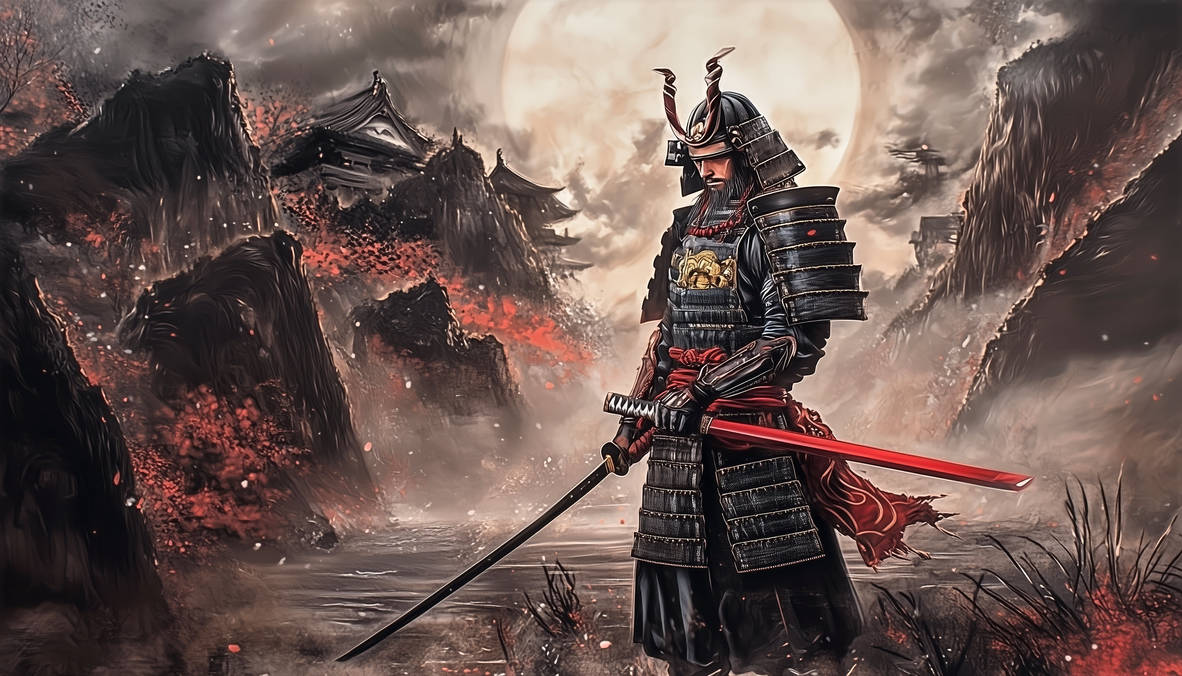
Art by TaliusDesigns, source

The Great Houses

There are five great noble houses of the Pearl Islands, whose leaders are feared and respected Daimyos and who have many samurai at their command. There are also a larger number of minor houses who command fewer samurai and resources but nonetheless aspire to the same status and abide by the same rules as the five great houses. These great houses are long-lived and can trace their lineage back to before the Thyatians took over, and command great respect and honour among all Pearl Islanders. 

Each of the great houses has both an animal totem and a preferred gemstone and colour. These will feature on the banners and armour of the samurai that belong to that house, and those familiar with the houses will quickly recognise those loyal to the great houses and the more prominent lesser houses. 

The five great houses are:

  • Okami (Wolf Clan)
    • Based in Kaiko
    • Gemstone: Yellow Topaz
    • Troops: 3400 footsoldiers, 760 samurai, 8 warships
    • Notes: Supported by Order of the Mandate of Heaven, currently holds the Shogunate
  • Okotta-Tora (Tiger Clan) 
    • Based in Saba
    • Gemstone: Red Carnelian
    • Troops: 3000 footsoldiers, 800 samurai, 6 warships
    • Notes: Loose alliance with Order of the Snarling Tiger (Sohei)
  • Kumo (Spider Clan)
    • Based in Hannabira
    • Gemstone: White Pearl
    • Troops: 1200 footsoldiers, 620 samurai, 12 warships
    • Notes: Noted for its naval prowess and maritime trade connections
  • Inoshishi (Boar Clan)
    • Based in Raisukawa
    • Gemstone: Green Jade
    • Troops: 3600 footsoldiers, 660 samurai, 4 warships
    • Notes: Produces a lot of food and controls many farms. Also has a number of retained magic users (majutsu-shi)
  • Shaganda-Hyo (Leopard Clan)
    • Based in Yunohama
    • Gemstone: Blue Lapis Lazuli
    • Troops: 1100 footsoldiers, 500 samurai, 11 warships
    • Notes: Considered by some to be less honourable than other houses due to their association with both ninja and yakuza. 

These great houses are all based in major cities of the Pearl Islands and control large areas of land and the peasants and artisans who work there, gathering taxes and conscripts to maintain their power bases. The Great houses will also hold one or more castles as military bases and also the residence of the senior family members. 

House Okami is currently the first among equals, being both in control of the largest city and also being the house of the current Shogun who effectively governs the whole of the Pearl Islands on behalf of the Thyatian Emperor. However, both Okotta-Tora and Inoshishi are comparable in military strength and wealth. House Okami does have the advantage of the support of The Order of the Mandate of the Heavens, an order of Sohei (warrior-monks), as long as the head of the house remains the Shogun. 


The Lesser Houses

These will often ally with or pledge fealty to a great house so as to gain some deterence from attack by another great house. Thus there is a complex web of alliances, rivalries and debts of honour. Not even the Shogun's bureaucrats are entirely sure how many lesser houses there are, as these can change as lineages are destroyed, branch off, absorbed by marriage or change their names. All hold some land and often a town or two as their base. The more powerful houses may have their own castles. Some have a preferred gemstone and heraldic animal but there are so many houses that duplication does occur with at least two minor houses claiming the cobra as their animal, and three that claim purple amethyst as their gemstone. This has resulted in confusion on the battlefield as distinguishing friend from foe becomes difficult. The five most notable of the minor houses include:
  • Kyoso-Ba (Horse clan)
    • Based in Shosen
    • Gemstone: Opal (cyan)
    • Troops: 900 footsoldiers, 400 cavalry, 120 samurai
  • Sasori (Scorpion clan)
    • Based in Mototake
    • Gemstone: Amethyst (purple)
    • Troops: 600 footsoldiers, 140 samurai, 10 warships
  • Iguru (Eagle clan)
    • Based in Atsui-Yogan
    • Gemstone: Amber (golden yellow/orange)
    • Troops: 900 footsoldiers, 160 samurai
  • Tako (Octopus clan)
    • Based in Watame 
    • Gemstone: Coral (intense pink)
    • Troops: 1200 footsoldiers, 150 samurai, 20 warships
  • Shachi (Orca clan)
    • Based in Tako-Ryoshi
    • Gemstone: Banded Onyx (black & white)
    • Troops: 1200 footsoldiers, 200 samurai, 13 warships

Good Guys and Villains?

Rather than saying that a whole house or clan is particularly heroic or villainous, I shall say it comes down to individuals. However, members of a house are expected to be loyal and obedient to their Daimyo, and therefore a house will behave in accordance with the wishes of whoever is head of that house. The change of the head of the house or his adviser can prompt a dramatic shift in the policy of that house and who it views as allies or enemies. 

For example the current head of House Kyoso-Ba  has become famous for his vigorous hunting and slaying of both bandits and monsters that plagued his lands, something his predecessor, a rather indolent and decadent uncle, did not bother with. Thus House Kyoso-Ba is now seen as being an upholder of peace and justice. Those household members who show skill and courage in defending the fiefdom are feted and rewarded by the daimyo, thus encouraging them to heroism even if it is not a natural trait. Popularity among the peasants who are spared from facing monstrous raids is an additional bonus.  

As a counterpoint the now-extinct House Mamushi slid into dishonour and disgrace when the Daimyo (who inherited his title under suspicious circumstances) was shown to be a worshipper of Chaos and had brought several chaos cultists into his household. After a failed rebellion against House Kumo resulted in the death of the chaotic daimyo, the remaining members of the house either claimed ignorance of the chaos cult, or else argued that they were being loyal to their master and to do otherwise would be unacceptable disobedience - this was not enough to save them from the blades of House Kumo. 

Serious rifts within a house can and do occur, sometimes with members being expelled or fleeing. If possible these exiles may set up a new noble house, or else they may abandon nobility and become ronin (masterless samurai) or the like. The morality within these splits may be black and white,but is usually shades of grey.