Showing posts with label Thyatis. Show all posts

Saturday, 9 May 2026

Traders of Jaboor

source

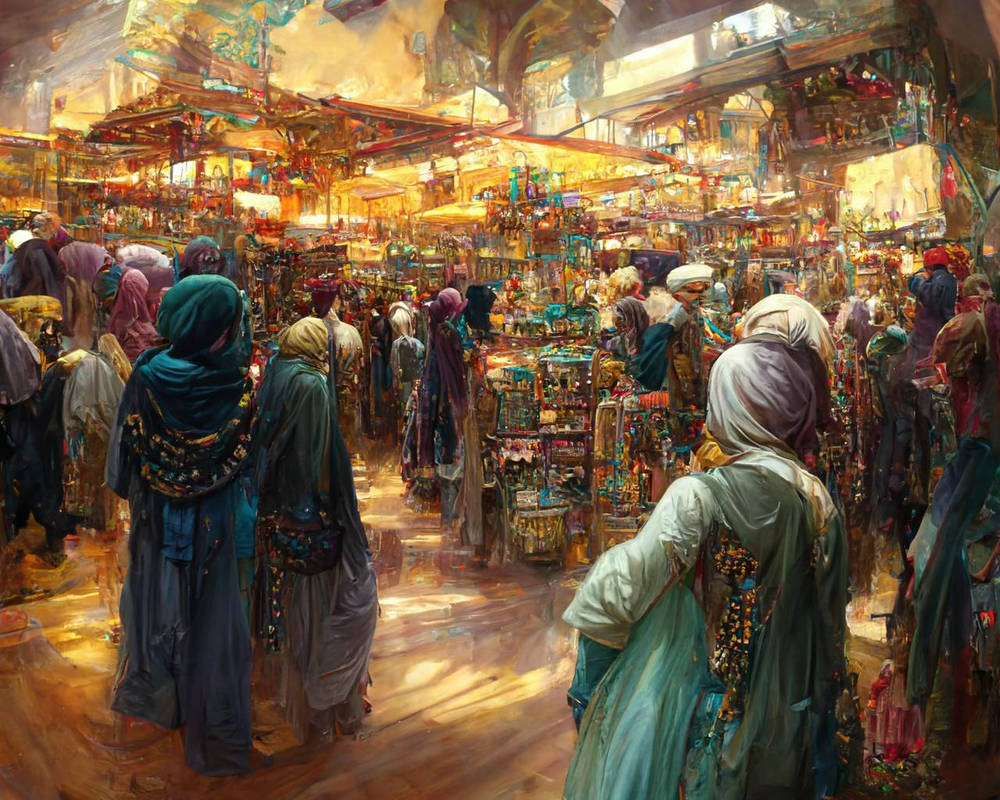
Jaboor is a trading town on the east coast of the Emirates of Ylaruam and as such many of its more important and colourful characters are merchants of various types. 

Nabil Paranthi 

Ftr5/Mer2, human male, age 65, align Neutral

Str 12, Int 16, Wis 14, Dex 9, Con 11, Cha 14

Nabil is a native of Jaboor and also patriarch of House Paranthi. As such he finds himself at the forefront of dealing with the faction of over-zealous town guards known as Al-Fassaad. He is fed up with oppressive religion and will refuse to trade in the holy city of Abbashan and is not afraid to use his money and own influence to curb the growth of Al-Fassaad. He personally prefers trade with both Thyatis and Alphatian merchants on the Isle of Dawn. He specialises in food, including fruit, vegetables and grain. He has dabbled in trading in wines and beers but he knows that this could get him into even more trouble than currently. He does a thriving trade in coffee, but even with that some religious conservatives think that this dark brown brew is a mind-altering substance and could be addictive. Nabil Paranthi has refused to compromise here and intends continue to trade in coffee. 


Ressinik Shallowkeel 

Ftr5, human male age 45, align Neutral 

Str 15, Int 12, Wis 10,  Dex 13, Con 13, Cha 14

Ressinik is an Ostlander and has been sailing the Sea of Dawn since childhood. He shifted away from viking raiding to mercantile trade in his 20s and has become quite a businessman, though he keeps his battleaxe nearby at all times. He takes his ship (The Triton’s Triumph) all over the sea of Dawn including the Northern Reaches, Ylaruam (especially Jaboor), the Isle of Dawn and the eastern coast of Thyatis. He has recently stopped trading in Landfall after the invasion of the Heldannic Knights but is now considering trade expeditions to Oceansend. He often recruits new crew who want to move away from a life of crime and find a more peaceful way to make money. He tends to trade in weapons and armour but is versatile and open to other trading opportunities. 


Naanfaelin 

Elf6, elf male, age 340, align Lawful

Str 11, Int 15, Wis 12, Dex 13, Con 11, Cha 12 

Naanfaelin is a recent convert to the Eternal Truth and feels that Jaboor is where he belongs. He comes from the Minrothad Isles and is a Sea Elf, and grew up sailing the northern Sea of Dread from Thyatis City to Jaipur in Sind. He has had a go at piracy and knows the dark side of Ierendi, and even has some contacts in the dangerous port city of Vlaad. However, about a year ago he had a realisation that he was not happy about who he was becoming and decided a radical change of direction, and the Eternal Truth offered a way that Naanfaelin knew was right for him. 


Tarentius Altacor 

Ftr7/Mer3, human male, age 40, align Chaotic

Str 13, Int 14, Wis 12, Dex 15, Con 10, Cha 14

Tarentius is a Thyatian merchant who plies the eastern coast of Brun from his home town of Retebius to Oceansend. He has a polite and friendly exterior but he is ruthless and amoral, doing whatever it takes to make money and protect his business. As with many Thyatians he is capable of duplicity and fraud though he only does outrageous and illegal moves if he is certain he won’t see the target again - for regular suppliers and buyers he needs to maintain a certain trustworthiness. He has dabbled in slave trading (particularly around Ostland and Thyatis) but he deals in a broad range of merchandise including weapons, rare animal parts, fencing pirated loot and illicit drugs including Zzonga fruit from Alphatia. Despite his alignment he is dismissive of the Cult of Chaos (he is far more secular and focused on the here and now) and also once someone proves a worthy crew member on his ship, The Soaring Albatross, he is quite loyal and protective of them. This goes both ways and his established crew respect and fear him. 


Fezzika Daltanpur 

F4/Mer2, human female, age 55, align Lawful

Str 10, Int 12, Wis 13, Dex 12, Con 12, Cha 13

Fezzika is an inland trader and native Ylari who regularly visits Abbashan. Fed up with Al-Fassaad and would prefer to deal with other towns. Fezzika is considering establishing caravan routes across the desert to the south to trade with Hedjazi, Kuznetz and Ctesiphon, bypassing the holy city altogether. However, she also recognises that farmers around the Abbashan oasis produce good food and she is reluctant to abandon this supply of merchandise.  Trading with such farmers outside the city walls would be risky and considered tax evasion by the city rulers but Fezzika is still toying with the idea. 


Dantalla the Swift 

MU13, human female, age 53, align Neutral

Str 8, Dex 10, Con 13, Int 17, Wis 12, Cha 14

Dantalla is a former adventurer of Darokin who in the course of her explorations has acquired a magic flying carpet of unusual size. Dantalla’s carpet is 15ft x 15ft and can carry up to 1000lb of passengers and cargo. Thus she has put it to use ferrying people and small, high-value goods around the Emirates. She typically trades in incense, naptha, silks, gemstones, perfumes and rare books, and passengers willing to pay 100gp per travelling day. She is quite capable of casting powerful spells, and these days it is to fend off aerial monsters. She has become quite familiar with the Emirates of Ylaruam, having lived and worked here for 12 years. Although she does sometimes travel abroad she tends to stay within the Emirates. Being a foreigner, a female and magic-using sorceress she has encountered suspicion and prejudice - however, these days she has a number of trusted contacts in different towns and cities who are happy to do business with her, and she completely avoids the Holy City of Abbashan and anyone else who is more trouble than they are worth. 


Dornihaali Aalsta

MU4, human female, age 30, align Neutral

Str 12, Int 16, Wis 12, Dex 14, Con 8, Cha 14

Dornihaali is a native of Jaboor but half-Alphatian. Her father is an Alphatian mage who lives in Dunadale on the Isle of Dawn while her mother is a cosmopolitan Ylari in Jaboor. She has recently been hassled by members of Al-Fassaad, partly because of her parentage and partly because of her magic-use. As suc she has recently become friends with Nabil Paranthi thanks to their mutual problem of Al-Fassaad.  She has also been approached by an Alphatian mage looking for people to gather information about Jaboor, its trade, politics and military and anything involving Thyatian activity. After asking her father about this mage, it turns out he was involved in Alphatia's Imperial spy network, and so Dornihaali agreed to help out the Alphatians. At the moment this is merely a matter of keeping an eye out in Jaboor and she is not ready to take serious risks - Dornihaali considers herself a merchant first and foremost, with intelligence gathering being more of an occasional favour for her father. She also trades between Jaboor and the Isle of Dawn, usually bringing fine timber into Jaboor and taking fruits and spices back to West Portage on her ship The White Porpoise. 


Galbi Ironhoof

Centaur Male, age 35, align Neutral

Galbi is probably the most unusual looking trader in Jaboor bazaar, but he is respected and trusted by other established traders. He comes from a band of centaurs that roams the desert of Ylaruam near the coast and he still visits his home tribe. He has also become a regular trader with the nomads of the desert (both human tribes and other races) and has a knack for finding them in the vast desert. He is very wary of ships and as such he only trades inland. 


Friday, 5 December 2025

The Selenica Co-operative


source

The Selenica Co-operative is a network of merchants who have agreed to work together to stay in business and protect themselves and their goods. As the name suggests, the group is centred on Selenica in eastern Darokin and as such is on a crossroads between various nations including Karameikos, the Five Shires, Ylaruam and Rockhome. The merchants are all travelling traders, moving goods and money around between cities and countries, and generally do not maintain static shops, though they often trade with those that do. 

The four main functions of the cooperative are

  1. Mutual defence. Members of the co-operative will often band together into large and well-guarded caravans when travelling to the same destination, or at least travelling the same road for a distance. Given how dangerous some of the mountain passes and hills can be, this is a sensible precaution. Bandits and monsters are less likely to raid a large caravan than a sole trader. 
  2. Trade and financial information. There is a general understanding in the co-operative that news about trade and economics is important for finding the best deals and avoiding difficulties. As such members of the cooperative will tell each other about the ebb and flow of commodities, the activities of rivals who might compete with the cooperative, and laws and taxes in the places the cooperative might do business.
  3. Avoiding competing with each other. Merchants don't like cutting prices simply because somebody else is selling similar wares cheaper. Although there is some disagreement and arguing within the co-operative, it is considered a safe place to sort out potential rivalry and help merchants find alternative markets. 
  4. Loans at reasonable rates of interest. Admitedly what counts as reasonable can be subjective, but as long as both lender and borrower are in agreement, this has kept various merchants solvent and in business when they might otherwise have been ruined by the ups and downs of life as a travelling merchant.
Darokin is a land famous for its merchants including the great merchant houses that employ dozens or even hundreds of workers, and a head of the house overseeing all of its business, with junior merchants often acting under instruction. The Selenica Co-operative is far less hierarchical, and all members are at least in principle equals (though richer members are more equal than others). Each merchant in the co-operative is considered an independent trader looking after their own business and making their own deals. Most members are from Darokin but in the fifty years since it started in Selenica, more merchants from other places have joined, including:
  • Ylaruam. This includes Parsa and Ylaruam City. The co-operative avoids Abbashan as they have had bad experiences with the theocracy there. In Cinsa-Men-Noo there is Maerell Dhambor, who is not a member but has had friendly dealings with the co-operative. 
  • Karameikos, including Specularum, Kelvin and Penhaligon. Specularum is also a trading port for members who wish to trade further across the sea. In Penhaligon there are two members - Beltorphix and Maddrasso.  
  • Rockhome. Though there are great opportunities to trade between Darokin and Rockhome, currently the only safe route through the mountains is into Ylaruam’s Parsa and then north through the Ust-Urt valley and through Karrak Castle. Nonetheless, merchants of the co-operative consider this long way round to still be worthwhile and in Greenston there is Meribidus Silverbrow   
  • Athenos in the south of Darokin is the nation’s main port, and as such many merchants will either sell to foreign merchants here or else hire ships to trade overseas. 
  • Corunglain in the north of Darokin is both a large city of customers and also the jumping off point for merchant caravans braving the dangerous routes to Glantri and Ethengar. There are several members of the co-operative based here. The mutual defense clause of membership is frequently invoked and the co-operative makes sure that caravans heading north into the Broken Lands are as well protected as they can afford to be. 
  • Ierendi City. Note that the members are quite cautious about trading here - the city itself may be safe but the surrounding seas are patrolled by pirates from Vlaad. No sane member of the co-operative will trade actually in one of Ierendi’s pirate ports. 
  • Thyatis City and Kerendas. The Empire of Thyatis is a great opportunity for trade, and the co-operative has several merchants based there. Goods will often be loaded onto a ship at Specularum and make the short trip past Minrothad. 
  • No direct trade with Minrothad City occurs, primarily because of the Minrothad Guilds’ policies and insistence on maintaining a near-monopoly in their homeland. But sometimes Minrothad merchants will trade with members of the co-operative either in Kerendas or Specularum. 

The Selenica Co-operative is quite open-minded about its membership. A certain level of trustworthiness is required, so no theft from or assaulting other members is tolerated. Fraud and getting into trouble with law enforcement is likewise frowned on, and slandering other merchants (especially those within the co-operative) is discouraged. These basic rules mean that most of the cooperative are Lawful or Neutral in alignment - Chaotic types tend not to fit into the co-operative’s ethos. However, a range of races and nationalities are represented, and female merchants are welcome as well. This is primarily a matter of professionalism - the ability to do business and make money is the most respected attribute. 

Although not hierarchical, the co-operative does have leadership of sorts in the form of the Board of Directors, who are the 9 most senior or wealthy merchants in the co-operative who are asked to set the rules, welcome or expel members and deal with disputes between members. Although there is a certain amount of political manoeuvring both by those on the board and those seeking to ascend to the board, it does generally work fairly well, partly because of the ever present competition of the big merchant houses.  Those on the board who are particularly selfish, incompetent or greedy will find themselves outvoted on decisions and possibly voted off the board if the other eight directors would rather have someone different. Nonetheless, the board has run into trouble when one or more directors have been magically influenced (usually involving Charm or Suggestion spells) and there was one period when a rival major merchant houses was using a mage to scry on the board of directors meetings. 


Friday, 15 November 2024

The Pearl Islands as Mystara’s Mythic Japan

This is a big deviation from the published canon of Mystara, perhaps more than what I have done with Ierendi. The Pearl Islands, as described in Dawn of the Emperors, are based on Polynesia and other south Pacific islands. This is nice but I find it not particularly inspiring - maybe this is a bit harsh. But there is also a longing in me for samurai, ninjas and fighting monks. The Pearl Islands seem like a suitable place to place these in Mystara. And with Ochalea being based on mythic China right next door the old rivalry and interaction between the two can be a source of tension and adventure. 

Political Overview

The Pearl Islands are still subjects of the Emperor of Thyatis and they contribute troops and money to their imperial overlord. There was originally an Emperor of the Pearl Islands but he was slain during an invasion by Thyatian troops. The Pearl Islands are now ruled by the Shogun, traditionally the second-in-command to the Emperor, and these days the governor of the Pearl Islands on behalf of the Emperor of Thyatis.

The Pearl Islands other major international relationship is with Ochalea to the west. The Pearl Islanders have a rivalry but also engage in trade, diplomacy and some cultural mixing. The Pearl Islanders sometimes view the Ochaleans as weak, cowardly and underhand while the Ochaleans view the Pearl Islanders as aggressive, arrogant pirates obsessed with so-called honour. 

The Pearl Islands are feudal and hierarchical, with the Shogun ruling over his senior nobles the Daimyo who in turn rule over the samurai, the Pearl Island equivalent of knights, The Pearl Islands is a militaristic nation, with great emphasis on loyalty, obedience, discipline and honour. This makes them perhaps similar to the Heldannic Order, very lawful but not always benevolent. Women will find the Pearl Islands to be quite male-dominated, with most positions of power held by men. Players are welcome to have female characters in the Pearl Islands - there are no specific rules to say otherwise but there may be a certain amount of prejudice and old-fashioned attitudes from NPCs.  

These daimyo do not always get on with each other, and even occasionally rise up against the Shogun if great grievances or great ambition come to the fore. Civil war and internal conflicts are almost regular occurrences in the Pearl islands, so every nobleman will hold both a fortress and a body of troops including an elite core of samurai to defend his lands.    

The Pearl Islands have their own language, Gengo, which they use when not dealing with outsiders. Many of the better educated residents have a good grasp of Thyatian Common, though the peasants usually just stick to Gengo. In Gengo the Pearl Islands are known as Paru-Shoto. 

Character Types in the Pearl Islands

source
Samurai are the elite fighters of the Pearl Island nobility. They are famous for their Katanas (masterwork bastard swords) and their stylish lacquered armour (the equivalent of banded armour). Samurai place great store in honour, courage and loyalty. Those who fail these principles may become ronin, outcast samurai, left to find a living as mercenaries or bandits, or else commit ritual suicide. 

Bushi are the ordinary fighters, the rank and file warriors of the Pearl Islands. They still follow Bushido (Way of the Warrior) that Samurai follow, though perhaps with less fervour. 

Ninja are thieves that focus on stealth, surprise and subterfuge. They are famed and feared as assassins and commandos, dressed in their classic black garb with black hoods and masks to hide in the shadows as best as possible. 

Yakuza are thieves that function more as organised criminal groups, relying less on stealth and more on intimidation. Their code of honour is more similar to a mafia mobster than of a knight, with loyalty and respect being most prized.  

Sohei are the clerics of the Pearl Islands. They sometimes follow immortals but are more likely to follow the philosophies of Law, Chaos or Neutrality. 

Monks are based on the Mystic Class, wise philosophers and experts at unarmed combat. They are nearly always Lawful in alignment. 

Majutsu-shi are the mages of the Pearl Islands, often viewed with suspicion and not always welcome in society. 

There are very few demihumans native to the Pearl Islands - nearly all have travelled from overseas. 

At the moment I do not intend to have special rules for Pearl Island characters that might affect combat or level advancement - the differences are principally in attitude and appearance. 


Revised geography and map of Pearl Islands

Based on this map by Thorfin Tait on the Vaults of Pandius (which in turn is based on a map from the Dawn of the Emperors boxed set) I have revised the map to fit the new culture here. 


Note that in some cases the Thyatian names still remain but with the Gengo names underneath. 

This map shows the major cities but not minor settlements as there are too many to be clear on a map this scale. These large cities are the power bases of the most influential and powerful daimyo. The city of Kaiko, known to Thyatians as Seagirt, is the capital and the domain of the Shogun - it has a population of 20,000 in the city itself and another 60,000 in the surrounding countryside.  The map may also miss out on small islands less than a hex (24 miles) in size.

The Pearl Islands are generally subtropical in climate, with lush forests that can seem like jungles and fertile river plains. The main island Nuarito has a volcanically active mountain range which splits the island diagonally. Volcanic eruptions, earthquakes and tsunamis are all natural hazards here, and every few decades the lands are rocked by some sort of geological event that could be a disaster. 


Friday, 19 July 2024

Traldar and Traladara Ruins in Karameikos

The Priory of Kells, source

I am going back to where this blog started - Karameikos. One of my earliest posts since I restarted the blog is about dungeons in Karameikos. That post didn’t really offer new ideas, only a quick overview of the official version, noting that there were not many official mentions of dungeons in Gaz1: The Grand Duchy of Karameikos,  but that would not stop an imaginative DM from placing plenty of their own around. 

Going back through the history section of the gazetteer I noticed that there are large gaps in the history. Like blank spaces on the map, I see this less as a lack of information and more as a blank canvas, spaces in the timeline where the DM can add their own events and changes. There are only 19 entries in the official timeline for Karameikos that stretches over 3000 years. Clearly for the sake of page count and simplicity for new readers I can understand why TSR kept the history very concise. But it does raise questions in my mind of what lesser events may have happened that were omitted for the sake of brevity. 

Nonetheless I have spotted things in the gazetter that I hadn’t last time round. Kelvin for example is a very Thyatian town, named after one of Duke Stefan’s loyal lieutenants. However, underneath are Traldar ruins, possibly forming a dungeon beneath Kelvin. Penhaligon has no such mention of Traldar or Traladaran ruins but I would certainly consider the possibility. Outside Threshold there is a ruined village of Hutaakan origin. Although I would expect soldiers from Threshold to regularly sweep the surface ruins for monsters before they start to threaten townsfolk, I can imagine they would avoid that flight of stairs that leads down into the dark, leaving such matters to foolhardy adventurers. I still have not tackled the ruined village of Krakatos and whatever might lie beneath. 

The Traladarans as Mystaran Celts?

Although the Traladarans have eastern European sounding names (particularly Yugoslav and Romanian) I am really not familiar with bronze-age Romania. I don't know anyone outside of those countries who does, and if they do, they probably don’t play D&D. However, my next best point of reference is western European Celts. I don’t think these are what the writers had in mind when describing the Traladara, but they are something I can at least have some concept of. And it fits in with them rubbing shoulders with and then being taken over by the much more powerful Byzantine/Roman Thyatian Empire to the East. The Celts also had their own distinct culture, art and legends but were not quite as civilized as the Romans, not developing their own cities or writing. This fits with the Traladara not having large cities, and their legends seem to have been recorded by Thyatian scholars, not their own. Western Celts had actually mastered iron smelting, and so were more iron age than bronze age - this could be reflected in traditional Traladara weapons and armour. 

Of course the Celts and Romans had a much more violent history, from the Gauls sacking Rome in 390BC to Julius Ceasar’s bloody conquest of Gaul, his foray into Britain and then Claudius’ conquest of Celtic Britain and the destruction of the druids and finally Boudicca’s sacking of Verulanium followed by the brutal Roman suppression of her revolt. I can imagine that there would have been similar clashes between Traladarans and Thyatians over the centuries since AC 0 as Karameikos would be an obvious target for Thyatian expansion and conquest. 

In real world history, Roman expansion into the Celtic world was a combination of factors, including bloody conquest, trade, culture and political alliances. What Traladaran chief fighting off rival chiefs in Traladara would turn down an offer of gold coins and forged iron weapons from Thyatis? All the Thyatians want in return is a little cooperation if their mutual enemies start attacking Thyatian interests on the south coast of Traladara. There were limits to Roman expansion - Hadrian’s Wall between northern England and Scotland is the biggest and most spectacular example of this. Romans also never had a military presence in Ireland, though the discovery of Roman coins in Dublin shows that they certainly traded there. In fact that’s how I see Specularum: As Marilenev Port it was Traladara’s main trading centre where the majority of foreign traders were Thyatian. As well as Thyatian goods and coins, they also brought over Thyatian ideas about architecture and city planning. The city of Specularum mapped out in the Gazetteer was not just built within the 30 years since Duke Stefan Karameikos arrived.  After the Roman invasion of Britain a new group emerged - the Romano-Britons, of Celtic ancestry and retaining some aspects of their heritage but adopting a lot of Roman culture, dress and attitudes. I imagine current Karameikos and Karameikians to be a similar amalgamation of cultures. 

Of course Mystara is not the real world, and two things that the Traladarans had to deal with that Celts did not were obviously effective magic (clerics and magic users) and monsters (lycanthropes, undead, humanoid tribes and the occasional dragon). Although the Celts of western Europe were fighting among themselves while also fighting the Roman Empire, I can imagine the Traladarans fighting off humanoid hordes such as the goblins migrating into the Dymrak Forest, the orcs encroaching from the Black Peaks and of course the hated gnolls, whose near-genocidal wars a thousand years ago brought the collapse of the ancient Traldar culture and the dark age from which the more recent Traladara culture emerged. In fact, this is probably the main reason they were less violent towards the Thyatians - both viewed the orcs, goblins and gnolls as a common enemy. Trading weapons and armour and diplomatic favours was more about fighting off these humanoids than neighbouring Traladarans.

There are also less barbaric demihumans - the gnomes around Highforge, the Callarrii Elves, halfling settlers from the Five Shires and dwarves migrating from Rockhome during its expansionist phase settling in the Altan Tepes, including Tarrag Duun. All of these would have had their own interactions with both the Thyatians and the Traladarans.  I imagine the Traladarans would have considerable respect, even awe, for the elves. The Thyatians would probably prefer the gruff, no-nonsense work ethic of the dwarves, The halflings were not considered particularly dangerous but they were good farmers and boasted an excellent cuisine. 

In terms of magic there are far fewer references in the gazetteer. Zirchev, King Halav’s right-hand man, was a wizard of great power. But the Traladarans do not have much of a magical tradition, certainly not compared to Glantri, Alphatia or even Thyatis. Nonetheless I can imagine the Circle of Zirchev as a network of Traladaran human mages who learnt magic use from the elves. Whether they are still around today or were absorbed into the more modern orders of mages in Karameikos is not clear. Perhaps they form a secret pro-Traladaran group within the Specularum Magician's Guild?

Celtic druids linking into D&D druids in old Traladara feels like a blog post for another time. And I am seriously considering this. However, the gazetteer does not mention druids but does talk about the Church of Traladara and the veneration of King Halav. One sect, the Church of Halav, has gone so far as to equate the current Duke Stefan with the ancient King Halav. The Church of Traladara seems more relaxed and less zealous than the Church of Karameikos from Thyatis. In terms of the struggle between Law and Chaos, in this campaign both the Church of Traladara and the Church of Karameikos are considered denominations of the Church of Law. They both have Lawful outlooks on life and behaviour.  They may not always agree with each other, and like real world sects there may be hardliners in each insisting that their version of Law is the correct one and everyone else is wrong. But when it comes to dealing with the Cult of Chaos and chaotic monsters the majority of both the Church of Traladara and the Church of Karameikos can put their differences aside to fight their common foe. In terms of immortals, the Church of Karameikos follows Law as a principle and as a cosmic force, while the Church of Traladara focuses on King Halav as an immortal - he has indeed ascended to become a Lawful saint, and is able to grant clerical spells and the ability to turn undead to his clerics. Queen Petra and Zirchev the Mage are lesser immortals, but are still able to grant clerical abilities to clerics who devote themselves to these two. In previous writings on this blog I have made references to the Church of Law in and around the Grand Duchy of Karameikos. I think it is simple to say that unless specific immortals and saints are mentioned the Church of Law involved will be the Church of Karameikos. 

Of course all this comparing Celts with Traladarans comes with a caveat that applies to all the cultures in Mystara - they may be inspired by real world historical nations and cultures but should not be considered accurate replicas. Darokin is not the same as Rennaisance Italy, the Northern Reaches are not the same as Viking Scandinavia and Nithia is not the same as ancient Egypt. After all, Karameikos has knights in shining armour and crenellated castles, even on the cover of the Gazetteer. So whatever the Traladarans may borrow from Roman-era Celts, they should not be considered historically accurate. 

Traladaran Ruins

So what does this mean in terms of Traladaran ruins? Here are some rough ideas that I could develop further:

source

Burial Cairns and Tumuli. These can be classic dungeons, either relatively small and simple like their real-world equivalents or being extensive catacombs with a Traladaran/Celtic flavour. 

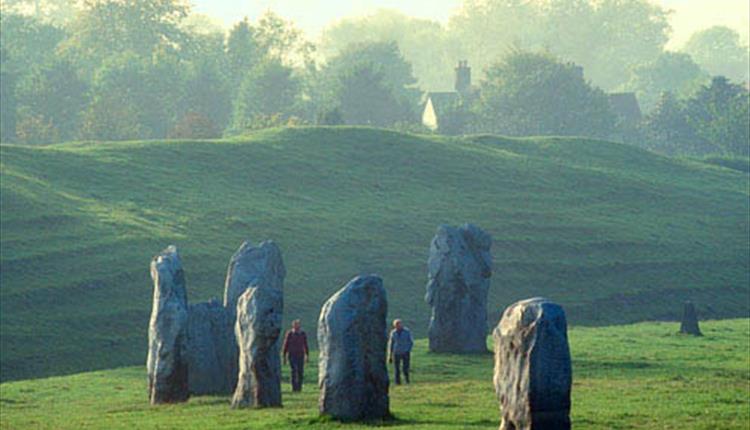
Standing Stones: Like Avebury or Stonehenge, these upright stones usually larger than a man are occasionally solitary but often in a circle. They are built on powerful confluxes of mystical energy, also known as ley lines. The exact effects are up to the DM but those who are aligned to the purpose of these standing stones their spellcasting is enhanced. 

source

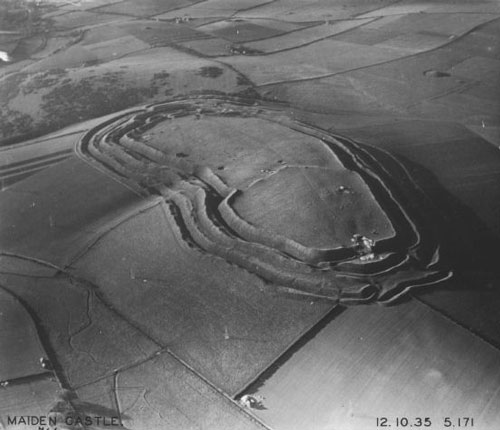
Hill Forts, either abandoned or still occupied. These are (or were) Traladaran settlements defended by earthwork ditches and wooden pallisades. If properly maintained by their inhabitants they still offer good military defences against conventional attacks from bandits or goblinoids. 

source

Shrines and Chapels to Halav, Petra and Zirchev have been built since the revival of Traladara culture 600 years ago. Some of these are still in use, tended by a cleric or two and maybe with some parishioners from local villages and farmsteads. Others will have fallen into ruin - whether through lack of faith or struck by some disaster. Reclaiming these lost places of worship would boost the adventurers’ status at least among those Traladarans who follow the old ways. 

Thyatian outposts from before the Karameikos takeover. These would be both military and economic in use, with soldiers providing safety for traders. This is inspired by some of the Roman forts on Hadrian’s Wall where a lot of trading took place. Some might still be maintained by what would now be the forces of Duke Stefan Karameikos while others have fallen into ruin perhaps after being sacked. 

Battlefields are not exactly ruins but hold the remains of many fallen warriors and whatever possessions have survived the ravages of time. Of course in D&D the big worry here is undead creatures, especially when dark, chaotic magic is involved.


So where are these Traladaran features found in Karameikos? At the moment I am not going to put a whole lot of them on the map of Karameikos. However, I am reserving the option of placing them as and when they are needed by adventures or other blog posts. Similarly events in Traladaran history may not have been important enough to be included in the Gazetteer timeline but could still be part of the background of places, items and adventures the PCs may encounter.  


Friday, 31 May 2024

Jolgruul the Corruptor and other Chaos Cults

Jolgruul the Corruptor 

One of the more subtle and insidious Chaos Princes , Jolgruul prefers temptation over confrontation. Although he and his followers are quite capable of violence, he prefers to inveigle the foolish and unwary into his machinations. He will often use the seven deadly sins, particularly Avarice, Pride and Lust, to lure mortals into his grasp. Although most chaotic creatures do not consider contracts to be worth the paper they are written on, Jolgruul is much more likely to use contracts with mortals, with the end results never being in the mortals' favour. Such contracts are both cunningly written as if by a master lawyer and also magically enforced, and breaking the contract will bring terrible curses or other consequences on the reneger. Unusually for a paragon of Chaos, Jolgruul himself will also stick to his side of the contract, even if it is not in his favour. Whether he is concerned about practical consequences or he has some strange sense of obligation around these deals is not known.

Jolgruul's cultists may well have entered into contracts with him, or else been ensnared and corrupted and then found that their only option was to go along with him. They are typically sneaky, deceptive and occasionally quite charismatic, making everything they do and encourage others to do seem quite acceptable and reasonable. Jolgruul's followers are most often found in and around Thyatis, particularly the large cities, though there are rumours cult cells have made it to Specularum in Karameikos and also the pirate port of Vlaad in the Kingdom of Ierendi. Although not active in Darokin, Jolgruul is impressed with some chaos cults in Darokin City, particularly the Black Rabbits and the Lords in Scarlet and has encouraged his clerics to consider some sort of alliance with them. 

Although most of Jolgruul's followers are humans, there are a few monstrous creatures that are interested in his approach, including some that can shift into human form. Devil swine, mujina and doppelgangers have all been known to be part of Jolgruul's cult. But Jolgruul generally ignores those who cannot be subtle and deceptive. Centipede Demons are also found assisting these cultists - whether the cultists are powerful enough to summon and bind these fiends themselves or whether Jolgruul sent them as a boon to his followers is not clear.  

The Snake Cult of Jaboor

Art by Conceptopolis, source
Underneath the Ylari port of Jaboor there are a network of tunnels that lead down to the caverns that contain the sunken river bed of what was the river Nithia. This is now home to a colony of serpent people and some of their monstrous allies. However, in the last five years they have human allies in the town above as well. The human townsfolk are all expected to follow the official religion of Ylaruam, The Eternal Truth, and the vast majority comply, with many being true believers. But there are a few who resent such dogma and orthodoxy, and seek a different sort of immortal patronage. The serpent people have made contact with these, initially using magical disguises, and introduced these renegade humans to the worship of Apep the Snake God, the bane of ancient Nithia.  Although the cult now has human followers, the serpent people are definitely the ones in charge, though they very rarely emerge onto the surface. Most of the time it is the human followers who go down into the caverns, using an old cave entrance among a cluster of boulders to the west of town. 

Out of the town population of 4500 people, only about 20 are true followers of Apep while another 50 or so are hired by the cult as guards, mages and the like. As with many of these cults they are very selective and careful about who they try to recruit and convert. Some of these cultists want some sort of power and prestige that they cannot gain legitimately, including forbidden magic of ancient Nithia, while others join as angry, blasphemous defiance against what they see as the overbearing and smothering monotheism of the Eternal Truth that holds sway over Ylaruam. For the previous 5 years they were just establishing the cult, gathering trustworthy members, money and information, but now they are getting bolder.  Recently the cult has kidnapped several citizens of Jaboor. Two have already been sacrificed to Apep but another two are being held for the next ceremony, including a visiting cleric of the Eternal Truth. 

The Ravenous Maw

source
This cult is quite unlike the previous two and makes no attempt at subtlety. It is established in various humanoid tribes along the Black Peaks, Altan Tepes and into southern Rockhome, particularly among ogres, gnolls, trolls and hill giants. It is focused on hunting and eating, and since all of its worshippers are naturally carnivorous, this fits in with their primary concerns - finding and killing prey and eating their carcasses.  This cult has relatively few human members, but these are often the worst sort of degenerate cannibals. Even among the humanoid cult members, eating each other is not unknown, though for the sake of cult cohesion and combat strength the shamans only sanction eating other cult members when they have died from other causes such as battle against enemies of the cult. Of course, some of the more hungry members will ignore this rule - they are chaotic after all. 

The Ravenous Maw does not seem to have a coherent personality that the members worship but merely the concept of predation and carnivory. Having said that, shamans will often conflate the Ravenous Maw with chaos princes and minor immortals linked to their race - Yeenoghu for gnolls, Vaprak for ogres and trolls, and Baphomet for minotaurs, all of whom encourage their followers to hunt, kill and eat humans. It is believed from captured members that Maglubiyet the Immortal patron of goblins and hobgoblins holds the Ravenous Maw in contempt, considering it animalistic, disorganised and short-sighted, thus few of those races are found in this cult. 

The Ravenous Maw is quite open minded about who or what can join their ranks - as long as the new member is suitably vicious and hungry but controllable, it will be considered. Ettins, athaches, frost giants and thouls have all been found among them. Predatory beasts are sometimes used as mounts or war beasts, including cave bears, sabertooth cats and giant hyenas. 

The Ravenous Maw is not yet powerful enough to threaten major towns or castles but it has certainly attacked human villages in northern Karameikos, northern Thyatis and southern Darokin around Selenica, devouring villagers, livestock and pets. The dwarves of Rockhome have been threatened but so far have fended off attacks on their strongholds. The folks of Ylaruam have not yet been attacked but they could still be next on the menu. 

The Scuttling Scourge

Developing from a much smaller cult of scorpion-worshippers of Ylaruam who followed a Chaos Prince that had been a manscorpion (referred to as The Scorpion King), the Scuttling Scourge holds vertebrates in contempt and eight-legged arthropods in great respect. Spiders, scorpions, whip-scorpions and rhagodessas are all considered a higher form of life. This cult has spread from its homeland of Ylaruam and now has members dotted across the Known World including Davania, Yavdlom and Sind. Araneas are considered allies, although they are not religious and will not join in the ceremonies. 

Unlike the Snake Cult of Jaboor where human worshippers respect snakes and serpent people but do not expect to become one, the human worshippers of the Scuttling Scourge aspire to transform from a feeble four-limbed mammal into a much better form - an eight-legged predator protected by chitinous armour and armed with deadly venom. It is not known how this happens or even if it does happen (are the human cultists being fooled and just used as edible pawns?) but it is what the most fervent cultists desire. There are some manscorpions associated with the cult in its homeland of Ylaruam and on the eastern edges of the Great Waste bordering Sind who encourage this belief and it is possible that they have a way of transforming humans into manscorpions but this has not been confirmed.

Those familiar with a wide range of chaos cultists know that the Scuttling Scourge is not the only cult with an affinity for spiders - certain Arvorians of Norwold follow a spider-like entity called Mohosskith, though it is unlikely to be involved in this cult. 

Friday, 24 May 2024

Aalthir and Cittinova: When Cities Meet

Cittinova is a Thyatian colony on the northern coast of Davania, and is effectively the main town of Thyatis on Davania (though Raven Scarp would argue that point). It has a population of 2,000 people (mostly humans, a few jungle elves and a handful of other races).  Compared to smaller colonies and outposts such as Herakanthia it is a bastion of civilization, and is relatively secure from the monsters prowling the jungle. And yet as far as other cities in the Known World are concerned it is rather small and insignificant, and would really only count as a provincial town. Cittinova has a town guard of 200 soldiers, mostly armed with chain mail and either longswords and light crossbows or else longswords and polearms such as pikes and halberds. These town guards keep the peace within town and also fend off roaming monsters - although they need to fight in formation to defeat the larger dinosaurs.  

The Floating City of Aalthir is in a completely different league. Created and lifted by incredibly powerful magic, Aalthir has a population of 23,000, of whom 2,000 are magic users. That means for every man, woman, child, elf or whatever in Cittinova, there is magic user capable of casting Magic Missile or Charm Person in Aalthir. And there is a council of 12 archmages who both act as the rulers and  navigate the city through the skies of Mystara.  Any one of those archmages could wipe out a town like Cittinova, guards and all, from a safe distance. 

And now Aalthir has come to rest over the sea just north of Cittinova, in plain sight of the Thyatian town. This has caused considerable consternation and speculation among the population, and many citizens are fearing annihilation or conquest. After all, Aalthir originally comes from Alphatia, and although now it is effectively an independent city-state, it still has many cultural and political ties to that great empire. And as everyone knows, Thyatis and Alphatia do not usually get on well together. 

Instead, the archmages have sent a delegation down to Cittinova on a skyship, claiming only wishing to trade and establish friendly relations. Of course, the Thyatian governor of Cittinova doesn’t trust these Alphatian wizards at all but firstly he knows they have the upper hand in nearly all respects, and secondly many of his citizens are fascinated by this magical marvel. Even the merchants of Cittinova are eager to do business with their fellow traders a mile above the ocean.  

 Art by VargasNi, Source

The Aalthir authorities are quite careful about who they allow onto Aalthir itself - only a few select Cittinova officials actually set foot in Aalthir. One enterprising skyship captain has been offering sight-seeing trips to the curious people of Cittinova, taking them on her skyship (an exciting adventure in itself!) and then circling around the floating city several times but not landing as the captain and her crew point out landmarks and features that the tourists would find interesting. At one point a squadron of six hippogriff riders flew from Aalthir over Cittinova for a fly-by. But this scared both humans and livestock  who were not sure if this was some attack. The rulers of Aalthir have forbidden any future visits by hippogriff.  As a friendly gesture it did not go as well as planned but as a display of military might it was certainly demonstrative. 

For the moment there is a bustling trade in the main marketplace of Cittinova, with goods and passangers being ferried to and from the floating city via skyships. The merchants of Aalthir are buying local specialities including jungle fruits, rare woods from the enormous nearby trees, and animals, both butchered body parts and also the occasional live specimen. One Aalthir wizard has bought a captured phanaton as a pet, despite the phanaton's protestations. In return the merchants of Cittinova are buying silks from Ochalea, tea and spices from Bellissaria and many magical potions and curiosities made in Aalthir itself. A visiting trader from Minrothad has joined in with the buying and selling, partly to make money but also to see how Alphatian merchants operate and what they have to offer - making connections between Minrothrad and Aalthir could be profitable. A mysterious archmage called Ellaria has travelled by magic carpet from Aalthir to briefly visit Cittinova, though she always wore a silver mask that completely covered her face and long clothes that covered her skin.  

One skyship took a band of Aalthir mages deep into the jungle of Davania, and they have returned with various trophies including a sedated giant chameleon, a grateful but rather confused rakasta whom the Aalthirians rescued from a hungry Tyrannosaurus and the severed head of said dinosaur - the rest of its body had been blasted by lightning bolts, and a charmed Deinonychus. The new owner of the Deinonychus insists that it will stay friendly; Other people on board are not so sure. But a jolly good time was had by all, except for the crew hand who got attacked by a carnivorous plant. He survived but is still badly shaken. 

 Art by ValerySazanov, Source

But what is going on behind the scenes? Firstly a Thyatian wizard visiting from his home back in Port Lucinius has teleported back home and ridden to Thyatis City to report on this visit. The Thyatian government is now aware and considering its response. Secondly one of the tourists onboard the sight-seeing tours is an Imperial Thyatian agent and has used his elven cloak and boots to hide on the ship, then snuck off when it docked, so now there is a Thyatian spy on Aalthir, though his ability to report back to his superiors is limited. Similarly an Alphatian wizard has wandered away from the trade delegation into Cittinova and is now looking to see what is going on in this Thyatian backwater, although he does not have the same government connections, and might be doing this for his own curiosity. 

Will this calm down the tensions between the two empires or will it exacerbate them? How will central Thyatis react to what could be interpreted as an intrusion? Did Alphatia approve of this event or did Aalthir conduct this entirely on its own? The ramifications of this encounter between two settlements of rival empires are yet to play out. 

Thursday, 21 September 2023

Herakanthia the Jungle Outpost

Map of Thyatian possessions on the Davanian Coast
Scale is 72 miles per hex

The Thyatian hold in Davania is primarily the two towns of Cittinova and Raven Scarp. However, they have also established a number of smaller outposts on and near the coast, including Herakanthia. Founded 50 years ago by the adventuring swordswoman Heraka this has proven to be a useful base camp for exploring the jungle, sitting about 50 miles south of Cittinova but still only an hour’s walk to the coast 


Herakanthia has 240 inhabitants, and is surrounded by a ditch and wooden palisade, with a single guarded gate. It sits on a hilltop and the residents have cleared away trees and bushes so that approaching creatures can be seen easily. There is a path east to the coast that is maintained and at the nearby beach (2 miles along the path) there are 12 large boats - mainly for trade and passengers to Cittinova but also as a potential means of evacuation if the whole outpost is in mortal danger. The sea along the coast is also the main trade route to Cittinova and Raven Scarp - the jungle is too dense, rugged and dangerous for overland routes. 

There is a standing garrison of 50 soldiers, some local to Davania others drafted from the Thyatian homeland. They are all equipped with crossbows, polearms and chain mail. Other residents will join in with defence as they are able to - there was a notable incident ten years ago when a pair of Allosauruses broke through the palisade and killed several people, and everyone who could wield a spear or pitchfork had to form an impromptu phalanx to drive the dinosaurs off.   

At the base of the hill that the outpost stands on are a dozen acres of farmed land where wheat, maize and vegetables are grown. This is a mixed success - sometimes it provides plenty of food, but other times the crops are hit by various tropical blights, devoured by insects or trampled by huge wandering beasts. Hunting and foraging are important sources of food but this is always done as an organised expedition - wandering around alone in the jungles of Davania is extremely dangerous, and even with armed escorts, violent encounters happen - the Thyatians know that they are not the top of the food chain. Fishing in the nearby sea is possible but the seas have their own dangers, so at the first sign of large marine creatures or bad weather the fishermen will head for shore. Food security is a significant concern for the people of Herakanthia. 

Notes on levels: Davania is a dangerous place, and as such I am assuming that adventures set here are either Expert or Companion level (for PCs of levels 5-20). Dinosaurs, dragons, Araneas, Kopru and the like are all threats that novice adventurers are not expected to deal with. 

Non Player Characters of Herakanthia

Keltrakis: human female 15th level magic user, neutral. Keltrakis has been tasked with maintaining Herakanthia by the governor in Cittinova, and she intends to prove her worth. She is competent enough  but she does tend to view every challenge and danger from the point of view of her seniors in the Thyatian administration. Trade, finances, food and security are her main concerns. She is a skilled mage and when the situation calls for it, she can bring her magic to bear on problems and threats - she slew a marauding Dimetrodon with a lightning bolt early in her tenure here, which impressed the residents. 

Escallios Parrottalker: elf male 9th level elf ranger, neutral. Escallios is a resident of Herakanthia after leaving his tribe of jungle elves for unspoken reasons. He has proven to be a very knowledgeable native guide to the jungle, advising human Thyatians about dangers and resources. He is still on talking terms with other jungle elves, though there are obvious tensions and awkwardness when dealing with the Bough-Runner tribe which he left a while ago.

Torgonnus the Myrmidon: human male 12th level fighter, lawful. Torgonnus has had a varied career, from conscripted soldier to deserter to gladiator and now freed to become an adventurer. He has arrived in Davania to find out what happened to his father, who joined a wave of settlers from Thyatis seeking new opportunities in Davania. He believes his father was last known to be in a settlement deeper into the jungle than Herakanthia but which lost contact with Cittinova about 10 years ago. Although Torgonnus does not expect to find his father alive, he still needs to know what happened. 

Talsheridon the Brewer: elf male 7th level spell-sword , neutral. Talsheridon is skilled not only as a spellcasting elf but also as an alchemist . He has set up in Herakanthia to gather ingredients from the nearby jungle, particularly rare herbs, flowers and fruits which possess properties that he wants to investigate, and may offer alternative recipes to well-known potions. He can generally look after himself but even he is cautious about venturing into the jungle alone, and is always looking for bodyguards to keep him safe as he forages for components and ingredients. 

Mektra The Opportune: human female, 7th level thief/4th level darokinian merchant, neutral. Originally from Athenos where Darokin meets the sea, Mektra is always on the lookout for things that could be sold for a profit. She usually travels to Cittinova and back but sometimes she will travel further around the Sea of Dread, including Thyatis City, Specularum, Athenos. Minrothad City and other trading ports. She has set up a temporary shop in Herakanthia and will buy and sell to adventurers. 

Orribos the Seeker: human male, 11th level cleric, chaotic. Orribos claims to be a scholar from Ierendi, and he has actually spent some time there. However, he is actually a cleric of chaos from Hule. He is in the jungles of Davania looking for the lost city of Ervvos, from a mysterious pre-Blackmoor civilisation that was somewhere in northern  Davania. He will claim to be interested in the lost city for scholarly reasons though he believes that several powerful artefacts of chaos might be found there. He may try to form an expedition to search for this lost city, casually mentioning abandoned piles of gold and silver to be claimed by anyone entering the city. 

Dubrovia Stoutshield: human female, 7th level cleric, lawful. Dubrovia has been sent to Herakanthia by her superiors in the Church of Law in Cittinova, with instructions to assist the outpost and its inhabitants. Although she is not happy about her posting, she is obeying her orders. She originally came from Thyatis City and she misses the cosmopolitan hustle and bustle of city streets. And although human criminals can be dangerous, she feels far more danger in Davania than in Thyatis City. Her healing and curing spells are much in demand, and although she treats locals free of charge, she may ask for a donation from visitors requiring her spells. 

Mahallia: female aranea grandmother, 9th level magic user, chaotic. Mahallia always appears as an attractive jungle elf (using her natural aranea shape changing ability) when around humans or elves. She does not live in Herakanthia but has a treetop lair a few miles to the west deeper into the jungle. Other residents of Herakanthia do not suspect her true nature and accept her disguise as a regularly visiting elf.  She is here as a spy for a huge colony of aranea known as the Scuttling City far to the south, and is always asking about people moving in and out of the outpost, particularly those that might prove a problem should the araneas attack. Mahallia has befriended the ruler of the outpost Keltrakis through their common love of magic and new spells. She occasionally lets slip a disdain and contempt for humans but most people put that down to elven snobbery. 


Friday, 8 September 2023

The Emancipators of Thyatis

The Emancipators are a secret society in Thyatis who are opposed to slavery, and seek to free slaves where possible, usually without paying slave owners. This sets them at odds with the Thyatian government and law which accepts slavery, and views freeing slaves without the owner's consent as theft. Thus the Emancipators work in the shadows. They have been doing this for over 200 years, since its founding in AC 788 by Praetorus Validor, a nobleman of Kerendas.

Philosophy and Alignment

If this were AD&D it would be a simple case of neutral good and chaotic good Emancipators against lawful evil and neutral evil slave owners. But with B/X D&D's single-axis approach to alignment being reflected in the cosmic forces of Law and Chaos this has led to heated debate within the Emancipators as to whether slavery is lawful or chaotic and therefore what does that make them? The consensus within the group is that the Emancipators are on the side of Law. Although the law of the land and Thyatian society accepts slavery and what the Emancipators try to do is illegal, the Emancipators believe that the true philosophy of Law requires some respect and dignity for all intelligent beings. Slavery does not allow this respect and dignity and is therefore chaotic, and so by opposing slavery, the Emancipators are on the side of Law. It is worth pointing out that there are quite a few members of the Emancipators who do not care for the cosmic forces of Law and Chaos and who declare themselves neutral in such matters but they still think that slavery is a terrible wrong that they are trying to set right. A few members would admit they have chaotic tendencies (not caring for authority or societal norms, prefering individualism) but then strongly deny that this would make them evil (in AD&D terms chaotic neutral or perhaps chaotic good) and they view slavery as Law but in its worst, most extreme form. 

scene from Spartacus (starring Kirk Douglas and Tony Curtis), source


The Structure of the Emancipators

There are perhaps 200 trusted members of the Emancipators, split up into cells of 5 to 10 members. The similarity to how chaos cultists infiltrate society often generates wry amusement, but it still works. If Thyatian authorities arrest and interrogate one cell, other cells should still remain safe and secret.  There are several cells in each of the major cities operating independently of each other. Similarly towns in the Thyatian homeland have a cell each. There are also cells dotted around usually near farming or industrial areas where slaves are used.  Each cell has its codename, usually a colour. There is a manor house outside of Kerendas City, home to a secretive nobleman , Gaius Validor, where cell leaders gather once a year. The manor house is heavily guarded and Gaius is careful not to let his connection to other Emancipators be revealed. Many Emancipators do not know that this is the headquarters of the group - they only refer to the mysterious HQ as "Indigo". 

Emancipators usually try to free one slave at a time. If possible they will assess how eager the slave is to escape - there is nothing more frustrating than trying to free a slave only to find that either they are too scared of retribution to leave or perhaps feel that they are in a good situation with reasonable shelter, food and security compared to the uncertainty of life on the run. Emancipators only rarely engineer mass escapes as this tends to attract attention of the authorities. Losing one slave could be seen as carelessness on the part of the slave owner - a hundred slaves on the loose becomes a problem for every decent Thyatian in the vicinity and raises fears of a slave rebellion which can occasionally become very violent and vengeful. The Emancipators have no intention of harming innocent Thyatians or bringing the army down on them and their newly freed charges.   

Recruitment is extremely careful with many tests and a year long probabtion where the new member is not even aware of everyone in the local cell, least of all members beyond the cell. It is rumoured that Emancipators have a particular handshake and phrase that could seem innocuous to a non-member but members should recognise, thus allowing them to identify each other but without much risk of revealing themselves to non-members. After the simultaneous collapse of the cells in both Argevin ("Saffron") and Torion ("Pearl") in AC 975, when infiltrators loyal to slave-owning businessmen betrayed the local members to the authorities along with over a dozen escaped slaves, the Emancipators take no chances. 

Having said that, individual members can hire people outside the society for one-off jobs, usually involving transport. As long as the hirer is the only one who can be identified to authorities this is considered an acceptable risk. The Emancipators also occasionally hire adventurers for particular tasks, particularly ones that require specialist skills such as thievery, spellcasting or application of sharp steel. Sometimes the same people are hired on a regular basis and they have an idea of who they are dealing with but they don't rat out their employer, either because they like the payment or perhaps they don't like slavery themselves and therefore approve of what the Emancipators are trying to do. 

Selected Cells

The Kerendas Docks Cell ("Scarlet"): This team of 6 members is less involved in freeing slaves from their masters and more with safely smuggling them out of the country. They have several sea captains who they trust, including Mayana Abbrovic, who regularly sails the southern coast from Thyatis to Sind. Mayana hates slavery and as such will help the Emancipators, delivering escapees to Athenos in Darokin, Specularum in Karameikos and the safer parts of Ierendi.  

The Greenheight Cell ("Viridian"): This cell specialises in the overland route into Karameikos. past the Vyallia Elves but carefully avoiding the goblins of the Dymrak forest. The cell owns and runs a farmstead on the border of the forest where horses and cattle are raised. This is used as departure point onto Karameikos. The Vyalia elves have a mixed view - on the one hand they have no love of Thyatian slavery and sympathise with those who love freedom. But on the other hand the elves do not want to be dragged into what they see as a human dispute. 

The Goldleaf Cell ("Beige"): This team of 3 activists is particularly concerned about a brutal mining operation in the nearby hills. The mine owners maintain at least 60 slaves in appalling conditions, guarded by hobgoblin mercenaries. The cell has rescued only four slaves, one at a time, as per normal procedure but they are considering breaking protocol and freeing all the slaves at once. This would require extra muscle and at least one of them is quietly asking around for adventurers willing to participate. Freed slaves are shepherded northeast towards the border with Ylaruam, though the path is fraught with wandering monsters, including other hobgoblins. An armed escort would be appreciated. 

The Argevin Cell (“Azure”): Rebuilding after a disaster two decades ago when the whole cell was arrested, this cell is keeping an especially low profile.  Two of the members are half-Alphatian mages and this has led to complications, namely accusations of bias towards slaves of Alphatian heritage and those who show magic talent. One of the members has even accused another of being an agent of the Alphatian Empire. The accused has admitted to Alphatian sympathies but not loyalty or official connections. He does have a good arrangement with a merchant-trader who can transport passengers to the Isle of Dawn, including Alphatian-controlled ports where slavery is not tolerated.  

source


Saturday, 19 August 2023

Thoughts about Adventures in Thyatis


The homeland of Thyatis is something of a crossroads between the Known World of the Cook Expert set and wider Mystara as described in Dawn of the Emperors. It is one of the older realms of Mystara, having survived for over 1000 years, though not as long as Alphatia, its greatest rival. In both the Dawn of the Emperors set and in this campaign the two main real world inspirations for Thyatis are Imperial Rome and the Byzantine Empire, though of course this is fantasy so I do not feel obliged to stick too closely to these. 

To be fair, I had not really paid much attention to Thyatis. Not because I disliked it but simply because other lands caught my attention - the deserts and ruins of Ylaruam, the dwarven strongholds of Rockhome, the classic Basic modules set in Karameikos, the weird wizardry of Alphatia. What does Thyatis have to offer? Upon a closer look, quite a bit.

A Classic Battleground of Law vs Chaos

When I restarted this blog back in 2021 I had this idea of a campaign with PCs fighting against a world-spanning Cult of Chaos. This theme, although no longer the main focus, is still part of my vision of Mystara where, like Moorcock's Eternal Champion and the Warhammer Old World, Law and Chaos struggle for dominance, using mortals as the footsoldiers of these cosmic philosophies. And Thyatis is no exception.

In many ways Thyatis is ostensibly a very lawful society but it has a definite undercurrent of Chaos, the perfect breeding ground for secret subversive cults and malevolent conspiracies. On the one hand Thyatians espouse discipline, efficiency and loyalty, all lawful traits (although in AD&D terms more Lawful Neutral than Lawful Good). Many citizens and governors like the idea of Thyatis functioning as a powerful, effective empire with strong institutions and no crime or rebellion. 

But beneath this there is the instinct of every Thyatian for himself. The ambition, the deceit, the willingness to use violence to solve problems both in national foreign policy and in individual matters are all chaotic traits, and if strong enough the person could be tempted to deliberately choose the path of Chaos. Indeed, the trickery and duplicity that Thyatians are infamous for is also a trait that helps Chaos cultists hide their true allegiences and activities. 


A Cold War between Thyatis and Alphatia

As I have mentioned before, this blog is using the Gazetteers set at 1000AC, and as such ignores events from Wrath of the Immortals. Alphatia is still a powerful albeit dysfunctional nation ruled by wizards on a continent east of the Isle of Dawn. Thyatis broke away from Alphatia and has fought several wars against it. Although officially the two nations are currently at peace, there is still a lot of tension and small-scale conflict, with secret missions and acts of espionage and sabotage on both sides, while allied nations and colonies are used to determine dominance across Mystara by proxy warfare.Norwold and the Isle of Dawn are the most obvious areas for these lesser conflicts, as seen in the Norwold town of Latella

Alphatian agents have also reached the Thyatis homeland - given how some of them can teleport great distances without error it is very difficult to keep them out. Some of them are there just to keep an eye on Thyatian troop movements or what is going on in the Senate or the Emperor's court but others have mischief in mind. 

Of course the Thyatian government is doing all it can to counter Alphatian aggression and disruption but adventurers could prove their loyalty and usefulness to the Thyatis by thwarting Alphatian schemes. Certain officials in Thyatis City are actually very experienced at recruiting adventurers to assist in this cold war - the fact that they have no official connection to the government can prove useful should the adventurers get caught, fail or break the law. 

Social Tensions and Reform within Thyatis

There are things within Thyatis that grate with modern sensibilities, the biggest of which is the practice of slavery. Other realms have ceased this abhorrent practice, such as Karameikos, Darokin, Ierendi and Minrothad. Alphatia only occasionally bothers with slavery - magic has always been a quicker and simpler substitute for human muscle power, though slavery is accepted within the Alphatian Empire.  

So it is not surprising that there are elements within Thyatis who are uncomfortable with slavery, and wish to see emancipation, including a group that call themselves the Emancipators. Of course there are others, usually with a financial stake in slavery, who want to maintain the status quo. Others fear what freed slaves might do, while others have become convinced that slavery is necessary for the Thyatian economy and that emancipation would lead to a collapse in production and construction across the Empire. 

The gladiatorial fights are a similarly dubious practice within Thyatis, especially those fights to the death. Killing other human beings, even criminals, simply to entertain crowds, is something that many outside Thyatis consider completely immoral. Yet many Thyatians enjoy this ultimate blood sport (from the safety of the spectator seats - the combatants in the arena are less likely to find it entertaining), and some will vigorously defend gladiator fights as being part of Thyatian custom and culture.

Leaving out the questions of slavery and gladiator fights there is still plenty of political intrigue within Thyatis, as different noblemen and different senators have disparate and sometimes conflicting views on how to run the Empire. Some will focus on the military, while others prefer diplomacy or trade or espionage. Many of these nobles and senators will do whatever is best for their own interests rather than the Empire, which usually involves acquiring reputation, money, land and military might, without directly breaking the law or upsetting the Emperor. 

The Thyatis Homeland is a Big Place with History

Sure, Thyatis is not as big as Alphatia or the Isle of Dawn, but compared to other realms of the Known World from the Expert Set it is substantial. The map of Thyatis from Dawn of the Emperors is 51 x 8 mile hexes from north to south, or 408 miles - that's only a little smaller than Great Britain. According to various online sources (like this) the population of Thyatis is about 3 million, mostly human but with a few elves and other demihumans. I consider this population to be unevenly distributed, with dense populations around the major cities but also areas of sparse population that are, if not true wilderness then certainly borderlands. Areas such as the Northern Territories where Thyatis is separated from Ylaruam by the Altan Tepes and the rugged hills of Hattias are still infested with monsters and humanoids. Although the Thyatian Army sends expeditions to deal with the most troublesome of these, adventurers are welcome to help out and keep any treasure they find, as long as they leave civilised Thyatians in peace. 

Thyatis, like Rockhome, Alphatia and Ylaruam, has a long history, which means a lot of opportunities for ruins and abandoned structures. Across the ten centuries of its existence there will have been rebellions, criminal enterprises, strange cults and feuds between noble families. Many of these events will have left their imprints on geography and society.

Cartography by Thorfin Tait, source here


The Empire beyond the Heartland

Even if the PCs stay within the heartland of Thyatis, the wider empire cannot be entirely ignored. Currently Thyatian colonies and dominions include:

Going back through the past one can read how Thyatis once ruled may nations that are now independent - their current attitude towards Thyatis can vary widely, from cordial friendship to paranoid distrust.
As such people from all these places could be found in the ports and trade centres of Thyatis, providing news and trade from other parts of the Known World. Perhaps there are hooks within encounters in Thyatis that take the PCs away from the heartland and to the far-flung corners of Mystara.