Showing posts with label Group. Show all posts

Saturday, 8 August 2026

Groups and Factions of Specularum

Source: Vault of Pandius

 Although B6: The Veiled Society has a map of Specularum and gives the city a population of 5,000, I am going with the information in Gaz1: The Grand Duchy of Karameikos which gives a population of 50,000 (a ten-fold increase) and a different map, shown above. Thank you to commenters in a previous post for clarifying this. There are many aspects of a large city that can be explored but here I hope to give a broad overview of which groups have power and influence as well as some of the most important NPCs of each. 

This summary is by no means complete, in that I may add more groups as needed, but these are generally ones either mentioned in published source material (primarily Gaz1 and B6) or that I have created in previous blog posts — three of them have been created for this post. Note that not all of these are monolithic - some will have subfactions or strife within them with attending scheming. Also I will assume that the events of B6 have not happened yet. 

The Nobility

Grand Duke Karameikos III and his court: This is the official government of both Specularum and the Grand Duchy and as such theoretically all others are subservient to the Duke. The Duke has numerous ministers, advisors and other subordinates who look after the minutiae of running both a large city and a Duchy. 

  • Duke Stefan Karameikos III, Ruler of Karameikos  (Gaz1)
  • Duchess Olivia Karameikos, Wife of Grand Duke  (Gaz1)
  • Lady Adriana Karameikos, Daughter of Grand Duke  (Gaz1)
  • Lord Justin Karameikos, Son of Grand Duke  (Gaz1)
  • Lord Valen Karameikos, Son of Grand Duke (Gaz1)
  • Lord Alexius Korrigan, Seneschal of Grand Duke (Gaz1)
  • Lord Zogrev Yarol, Minister of State  (Gaz1)
  • Admiral Lucius Hyraksos, Minister of War  (Gaz1)
  • Lord Bartran Cordelius, Minister of Trade  (Gaz1)
  • Lord Valdo Tisza, Minister of Finance  (Gaz1)

The Vorloi Family is discussed in B6: The Veiled Society; it is ruled by Baron Vorloi who has substantial estates on the south coast of the Duchy. They have a merchant fleet and try to stay aloof from the troubles and intrigues of other groups. 

  • Baron Philip Vorloi, Head of Vorloi Clan  (Gaz1)
  • Fortunato Vorloi, Brother of Baron Philip (B6)
  • Lucia Vorloi, Niece of Baron Philip (B6)

The Radu Family is also from B6: The Veiled Society , and is in control of both the Merchants’ Guild and, unbeknownst to most of Specularum, also the Veiled Society. The Radu also have influence on the dockside with both the warehouse workers and the shipbuilders. 

  • Anton Radu, Head of Radu Clan  (Gaz1)
  • Zweis Radu, Anton’s Son (B6)
  • Cartha Radu, Anton’s Brother (B6)
  • Antonito Radu, Anton’s Son (B6)

The Torenescu Family, also from B6: The Veiled Society, is not as powerful as it used to be but still holds considerable influence in the upper echelons of Specularum society. The Prince of Beggars (see below) has also assisted the Torenescu faction for reasons of his own.  

  • Aleksander Torenescu, Head of Torenescu Clan  (Gaz1)
  • Boris Torenescu, Uncle of Aleksander, deputy of Torenescu Clan  (Gaz1)
  • Stephanos Toresescu, (B6) 
  • Simion Torenescu, Statesman (B6)
  • Theosius, Lieutenant & factotum (B6)


The Criminals

The Veiled Society is (unsurprisingly) introduced in B6: The Veiled Society. It is actually headed by the leaders of the Radu family, though this is a well-kept secret, even among the lower ranks of the Veiled Society. They are involved in both petty crime and also schemes and conspiracies to further the power of the Radu family. The Veiled Society is amoral and quite capable of murder for seemingly trivial reasons, including framing other people, silencing possible witnesses or sheer terror tactics. 

  • Anton Radu, Head of Veiled Society  (Gaz1)
  • Zweis Radu, Anton’s son (B6)
  • Cartha Radu, Anton’s brother (B6)
  • Antonito Radu, Anton’s son (B6)
  • Flaviare, Veiled Society Cleric & Thug (B6)

The Kingdom of Thieves is the closest thing to an official Thieves Guild in Specularum. The Duke and his men do not tolerate such an organisation, and those who are found to be a member of the Kingdom can expect a significant judicial sentence. Nonetheless the Kingdom of Thieves has a strong presence especially in the poorer areas of Specularum. Not all thieves and rogues of Specularum are members of the Kingdom but the King of Thieves can gather the most criminals for grand enterprises such as elaborate heists or long cons. The King prefers a better class of criminal, and believes there should be honour among thieves - otherwise how else will they cooperate for the big jobs? 

  • Flameflicker, the Thief-King  (Gaz1)

The Princedom of Beggars is less of a strict hierarchy and more of a network. The fact that most citizens don’t think twice about beggars and would rather not deal with them means beggars are able to watch the streets and move about without too much interference. 

  • “Lord” Dmitrios, Prince of Beggars  (Gaz1)

The Guild of Seafarers is nominally a guild for sailors. However, it is increasingly apparent that the Seafarers guild includes more than a few pirates. Although they never directly clash with authorities and try to keep a low profile, the guild members are often offloading ill-gotten gains or listening for tip-offs about lucrative merchant vessels sailing from Specularum. The Guild of Seafarers actually allows non-pirates to join so as to give the guild a veneer of legitimacy. The guild has contacts in other maritime nations including the Privateers Guild of Minrothad and the pirate city of Vlaad in Ierendi. (New group, created for this post)

The Religious 

The Order of the Griffon: This order of knights and clerics is the military arm of the Church of Karameikos. Various senior members are also involved in the court of Duke Stefan. Their base of operations is Arragescu Keep, a few miles out of the city though they also have a hall in Specularum (#11 on the map above).

  • Lord Olliver Jowett, Head of Order,  (Gaz1)
  • Baron Desmond Kelvin II, Senior member, ruler of the town of Kelvin  (Gaz1)
  • Lady Mehesda Trandescu, commander of Arragescu Keep (this post)
  • Sir Barrastor Strongsword, Lady Mehesda's lieutenant (this post
  • Chaplain Aldara, resident chaplain at Arragescu Keep (this post)

The Church of Karameikos is the most prominent proponent of the philosophy of Law in the realm and is popular with those of Thyatian descent or at least not identifying themselves as definitely Traladaran. However, there are elements within the Church who are insisting that this ought to be the only church in Karameikos, and there seems to be a schism growing between the tolerant wing and the strict wing of the church.

  • Lord Olliver Jowett, Patriarch  (Gaz1)
  • Magdel, Assistant to Patriarch  (Gaz1)
  • Alfric Oderbry, Opposition to Patriarch  (Gaz1)

The Church of Traladara: The default church of the native Traladarans of Karameikos, the Church of Traladara also follows the precepts of Law as a cosmic force though in a slightly different way to the Church of Karameikos and with a more rural and working class approach. 

  • Aleksyev Nikelnevich, Patriarch  (Gaz1)

The Followers of Balance is a relatively small church that preaches neutrality, moderation and balance. It has fewer rules than the two Lawful churches but clergy and lay members are expected to be detached and reserved about all things, not getting into heated debates if they can help it. (New group, created for this post)

The Wavy Blade is a small cult of Chaos that has infiltrated Specularum. At the moment it is small and very secretive but with grand plans. The members will often try to get into jobs that are both respectable and also allow access to the levers of power in the city. One cultist is a sergeant in the city watch, another is an accountant in the city treasury and a third is a lieutenant in the Veiled Society. (New group, created for this post)

The Magical

The Magicians’ Guild is mentioned in Gaz1, marked on the city map above (#14) and given more detail in this post. Not all mages join the guild but those that pay the fees will receive guild benefits. 

  • Teldon, Head of Magicians’ Guild  (Gaz1)

Malthriggian’s Companions are based in Malthriggian’s manor house which is just outside Specularum, although the members will often visit the city for social, academic or business reasons. 

  • Malthriggian, Leader and host of his companions (this post)

The Mercantile and Industrial

The Merchants Guild is headed by Anton Radu, the leader of both the Radu family and also the Veiled Society. Some of the members of the guild chafe against this arrangement but are brutally kept in line by the threat of reprisals by the Veiled Society. The Merchants Guild has both a monthly membership fee and also a 5% on any profits made, which many consider quite steep. There are some merchants outside the guild but if prominent enough they will be pressured (by the Veiled Society) to join. 

  • Anton Radu, Head of the Merchants Guild and Radu Clan (Gaz1)

The Selenica Cooperative is a widespread network of merchant based in Selenica in Darokin. They have a number of members here in Specularum. They have resisted bullying tactics by members of the Veiled Society who want them to join the Merchants Guild or get out of town.

The Minor Guilds: Many trades and professions have enough members that they can team together and form a guild. Sometimes this is about establishing prices for goods or services, sometimes about reducing friction and competition between members, and sometimes about presenting a unified front in political and legal matters. Loggers, Farriers, Teamsters, Leatherworkers and Tavernkeepers are among those trades with their own guilds. The Dockworkers Guild is mostly under the control of the Radu family and the Veiled Society.

  • Edoard of Threshold, head of Loggers’ Guild  (Gaz1)
Hallonica House is based in Selenica in Darokin and is one of Darokin’s Great Houses of merchants. However, it has offices and warehouses in Specularum and does a lot of business both from Selenica along the Duke’s Keep Road and also from Athenos, along the coast past the Five Shires and  northern Ierendi. Recently members have been threatened by the Veiled Society and so the Darokinians are preparing to defend themselves and their interests . (Adapted from Gaz11: Republic of Darokin)

Sunday, 12 July 2026

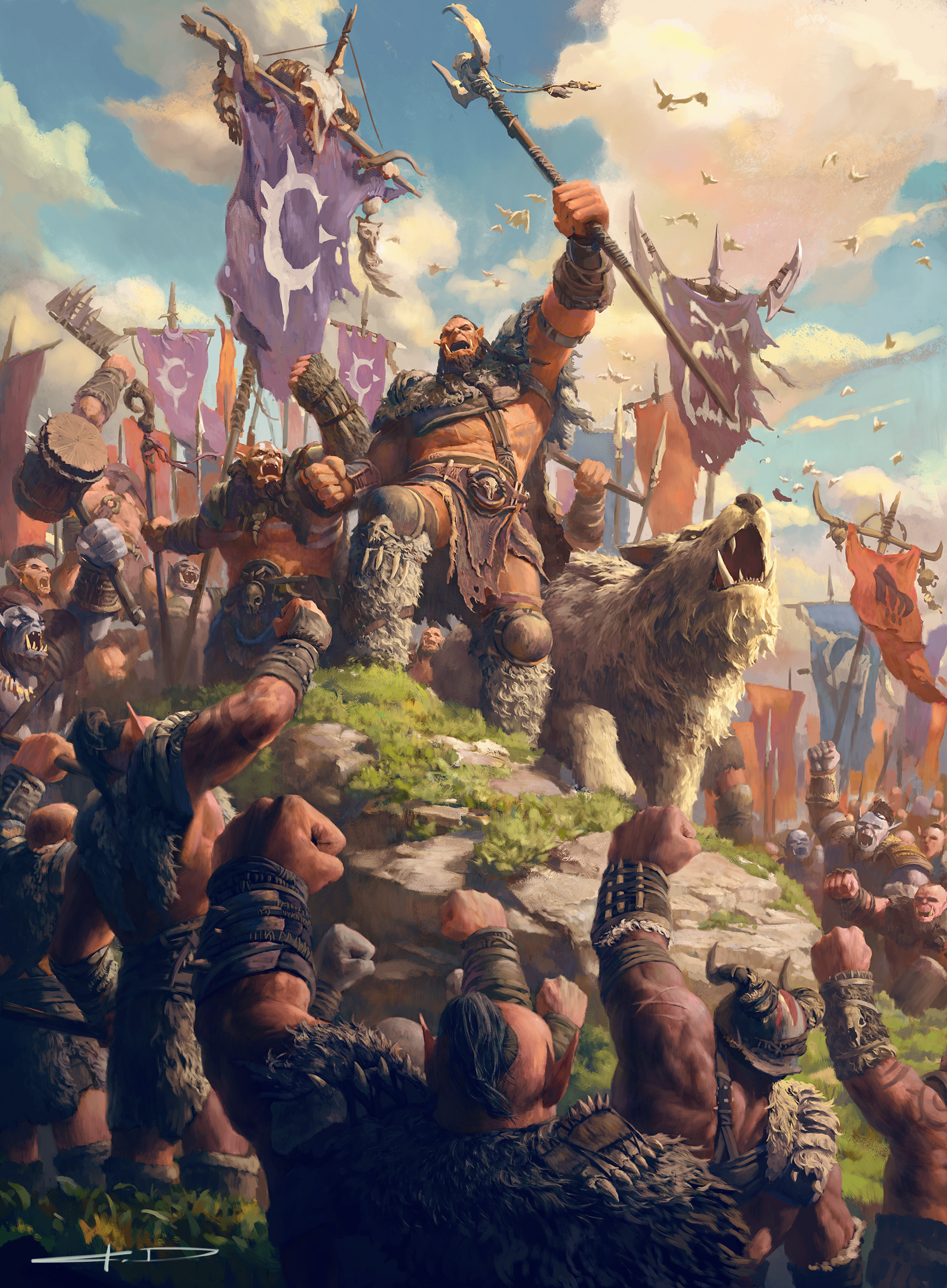
Orc Clans of the Eastern Cruth Mountains

art by Stanton Feng, source
The orcs of the Cruth Mountains have long been the most persistent and frequent enemies of the halflings of the Five Shires. As with orcs in other regions they band together in clans that consist of multiple tribes, with tribes being from 20 to 100 individuals and usually gathered into a single lair, whereas a clan may have tribes over quite an area and may include up to 1500 individuals. Clans typically have a central stronghold where the clan chief presides with his advisors and where tribal leaders deliver reports and receive orders. 

Here are some of the most significant orc tribes in the mountains north of Eastshire. This is by no means exhaustive. My homebrew rules for orc shaman and orc warrior NPCs can be found in this post

The Flaming Axes Clan

Headquarters: Shatterpick Mine (former dwarf tin mine)

Population & Fighting Strength: 450 (300 warriors)

Notable Troop Types: 

  • The Brethren of Gruumsh (elite unit of 2nd level orc warriors, numbering 25. They listen to their shaman Wazzugga the Blessed and are led by Malrax)
  • Headslammer’s Slammers: 10 ogres and 1 ogre leader sometimes hired as mercenaries. 

Notable NPCs: 

  • Wazzugga the Blessed: 9th level orc shaman. He is convinced he is receiving visions of war and conquest from the Great Orc Gruumsh himself. He is unhappy with his chief’s timid leadership
  • Zothog Hinslayer: 9th level orc warriors, leader of the Flaming Axes clan. He is naturally cautious and not attacking until victory is close to certain. He rides his pet cave bear Rendclaw into battle. He is getting fed up with his chief shaman’s rantings about launching immediate invasions of the Shires. 
  • Malrax of the Brethren of Gruumsh: 7th level orc warrior, wielder of the two-handed sword Fleshripper. He is a true believer of Gruumsh and is on Wazzugga’s side, and is considering how to take the chief’s throne, either by open challenge or by treachery.  

The Red Spears Clan

Headquarters: Overcliff Tower (crude orc-built tower on top of steep precipice)

Population & Fighting Strength: 600 (400 warriors) + 40 undead

Notable Troop Types: 

  • Varrath’s Dead Company (about 40 animated skeletons and zombies under Varrath Ghostspeaker’s command). 
  • Red Spears Spear-orcs. About half of the Orc warriors are equipped with spears and trained to set spears and fight in close formation.  

Notable NPCs:

  • Gornax the Brute: 10th level Orc Warrior with 18 Strength & 16 Constitution. Nominal leader of the Red Spears clan. He can defeat most living foes, even hill giants and trolls, but fears the supernatural and respects his shaman, nearly always listening to his shaman’s advice. 
  • Varrath Ghostspeaker: 11th level Orc Shaman. Varrath has visited the tomb of Shordoth and is more interested in the force of Chaos than the orc immortal Gruumsh. He is interested in necromancy and has acquired some unholy items that help him command the undead. He finds it easy to manipulate his chief, Gornax the Brute, and considers him a useful figurehead. 
  • Dalgosh: 6th level orc warrior. More intelligent than Gornax. Dalgosh has spoken with members of the Circle of Forgotten Secrets about hiring the Red Spear orcs as mercenaries. Varrath has not directly intervened but does not trust the human mages either.   

The Hill-Stomper Clan

Headquarters: Pikehead Camp (palisade & ditch on hill top with wooden buildings) not far from Darokin

Population & Fighting Strength: 650 (430 warriors) + 200 kobold slaves

Notable troop types: 

  • Kobold Slingers. Those kobolds trusted with weapons are generally used as scouts and skirmishers, equipped with slings and long daggers. Currently there are 40 of them. 
  • Worg Riders: About 15 of the most elite warriors (3rd level orc warriors) ride worgs into battle. 

Notable NPCs:

  • Eegorn Warhunter: 8th level orc warrior. Eegorn has begun a process rather unusual for orcs - trade with certain humans. Such humans are usually amoral and sometimes aligned to Chaos. This means that Eegorn can get better weapons and armour. He has recently got kobolds to mine gems from local seams and selling the gems to these humans for gold. 
  • Norstrol Swordbreaker: 6th level orc warrior. Leader of the largest tribe within the Hill-Stomper Clan, Norstrol is not interested in trade and thinks that any non-orcs should be attacked. However, he keeps being put back in his place by the chief, Eegorn. 
  • Barrvoss: 6th level orc shaman. Barrvoss is not sure about his chief’s new business ventures. As a follower of Gruumsh, Barrvoss believes in bloodshed and conquest, but he can also see the benefits of prosperity. He has had several non-violent interactions with chaos cultists and although he is not going to convert to their cause, he can see they can be useful allies. 

The Screaming Raven Clan

Headquarters: Raven Roost, a large natural cave complex halfway up a mountain, with many traps and pitfalls. However, deeper in the cave are a roost of Deep Glaurants who have started attacking the orcs

Population and fighting strength: 750 (500 warriors) + 50 kobold slaves. 

Notable Troop Types: 

  • Raven Archers (about 100 warriors from all the component tribes are trained with shortbows and arrows)
  • Raven Slayers: 15 experienced orc warriors (2nd level) with better than average dexterity (13 dex, +1 to hit with missiles and -1 to AC) armed with longbows.
  • Gannish’s Rockhurlers (30 orcs and kobolds trained and equipped with ballistae and onager catapults)

Notable NPCs:

  • Scarrag The Angry: 10th level orc warrior. Scarrag has found himself having to fight two separate opponents, the halflings of the shire and the Deep Glaurants who have taken a dislike to his orcs. 
  • Gannish the Clever: 7th level orc shaman. Gannish has spent time with the mysterious Modrigswerg (molder dwarves) of the Northern Reaches and has learned much about craftsmanship and contraptions from them. He now oversees the crews for several siege weapons and has organised the construction of traps guarding the clan's caves. 

The Hungerers

Headquarters: The Bone Pit, a large natural cave in the mountains with excavated extensions. Decorated with lots of bones. 

Population and Fighting Strength: 500 (340 warriors) + 20 ogres + 30 gnolls

Notable troop types: 
  • 40 orc berserkers (1st level orc warriors) & 20 battle ragers (2nd level orc warriors) who never check morale and never retreat, getting +1 to damage like human berserkers
  • Droog’s Hackers: 10 ogres + 1 ogre leader equipped with huge battleaxes (1d10+2 damage)

Notable NPCs
  • Hraak the Eyegouger: 7th level orc shaman. Hraak has spent time in the Altan Tepes along side The Ravening Maw cult and has picked up their beliefs and gruesome traditions and brought them over to his tribe in the Cruth Mountains. As far as orcs go he is very charismatic and has swayed most of the Hungerer clan to his newfound cult, even changing the name (formerly they were the Broken Boulder clan). Every full moon he organises a horrible feast where their slain enemies and other hapless victims are devoured. 
  • Marvorg: 6th level orc warrior. Marvorg is nominally the chief of the clan but he has conceded that now Hraak is running the show. But as a Gruumsh-following traditionalist, he is not comfortable with these new-fangled beliefs. Marvorg is uncomfortable with cannibalism: orcs eating humans, halflings and even kobolds is understandable, but orcs eating other orcs just seems wrong. He is considering leaving the Hungerers clan for a less radical one; Perhaps the Hill-Stompers will accept him?
  • Reshhee the One-Eyed: 5th level orc shaman. As a Gruumsh-believing traditionalist, Reshhee is not happy about Hraak and the Ravening Maw cult. She is also a female orc shaman which is not common, and is facing prejudice from other orcs who want to keep their females firmly under control. Unlike Marvorg she is not intending to leave but to kill Hraak and re-establish the old order of Gruumsh. 
  • Droog the Paunch: Ogre leader. Droog is not an orc, but he is Hraak’s strongest ally, and he and his ogre gang are more than happy to brutally suppress dissent within the clan and promptly devouring those slain. His epithet is as a result of his prodigious appetite. 

Saturday, 21 March 2026

Jungle Elves of Davania


source

Physical description: 

Jungle elves are darker skinned than elves of Brun and a bit shorter. Their hair is naturally black or dark brown but they sometimes either dye or bleach it. They tend to wear deep green leather and cotton as camouflage while hunting but can wear bright colours while relaxing or for ceremonies. Their equipment is nearly always made from materials found in the forest, so metal items are few and treasured.

Characters: 

Jungle Elf NPCs are mostly elven rangers (60%), some are spellswords (30%), and more elven druids than in Brun (10%) since jungle elves don’t have many metal items so forsaking metal equipment for druid spells is less of a sacrifice. 

The spellswords (standard elf class from B/X rules) are more like sorcerers than wizards - their magic seems more intuitive than learned and their spell preparation involves ritualistic chanting. 

Language is basically the same elvish as used in Brun but with an accent and some new words for things in the jungle. There are no game-rules changes between jungle elves and elves from other lands. 

Villages and Society

Jungle Elves often dwell in the extensive boughs and canopies of massive jungle trees where it is safer than on the ground. Such tree houses need to be at least 30ft up, away from the reach of the tallest dinosaurs. Their villages will typically consist of several large treehouses  connected by rope bridges. Village populations typically range from 50 to 200 elves. 

Villages known to the Thyatians in Cittinova include

  • Macaw Roost
  • Verdant Horizon
  • Gray Moon
  • Raptor Watch
  • Hollow Trunk
  • Mahogany Fort
  • Ivory Bow

The jungle elves of the Davanian jungle do not form a coherent nation but more of a network of villages, a loose coalition, with large stretches of harsh rainforests separating them. Conflict between elven villages is very rare - most of the time they are aware that other elves are the least of their problems and although contact between villages is infrequent, they also realise that other jungle elves are their most reliable allies. 

Source

 Jungle elves have a Neutral attitude towards foreigners including humans, perhaps a bit better towards foreign elves. They are wary of rakastas but most of the time they leave each other alone. Jungle elves are hostile towards minotaurs, bugbears and araneas who have always treated the elves as at best competition and at worst as food. 

Economy

Food is either hunted or gathered from the canopy - Davania does not lend itself to conventional agriculture. Nonetheless there are often favoured fruit trees that each village will guard, and since different jungle trees produce fruit or nuts at different times of the year, a range of selected trees should provide a village with enough food year round. Hunted animals are usually the smaller vertebrates such as iguanas, babirusa (treat as wild boar) and small deer (herd animals, 1HD). However, every now and then the elves will take on a more dangerous prey such as the large herbivorous dinosaurs such as stegosaurus or brontosaurus (see X1: Isle of Dread for stats). Such a kill can feed a village for a week, unless the elves are driven off from the carcass by a large scavenging dinosaur such as an Allosaurus or a pack of Deinonychuses

Trading is generally a matter of barter. Trade between elven villages is infrequent usually because of the dangers of travelling through the jungle from one village to another, but some trades are worth the risk. Recently the elves around the Thyatian settlements have started trade with the humans there. Again they generally barter and often are not interested in silver or gold. The elves provide jungle fruits, high quality longbows, dinosaur hide and other goods gathered from the forest, and in return they enjoy the range of fabrics and clothing the Thyatians offer, and also metal weapons which are more durable and stay sharper than the bone and hardwood weapons made by the elves. 


Tuesday, 16 December 2025

Orcs in the Known World

Orcs are second only to humans as the most populous humanoids of the Known World. They have made their homes wherever they can, including across other regions and continents of Mystara, usually in places that humans have decided not to colonise. Mountains, dense forests, caves and swamps are all potential homes for orcs.  

Image by Sam Wood from
D&D 3E Monster Manual

Alignment and outlook

Orcs are nearly always chaotic in alignment. The reason behind this is not clear - is it nature or nurture? If a baby orc was taken from its tribe and raised in human society, how would the orc turn out, and what alignment of cosmic forces would it associate with? The results are few and far between, but they do indicate that it is a combination of tribal ways and deeply embedded instincts. Those orcs raised in civilised places are nearly always aggressive and short-tempered, and often respecting might more than morals - the pecking order is how they fit into society. However, these civilised orcs are also able to curb their wanton violence, follow the rules and can often become useful members of society as long as they have some authority keeping an eye on them. Left to their own devices they have a habit of reverting to chaotic behaviours. 

Orcs are nearly always tribal rather than completely feral - they naturally gather into groups and although within the group there is a hierarchy enforced by occasional violence, there is also a certain tribal cohesion and loyalty. Reading and writing is rare, and usually taught by other races, and even then it is only some of the more intelligent orcs that become literate - often chiefs, shamans and those with potential for leadership. Oral tradition is the mainstay of orcish culture - stories and verbal histories are how orcs understand their place in the world. And it is also how they remind each other of how orcs have been wronged and cheated out of their rightful place as the masters of Mystara. A bit like within a tribe, orcs see different races as a pecking order, a hierarchy of strength. Bugbears and ogres are bigger and tougher individually but not as numerous, while goblins and kobolds are small runts to be kicked and bossed around. 

There are some races whose history with the orcs is too bitter, too unjust, to be tolerated. Elves and dwarves are at the top of this list and will usually be attacked on sight, but humans, gnomes and halflings are often viewed as no better, and subject to a similar hatred and aggression from the orcs. The orcs of the Cruth Mountains for example have a mixed view of halflings - sometimes as soft and easy targets to be enslaved and bullied, but at other times (particularly when the hin fight back) as vermin to be exterminated without mercy. 

It is fortunate that orcs are not good at getting together into a large coherent nation - they are so numerous they would threaten and probably overrun any current nation. One example of orcs actually gathering in strength was the recent attack on Dukes Road Keep, which nearly fell to the orcish horde. As it is, they are so disparate and disorganised that many adventurers start off their careers taking on small bands of orcs that are threatening trade caravans or farmsteads. Nonetheless, their nearly continual presence on the borders of civilization means that all nations need some sort of defence force to protect their citizens from orcish predation. Even if that nation is involved in all-out war with another realm, they would have to be truly desperate or singleminded to strip away the militia defending villages and towns. Orcs are the footsoldiers of Chaos, the ever-present threat that seeks to destroy civilization, the ravening horde of evil.


Ravening Horde by Chris Achilleos

Orc Regions of the Known World

Note that few of these are coherent nations - many are just gatherings of tribes who are as likely to attack each other as to fight other races. No populations are given as their numbers fluctuate according to food supply and success or failure in battle. Besides, it allows the DM to muster as many orcs as his adventure requires. This collection of regions is not complete, and there are plenty of other places orcs might be found. The ones listed here are generally in mountainous terrain and mountains are favoured by orcs because humans, their greatest rivals, are less likely to settle there, but as mentioned above, orcs can live in all sorts of environments. 

The Black Peaks: Between the Republic of Darokin to the north and Grand Duchy of Karameikos to the south, the Black Peaks are part of the group of mountain ranges that run through the Known World, connecting to the Altan Tepes to the east and Cruth mountains to the west. The orcs here are dangerously restless and often fall under the sway of powerful creatures such as red dragons, hill giants and malevolent wizards. Their most recent display of strength was the attack on the Duke’s Road Keep. Where the Black peaks join the Altan Tepes there is Castellan Keep and the Caves of Chaos. Some of the orcs here have thrown their lot in with the Cult of Chaos, though others are more reticent and stay independent. 

The Cruth Mountains: This range sits between southern Darokin and the Five Shires, and is really an extension of the Black Peaks. The orcs here have been a major threat to the Hin, and several times in history have conquered the Five Shires, enslaving the halflings there. Although they have been beaten back, they nonetheless have numerous tribes in the Cruth Mountains ready for another opportunity to attack the small folk. Interestingly these orcs are not particularly interested in Darokin to the north, perhaps seeing the humans as tougher or maybe not as profitable. 

The Orclands: To the northeast of Darokin, north of Selenica and Alfheim, there is the Dwarfgate Mountains, named because they link Darokin to the dwarf land of Rockhome. However, this region is more colloquially known as the Orclands because of the large number of orcs and other humanoids that dominate here. It is fair to say that the Darokin Army has lost strategic control of the land between the mountains and Alfheim to the orcs. Deep in these mountains is a stronghold of Chaos called Derothgar. Although dominated by chaotic humans, nonetheless Derothgar exerts a powerful influence on the surrounding orc tribes, offering bribes or punishment as the leaders in Derothgar see fit. 

The Broken Lands: This is the main realm of the orcs, ruled by the great king Thar who manages to hold together various humanoid populations in what is known as the Great Horde. There are 3 main groups of orc here, Orcus Rex, Yellow Orkia (the Akkila Khanate) and Red Orcland (Wogaria). The orcs here believe they are the central hub of the orc race. Most other orcs beyond the Broken Lands are not even aware the Great Horde exists, let alone paying attention to it. 

Norwold: Orcs dwell in the far north of Brun and compete with other arctic and subarctic races, fighting with elves, lupins and human colonists. They are usually in independent tribes but some have fallen under the sway of the Arvorians, acting as foot soldiers, servants and labourers. Although not quite the massive threat faced by some nations further south, that may be because in Norwold there are even greater monstrous predators such as white dragons and frost giants (not to mention the Arvorians) that orcs seem secondary in comparison. 

Orc Encounters and game statistics

The standard orc given in the Basic Rules is still the default and if there is no particular reason why they should be different, then those are the stats used. There may well be variations, particularly if the orcs are given pole-arms or missile weapons (bows or crossbows).  for example, from the adventure Berresford's Ruined Tower we have 

Crossbow Orc: AC 7, Mv 90ft, HD 1, hp 4 each, THAC0 19, Att 1 crossbow bolt (range 80/160/240) for 1d6 or hand axe (melee) for 1d6, Save F1, Ml 7, Align C, 10 XP, equipment: leather armour, light crossbow, 10 bolts, hand axe, 10sp

Tougher leaders can be done using the stats in the Basic Rules for leaders and chiefs. However, I prefer to use my homebrew rules for humanoid NPCs. Orc shamans likewise use these new rules. If I am using multiple minor orc leaders in an adventure I may well give them a standard stat block though this is usually based on them being 2nd level orc warriors. For example from the adventure Iseldek's Drop: 

Orc Veteran: AC 6, Move 120ft, HD 2, hp 10, THAC0 18, Att 1 weapon for 1d6+1, Save F2, Ml 8, Align C, equipment: Leather armour, shield, hand-axe, 2d6+7sp 

I know that both Gaz10 The Orcs of Thar and the Rules Cyclopedia have rules for Wiccans (also known as witch-doctors) the magic users of the humanoids. However, I tend not to use Wiccans as studying arcane magic does not really fit with my idea of orcs, and you probably won’t see them on this blog. 

Friday, 5 December 2025

The Selenica Co-operative


source

The Selenica Co-operative is a network of merchants who have agreed to work together to stay in business and protect themselves and their goods. As the name suggests, the group is centred on Selenica in eastern Darokin and as such is on a crossroads between various nations including Karameikos, the Five Shires, Ylaruam and Rockhome. The merchants are all travelling traders, moving goods and money around between cities and countries, and generally do not maintain static shops, though they often trade with those that do. 

The four main functions of the cooperative are

  1. Mutual defence. Members of the co-operative will often band together into large and well-guarded caravans when travelling to the same destination, or at least travelling the same road for a distance. Given how dangerous some of the mountain passes and hills can be, this is a sensible precaution. Bandits and monsters are less likely to raid a large caravan than a sole trader. 
  2. Trade and financial information. There is a general understanding in the co-operative that news about trade and economics is important for finding the best deals and avoiding difficulties. As such members of the cooperative will tell each other about the ebb and flow of commodities, the activities of rivals who might compete with the cooperative, and laws and taxes in the places the cooperative might do business.
  3. Avoiding competing with each other. Merchants don't like cutting prices simply because somebody else is selling similar wares cheaper. Although there is some disagreement and arguing within the co-operative, it is considered a safe place to sort out potential rivalry and help merchants find alternative markets. 
  4. Loans at reasonable rates of interest. Admitedly what counts as reasonable can be subjective, but as long as both lender and borrower are in agreement, this has kept various merchants solvent and in business when they might otherwise have been ruined by the ups and downs of life as a travelling merchant.
Darokin is a land famous for its merchants including the great merchant houses that employ dozens or even hundreds of workers, and a head of the house overseeing all of its business, with junior merchants often acting under instruction. The Selenica Co-operative is far less hierarchical, and all members are at least in principle equals (though richer members are more equal than others). Each merchant in the co-operative is considered an independent trader looking after their own business and making their own deals. Most members are from Darokin but in the fifty years since it started in Selenica, more merchants from other places have joined, including:
  • Ylaruam. This includes Parsa and Ylaruam City. The co-operative avoids Abbashan as they have had bad experiences with the theocracy there. In Cinsa-Men-Noo there is Maerell Dhambor, who is not a member but has had friendly dealings with the co-operative. 
  • Karameikos, including Specularum, Kelvin and Penhaligon. Specularum is also a trading port for members who wish to trade further across the sea. In Penhaligon there are two members - Beltorphix and Maddrasso.  
  • Rockhome. Though there are great opportunities to trade between Darokin and Rockhome, currently the only safe route through the mountains is into Ylaruam’s Parsa and then north through the Ust-Urt valley and through Karrak Castle. Nonetheless, merchants of the co-operative consider this long way round to still be worthwhile and in Greenston there is Meribidus Silverbrow   
  • Athenos in the south of Darokin is the nation’s main port, and as such many merchants will either sell to foreign merchants here or else hire ships to trade overseas. 
  • Corunglain in the north of Darokin is both a large city of customers and also the jumping off point for merchant caravans braving the dangerous routes to Glantri and Ethengar. There are several members of the co-operative based here. The mutual defense clause of membership is frequently invoked and the co-operative makes sure that caravans heading north into the Broken Lands are as well protected as they can afford to be. 
  • Ierendi City. Note that the members are quite cautious about trading here - the city itself may be safe but the surrounding seas are patrolled by pirates from Vlaad. No sane member of the co-operative will trade actually in one of Ierendi’s pirate ports. 
  • Thyatis City and Kerendas. The Empire of Thyatis is a great opportunity for trade, and the co-operative has several merchants based there. Goods will often be loaded onto a ship at Specularum and make the short trip past Minrothad. 
  • No direct trade with Minrothad City occurs, primarily because of the Minrothad Guilds’ policies and insistence on maintaining a near-monopoly in their homeland. But sometimes Minrothad merchants will trade with members of the co-operative either in Kerendas or Specularum. 

The Selenica Co-operative is quite open-minded about its membership. A certain level of trustworthiness is required, so no theft from or assaulting other members is tolerated. Fraud and getting into trouble with law enforcement is likewise frowned on, and slandering other merchants (especially those within the co-operative) is discouraged. These basic rules mean that most of the cooperative are Lawful or Neutral in alignment - Chaotic types tend not to fit into the co-operative’s ethos. However, a range of races and nationalities are represented, and female merchants are welcome as well. This is primarily a matter of professionalism - the ability to do business and make money is the most respected attribute. 

Although not hierarchical, the co-operative does have leadership of sorts in the form of the Board of Directors, who are the 9 most senior or wealthy merchants in the co-operative who are asked to set the rules, welcome or expel members and deal with disputes between members. Although there is a certain amount of political manoeuvring both by those on the board and those seeking to ascend to the board, it does generally work fairly well, partly because of the ever present competition of the big merchant houses.  Those on the board who are particularly selfish, incompetent or greedy will find themselves outvoted on decisions and possibly voted off the board if the other eight directors would rather have someone different. Nonetheless, the board has run into trouble when one or more directors have been magically influenced (usually involving Charm or Suggestion spells) and there was one period when a rival major merchant houses was using a mage to scry on the board of directors meetings. 


Friday, 14 November 2025

The Subversion of Clan Rungorth

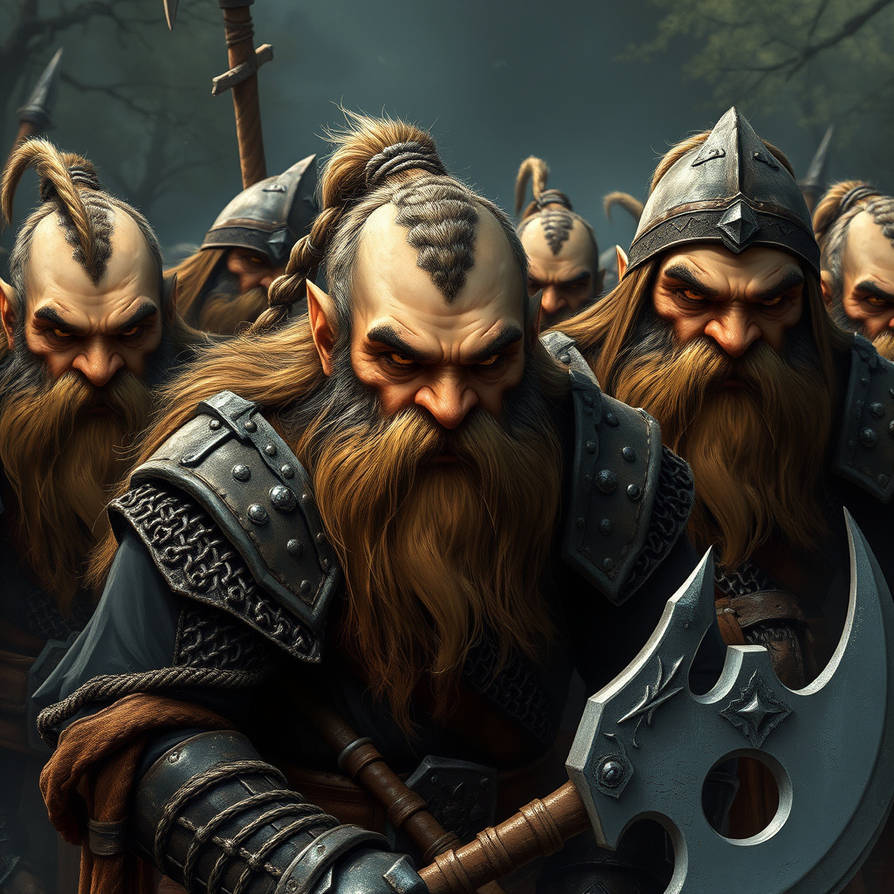
Of the seven great clans of Rockhome, Clan Hurwarf is the most isolationist, distrusting other nations and non-dwarves. Most of the time this is kept in check by the rest of dwarven society welcoming foreign traders and diplomats, but every now and then it can spiral out of control into paranoid madness.  

source

Clan Rungorth is a minor clan that has split off from Clan Hurwarf because Clan Hurwarf was not being isolationist enough.  It was always on the periphery of dwarven society, with its stronghold (Torrag Ikkorn)  in the southern mountains, but in the last fifty years it has fallen under the sway of an evil dwarf cleric who has fallen from grace and is now in league with the powers of Chaos. This dwarf, Multheid the Pure, has whipped Clan Rungorth into a frenzy of paranoia, and has denounced the rest of dwarven society as being corrupt and decadent as a result of prolonged contact with such wicked and despicable races such as humans, halflings, gnomes and worst of all, elves. Now the clan is hostile to any non-dwarf, and even other dwarves from outside the clan are treated with deep suspicion.  

Multheid's most loyal followers call themselves The Protectors of the Pure, and wear black cloaks and tabards, and have shaved their heads (though not their beards). These Protectors of the Pure are believed to number about 20 and include a number of very dangerous and experienced dwarf warriors. They act as Multheid's enforcers within the clan. The Protectors of the Pure trust Multheid absolutely and think that Rockhome as a society and nation is going to collapse and Rungorth will be the last bastion of true dwarves. Draxor Tunnelwalker is the leader of the Protectors of the Pure and is Multheid’s right-hand dwarf - he is both fanatically loyal and a brutal killer. 

However, there are others in the clan who have their doubts, but they have learned to their bitter cost to keep quiet and keep their heads down, as the most outspoken skeptics have been executed on Multheid’s orders. There is a small network who call themselves the Unbelievers but they are in no position to make any effective change, but should outsiders challenge Multheid’s grip on Rungorth, there will be some who will help. To compound the situation the clan leader, Gurnor Ironhammer, believes Multheid and has all but ceded rulership to the chaotic cleric. This seems to be more a lack of leadership and backbone rather than deliberate handing over of authority.  

Clan Rungorth has one major stronghold, Torrag Ikkorn, with 230 dwarves, and several smaller outposts with about 50 dwarves in each, for a total of 450 dwarves. They strive fervently to be self-sufficient in everything and assume anything from the outside world (traded, given or even stolen) is somehow tainted. This has resulted in food shortages and even some cases of malnutrition in the clan, but any food from outside, especially from those weird Wyrwarf clan farmers, is assumed to be poisoned or drugged or diseased. 

The clan leader of Hurwarf (Lord Duric) wants to reestablish contact with Clan Rungorth, and hopefully ascertain the situation. He insists that any party doing so should be entirely composed of dwarves - he believes non-dwarves would worsen the situation. He would like any problems to be resolved as diplomatically as possible, without bloodshed. However, he is worried about a hostile reception as one messenger he sent has not returned and he fears dark forces may be at work. 

Multheid the Pure has some sort of end-game but it is not clear what it is. Perhaps he just wants rulership over a clan. It is possible that he wants to establish a long-term cult of chaos among the dwarves of Rockhome though some would say there are better candidates, particularly among the Underside of Dengar city, and better ideologies (the greed for gold and the militarism in other clans could easily be taken too far).  It is also possible that he genuinely believes what he is preaching, but if he is worried about what is happening to dwarven society, then allying with the forces of Chaos is a mad way of countering this. And this may be the truth of the matter - Multheid is mad, and is preaching his insanity to Clan Rungorth, many members of whom were already nearly as paranoid as him. His fall into the clutches of Chaos may be because lawful and neutral immortals would not accept someone so divisive and hateful as their servant and representative among mortals, but to the darker powers of Chaos that thrive on fear, hostility and madness Multheid is a useful tool. 

Multheid has had an underground extension to Torrag Ikkorn excavated, where he now resides and works, creating an army of undead (mostly reanimated dwarf corpses but any suitable humanoid body will suffice). Other dwarves, even the leader Gurnor Ironhammer, are not permitted here and it seems he has done a good job of hiding his true loyalties from Clan Rungorth. It is possible that exposing Multheid’s Chaos worship and his desecration of dwarf corpses will shock enough clan members that a sizeable rebellion against Multheid will rise up. Of course, his fanatical dwarf followers, particularly the Protectors of the Pure, will rationalise and excuse these revelations, saying that it is all necessary to protect the clan and that strange alliances (even with the forces of Chaos) are sometimes needed when the enemy (everybody else in Rockhome) is overwhelming. Which way the clan leader Ironhammer will swing could prove crucial: for him, the reanimation of dwarf bodies as zombies would be the breaking point. And if the clan chief turns against Multheid, other dwarves may do likewise, perhaps out of traditional loyalty to the clan leader or perhaps they will reconsider what is really going on in the clan. 

Just to complicate matters, the Rusty Razor tribe of goblins is causing trouble in the area, and taking advantage of Clan Rungorth's internal problems to seize territory, establish hideouts and raid caravans and small settlements. Multheid claims that these goblins are being hired and encouraged by the corrupt and decadent dwarves of Dengar, who are too cowardly and coniving to confront Clan Rungorth directly. 

A little further away is another minor clan, Clan Dursten, who are allied with Clan Everast. These dwarves are a lot more sane and reasonable, and have seen more of Rungorth's descent into madness than most other outsiders. Indeed, until about a year ago there was still some trade and military cooperation between Dursten and Rungorth but relations deteriorated when Clan Dursten's leader, Sargenford the Gnollslicer, denounced Multheid and his vile views on the rest of Rockhome's dwarves. At this point all friendly contact between Dursten and Rungorth ceased, and Clan Dursten has had to deal with a resurgent goblin menace (particularly the Rusty Razor tribe) on their own. Sargenford will listen to those sent to deal with Clan Rungorth, particularly if they are polite and reasonable. He hates and despises Multheid and would like to see him removed, but he does not want bloodshed of other dwarves - he feels that Clan Rungorth has fallen under the evil cleric’s spell and that if Multheid is removed the rest of the clan will come to their senses. 

Notable NPCs

Multheid the Pure

Str 14, Int 14, Wis 16, Dex 10, Con 16, Cha 15
AC 2, HD DwC7, hp 40, Move 60ft, THAC0 15, Att 1 mace for 1d6+2 or 1 spell, Save C7, Ml 11, Align C,
Equipment: Plate Mail, Shield, Mace +1, unholy symbol, potion of invisibility, potion of gaseous form 
Spells: (3/2/2) Cure Light Wounds, Darkness, Rage, Aura of Shadows, Bless, Cause Disease, Paranoia

Gurnor Ironhammer

Str 16, Int 8, Wis 8, Dex 12, Con 14, Cha 13
AC 1, HD Dw7, hp 41, Move 60ft, THAC0 11, Att 1 axe for 1d6+4,  Save Dw7, Ml 10, Align N 
Equipment: Banded Armour +1, Shield +1, Hand Axe +2 +4 vs giants, trolls & ogres, potion of extra-healing

Draxor Tunnelwalker

Str 16, Int 9, Wis 10, Dex 10, Con 14, Cha 15
AC 2, HD Dw6, hp 27, Move 60ft, THAC0 13, Att 1 battleaxe for 1d8+3, Save Dw6, Ml 12, Align C
Equipment: Plate Mail +1, Battleaxe +1, 3 daggers

Sargenford the Gnollslicer

Str 13, Int 12, Wis 10, Dex 10, Con 14, Cha 16
AC 1, HD Dw7, hp 46, Move 60ft, THAC0 12, Att 1 battleaxe for 1d8+3, save Dw7, Ml 10, Align L
Equipment: Plate Mail +2, Battleaxe +2, Amulet of Lie Detection

Friday, 31 October 2025

Tornishal’s Cobras

source

Tornishal’s Cobras are an organisation led by evil wizards that is Alphatian in origin but has spread across much of Mystara. Note that they are not necessarily Chaotic, although some are, and the Cobras as a whole are not involved in the Cult of Chaos, although individuals may dabble in it. The guiding philosophy behind Tornishal’s Cobras is that wizards are the best fit to rule. A combination of magical might and intelligence make them not just suitable but the clear candidates for ruling nations and even the world. Some have even stated that they have a natural right to govern lesser people. 

The senior members, the management, are all human mages and many of them are Alphatian by nationality and ethnicity. They are known as the Cobras. They can recruit and hire anyone else, but those of other races and classes will not be brought into the inner circle and become cobras. 

They are currently focused on gaining power and followers in Alphatia, and here they are keeping a low profile as the Imperial Court and the various Kingdoms that currently rule Alphatia would not take kindly to the cobras’ ambitions. Ideally they would like to recruit and convert those already in power to their cause. Conveniently many of these are already human wizards, so offering them the position of a Cobra is simple. Others may need less generous methods - either making them easy to manipulate (usually through mind-controlling magic but sometimes blackmail) or arranging accidents or disappearances then making sure a more suitable successor takes over. 

Zzonga Fruit

Zzonga fruit is a mind-addling fruit that can bring both bliss and oblivion and has become a serious problem in Alphatia, especially among the ruling classes and mages.  Cobras are not permitted to eat it or fall under its influence in other ways - the cobras need to be clear-minded and sharp-witted. In fact many Cobras and others under their command will avoid alcohol (at least in large amounts) and any other recreational mood-altering substances - Zzonga may be the most prominent threat to a wizard’s clarity and effectiveness but not the only one.  They are well aware that their minds are their greatest assets, and it is a despicable waste of talent to blot out their minds for a few hours of mental numbness. 

Tornishal’s Cobras will use Zzonga fruit in different ways. 

Firstly it is a very in demand product. Cobras and their teams can make quite a lot of gold and silver by selling it to those outside the organisation, usually direct to the consumer but sometimes to other distributors. 

Secondly it can be used to gradually incapacitate rivals and those wizards who are not interested in joining. Those who are wary of the fruit itself may be introduced to it as a fine liqueur, tasting rather like peach schnapps or cherry brandy. Even if they do not develop the addiction, they are unable to think straight and will have difficulty casting spells for at least several hours

Thirdly some of these will become really quite addicted to their new-found favourite drink. Once they really want more and more, the Cobra can start either charging more per bottle or, if the target is in a position of power, start asking for favours and concessions in return for a steady supply of Zzonga liqueur. It can become a powerful form of leverage.  

History of Tornishal’s Cobras

Tornishal himself was a powerful wizard who lived about a hundred years ago in Sundsvall. He was outraged when Thyatis humiliated Alphatia despite what should have been overwhelming magical might. He then decided that most Alphatian mages and rulers were damn fools who did not have a clue about running their own wizard towers let alone a continent-spanning empire. He would show them how to do it. 

He found himself joining a small circle of ambitious wizards called The Order of the Cobra because they fancied themselves cold, ruthless and quick to strike. However, their leader, one Ostorius, was heavily into Zzonga fruit, and a lot of the time he did not bother turning up to the weekly meetings, and when he did he was not always coherent, and certainly not sharp-minded. Thus when Ostorius’ pet amber golem turned on its master  for some unknown reason, Tornishal quickly stepped into the leader’s seat, changed the circle’s name to Tornishal’s Cobras and announced that none of his members should use Zzonga fruit and should be careful of alcohol and other psychoactive substances.

Tornishal and many of his underlings considered themselves patriots, though given their extreme views on Alphatia, other nations and the role of wizards, perhaps authoritarian nationalist would be a better description. They don’t want to undermine or destroy Alphatia - far from it. They want Alphatia to prove itself to be the ultimate power in Mystara, capable of crushing upstart thugs like Thyatis with ease.  But that’s not happening with the current soft, weak-willed and corrupt regime at the top of Alphatia. But with Tornishal’s Cobras in charge then the world domination can begin in earnest. Even wizards on Zzonga fruit fits into their philosophy, with a certain survival of the fittest. Anyone weak and foolish enough to indulge in Zzonga fruit is a liability that the Cobras and Alphatia as a whole can do without. 

Current Cobra Cells

Sundsvall: This team has to tread the most carefully as they are among other wizards who are used to ambitious politicking and plotting. Currently they are simply making money in the Zzonga fruit trade, particularly targetting those who do not agree with Tornishal’s philosophy.  

Shiell: The Cobras have a cell of 4 Cobras and another 20 henchmen. They have cornered the Zzonga fruit market in the city. However, one or two city officials have the temerity to refuse the Cobras bribes, and have even started to investigate the group. Violence or quiet assassination may be required to remove these troublesome public servants. 

Alpha: This team in the capital of Norwold looks with contempt on many of the adventurers trying to claim their own realms under the umbrella of fealty to Alpha. Even the so-called magic users trying to stake a claim in the northern wilderness really don’t have a clue. But the Cobras have had success in placing their operatives within these minor realms as well as within the capital city. In one notable success a cobra has joined the inner circle of one of these minor realms as the court mage and now has the ear of the stupid fighter from Ostland who claims rulership.  

Thyatis City: This is the most dangerous place to be assigned and several cobras have been caught and killed by Thyatian authorities while their so-called operatives and agents have shown to be distinctly unreliable and occasionally planted moles. And it might be a cultural difference but there is far less appetite for Zzonga fruit in Thyatis, meaning that a major source of money and influence is not working. Some senior cobras have suggested pulling out of Thyatis altogether, while some say just keep one or two members there to keep an eye on Alphatia’s greatest enemy.  

Ierendi: Based in Vlaad, a cell of three Cobras and their band of henchmen coordinate with pirates, smugglers and dubious merchants to facilitate the sale of Zzonga fruit both within the Kingdom of Ierendi (see the Sordid Rhinoceros) and in the wider region. One of these cobras has a hand in the local slave trade as well. Some of the cynicism of the cities has rubbed off on them - they are less interested in being the vanguard of Alphatian superiority and more into acquiring money and influence.  

Specularum: As a relatively neutral place with regards to the struggles of Alphatia against Thyatis, this has become a safe haven from which to spy on Thyatis. As such there is a single Cobra here in the city but he coordinates a range of contacts who visit Thyatis on a regular basis. Similar to Thyatis City, there is not much appetite for Zzonga fruit here. The cobra based here has made friends and contacts within the Magician’s Guild though they do not seem to know who he really is or why he is befriending them. 

Corunglain: this city on the northern border of Darokin has a trio of Cobras. They keep a low profile and are really there to keep an eye on both Darokin and Glantri. Glantri, like Thyatis, has proved difficult and dangerous to infiltrate, with several members being caught and killed. Thus in the same way that Specularum is a safe place to send agents into Thyatis, Corunglain is a safe(ish) place from which to send operatives into Glantri.  The cobras reckon there is definitely an appetite for Zzonga fruit in Glantri but the vigilance that borders on paranoia within Glantri makes setting up a network there nigh-on impossible. However, given that Glantri is second most rival to Alphatia, investigating and weakening them is a high priority for the whole organisation. 


Saturday, 19 July 2025

The Troupe in Yellow


Art by Nottsuo, source
This post has been inspired by R W Chambers' story, The King in Yellow, which involves a fictional book that causes obsession and insanity in those who read it. This is my attempt to bring that idea into Mystara. 

The Troupe

Wandering around the Known World, particularly Darokin, Karameikos, Ierendi and Thyatis, there is a troupe of theatrical performers dressed in predominantly yellow costumes who call themselves the Troupe in Yellow. Although they are capable of a wide repertoire of performances, they do have one special performance, a play called The King in Yellow, that they only put on before they leave town. Those who watch the play are never the same again, and the Troupe in Yellow will pack up and leave before the authorities realise what has happened. 

The play is not just a performance - it is an incantation that places a most malevolent charm on those who watch it. Those of Lawful and Neutral alignment will suffer terrible fears and nightmares and will often go mad (save vs Spells to avoid insanity). Those of Chaotic alignment wil become fascinated, obssessed even, with the play, its characters and its meaning. They want to know more about the King in Yellow and get to know him, even serve him if they can (save vs spells, but this time to avoid a compulsion similar to a Geas spell). Thus the seeds of a cult of Chaos are planted every time the Troupe in Yellow performs this fiendish play. 

The Troupe in Yellow is currently 20 strong, with 5 performers and various followers assisting behind the scenes (what would today be called road crew). They travel in five caravans drawn by horses of bad temperment - the villagers who are visited quickly learn to leave the horses alone. The senior members are:

  • Valderion: human male, 14th level cleric, align Chaotic
    Str 10, Int 16, Wis 17, Dex 10, Con 14, Cha 16
    Valderion is tall, handsome, mysterious and clearly the leader of the troupe. Though usually dead calm, there are moments when provoked when he turns into a raging maniac. 
  • Camilla: human female, 11th level cleric, align Chaotic
    Str 11, Int 14, Wis 18, Dex 12, Con 10, Cha 17
    Camilla is Valderion's consort and also  the chief scribe: when not performing or practicing, she is carefully making copies of the book to pass onto willing disciples. She genuinely believes she is actually the reincarnation of the character she plays. 
  • Cassilda: human female, 10th level fighter, align Chaotic
    Str 16, Int 14, Wis 12, Dex 15, Con 14, Cha 15
    Cassilda is young, blonde and apparently naive, but is actually a master manipulator and deceiver, as well as being lethal in a sword fight. 
  • Castaigne: human male, 12th level mage, align Chaotic
    Str 12, Int 16, Wis 12, Dex 10, Con 15, Cha 14
    Castaigne is Valderion's understudy and personal assistant. He has various strange delusions that he usually keeps hidden from even the other performers, but he believes he is next in line to the Empire of Thyatis. 
  • Mr Wilde: Male Gnome, 8th level Trickster, align Chaotic
    Str 10, Int 18, Wis 14, Dex 16, Con 13, Cha 6
    An ugly and malformed gnome, Mr Wilde is in charge of the road crew. He keeps an angry black cat that seems to attack everyone (including Mr Wilde). 

These senior members all act their parts on stage, and during the final performance of their stay it is Valderion who takes the role of the King in Yellow and thus is key to the malevolent sorcery that the performance conjures. The crew behind the stage are all capable at handling themselves (all minimum of 4th level, various character classes and races) and are all willing followers of the King in Yellow. 

The Troupe has attracted the attention of the authorities as survivors of their visits sane enough to give coherent accounts have been able to alert others of the troupe and what it is capable of. The troupe and its play is now outlawed in Karameikos, Thyatis and Ylaruam but communicating the warnings and descriptions is not easy. Thus the troupe will avoid the large cities where they may be recognised and caught and instead stick to rural areas and small villages where ignorance and isolation allows them to move freely. 

The Book of the King in Yellow

Nobody is entirely sure where the book of the King in Yellow came from or when or by whom it was written. Some say it was created by a Prince of Chaos, while others of more erudite learning say it may have come from the far north in Norwold, perhaps from the Arvorians who are twisted enough that they would enjoy that sort of play. Although the book and the play do not specifically describe or promote the worship of Chaos, it still reeks of corruption and horror. The book is as outlawed as the Troupe in Yellow

Valderion, the leader of the troupe, holds the master original of the book. This contains the play script itself as well as various essays on the background to the play. It is possible to create copies in a similar method to how mages can copy spells from one spellbook into another. It is laborious and prone to error but it has been done enough times that the troupe has sometimes given a copy to enthusiastic converts to the court of the King in Yellow. There is known to be a copy in the hands of a powerful mage in Hattias, southern Thyatis and another was believed to have travelled to Vlaad in Ierendi. An individual who reads the book will suffer the same consequences as those who have watched the Troupe in Yellow perform the play, thus even copies of the damned book will cause madness and obsession. Those who try to perform the play from a copy will be far less effective than the Troupe in Yellow but some of the dweomer can still be conjured - all the audience still suffer the same effects but with +4 bonus to their saving throws to avoid the madness and compulsion.  

In the back of the book are a series of essays that describe the lost city of Carcosa, where the play is set. It will quickly become clear from the multiple moons and dark stars (whatever those might be) that this Carcosa is far in time and distance from Mystara. And yet the writer insists they have visited it and beheld its terrifying majesty. Furthermore they say that the King in Yellow still holds court after millenia of rule. Whether the King in Yellow is a title passed down to successors or perhaps is a being that does not age as mortals do is unclear. 

One powerful cleric of the forces of Law (Juliannus of Lucinius) who read a seized copy and somehow managed to avoid the worst effects came to the conclusion that the original book was written by the King in Yellow himself as a ploy to gather followers and disrupt his foes. Juliannus also postulated that the King in Yellow is a powerful supernatural being of utter Chaos, similar to or perhaps one of the dreadful beings worshipped by the Arvorians of Norwold. Before he died after a fall from the top of his temple (some say an accident, others say suicide) Juliannus insisted that a taskforce of lawful clerics should be established to counteract this pernicious and curse-inflicting book and those who promote and recite it. He saw it as a plague, a moral infection that would incapacitate or subvert all those who came into contact with the main vectors - the Troupe in Yellow.  Only the Order of the Amethyst Rose paid any attention to Juliannus while he was still alive, and we all know what happened to them. 

Sunday, 6 April 2025

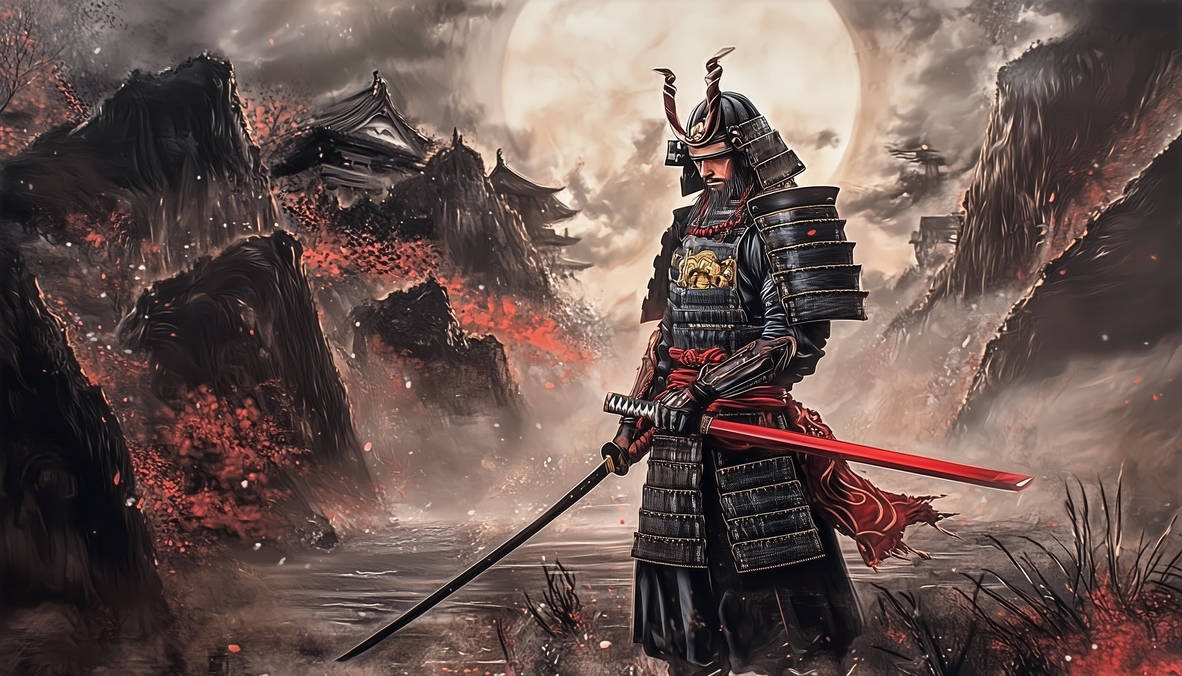
Noble Houses of the Pearl Islands

Art by TaliusDesignssource

The Great Houses

There are five great noble houses of the Pearl Islands, whose leaders are feared and respected Daimyos and who have many samurai at their command. There are also a larger number of minor houses who command fewer samurai and resources but nonetheless aspire to the same status and abide by the same rules as the five great houses. These great houses are long-lived and can trace their lineage back to before the Thyatians took over, and command great respect and honour among all Pearl Islanders. 

Each of the great houses has both an animal totem and a preferred gemstone and colour. These will feature on the banners and armour of the samurai that belong to that house, and those familiar with the houses will quickly recognise those loyal to the great houses and the more prominent lesser houses. 

The five great houses are:

  • Okami (Wolf Clan)
    • Based in Kaiko
    • Gemstone: Yellow Topaz
    • Troops: 3400 footsoldiers, 760 samurai, 8 warships
    • Notes: Supported by Order of the Mandate of Heaven, currently holds the Shogunate
  • Okotta-Tora (Tiger Clan) 
    • Based in Saba
    • Gemstone: Red Carnelian
    • Troops: 3000 footsoldiers, 800 samurai, 6 warships
    • Notes: Loose alliance with Order of the Snarling Tiger (Sohei)
  • Kumo (Spider Clan)
    • Based in Hannabira
    • Gemstone: White Pearl
    • Troops: 1200 footsoldiers, 620 samurai, 12 warships
    • Notes: Noted for its naval prowess and maritime trade connections
  • Inoshishi (Boar Clan)
    • Based in Raisukawa
    • Gemstone: Green Jade
    • Troops: 3600 footsoldiers, 660 samurai, 4 warships
    • Notes: Produces a lot of food and controls many farms. Also has a number of retained magic users (majutsu-shi)
  • Shaganda-Hyo (Leopard Clan)
    • Based in Yunohama
    • Gemstone: Blue Lapis Lazuli
    • Troops: 1100 footsoldiers, 500 samurai, 11 warships
    • Notes: Considered by some to be less honourable than other houses due to their association with both ninja and yakuza. 

These great houses are all based in major cities of the Pearl Islands and control large areas of land and the peasants and artisans who work there, gathering taxes and conscripts to maintain their power bases. The Great houses will also hold one or more castles as military bases and also the residence of the senior family members. 

House Okami is currently the first among equals, being both in control of the largest city and also being the house of the current Shogun who effectively governs the whole of the Pearl Islands on behalf of the Thyatian Emperor. However, both Okotta-Tora and Inoshishi are comparable in military strength and wealth. House Okami does have the advantage of the support of The Order of the Mandate of the Heavens, an order of Sohei (warrior-monks), as long as the head of the house remains the Shogun. 


The Lesser Houses

These will often ally with or pledge fealty to a great house so as to gain some deterence from attack by another great house. Thus there is a complex web of alliances, rivalries and debts of honour. Not even the Shogun's bureaucrats are entirely sure how many lesser houses there are, as these can change as lineages are destroyed, branch off, absorbed by marriage or change their names. All hold some land and often a town or two as their base. The more powerful houses may have their own castles. Some have a preferred gemstone and heraldic animal but there are so many houses that duplication does occur with at least two minor houses claiming the cobra as their animal, and three that claim purple amethyst as their gemstone. This has resulted in confusion on the battlefield as distinguishing friend from foe becomes difficult. The five most notable of the minor houses include:
  • Kyoso-Ba (Horse clan)
    • Based in Shosen
    • Gemstone: Opal (cyan)
    • Troops: 900 footsoldiers, 400 cavalry, 120 samurai
  • Sasori (Scorpion clan)
    • Based in Mototake
    • Gemstone: Amethyst (purple)
    • Troops: 600 footsoldiers, 140 samurai, 10 warships
  • Iguru (Eagle clan)
    • Based in Atsui-Yogan
    • Gemstone: Amber (golden yellow/orange)
    • Troops: 900 footsoldiers, 160 samurai
  • Tako (Octopus clan)
    • Based in Watame 
    • Gemstone: Coral (intense pink)
    • Troops: 1200 footsoldiers, 150 samurai, 20 warships
  • Shachi (Orca clan)
    • Based in Tako-Ryoshi
    • Gemstone: Banded Onyx (black & white)
    • Troops: 1200 footsoldiers, 200 samurai, 13 warships

Good Guys and Villains?

Rather than saying that a whole house or clan is particularly heroic or villainous, I shall say it comes down to individuals. However, members of a house are expected to be loyal and obedient to their Daimyo, and therefore a house will behave in accordance with the wishes of whoever is head of that house. The change of the head of the house or his adviser can prompt a dramatic shift in the policy of that house and who it views as allies or enemies. 

For example the current head of House Kyoso-Ba  has become famous for his vigorous hunting and slaying of both bandits and monsters that plagued his lands, something his predecessor, a rather indolent and decadent uncle, did not bother with. Thus House Kyoso-Ba is now seen as being an upholder of peace and justice. Those household members who show skill and courage in defending the fiefdom are feted and rewarded by the daimyo, thus encouraging them to heroism even if it is not a natural trait. Popularity among the peasants who are spared from facing monstrous raids is an additional bonus.  

As a counterpoint the now-extinct House Mamushi slid into dishonour and disgrace when the Daimyo (who inherited his title under suspicious circumstances) was shown to be a worshipper of Chaos and had brought several chaos cultists into his household. After a failed rebellion against House Kumo resulted in the death of the chaotic daimyo, the remaining members of the house either claimed ignorance of the chaos cult, or else argued that they were being loyal to their master and to do otherwise would be unacceptable disobedience - this was not enough to save them from the blades of House Kumo. 

Serious rifts within a house can and do occur, sometimes with members being expelled or fleeing. If possible these exiles may set up a new noble house, or else they may abandon nobility and become ronin (masterless samurai) or the like. The morality within these splits may be black and white,but is usually shades of grey. 


Sunday, 30 March 2025

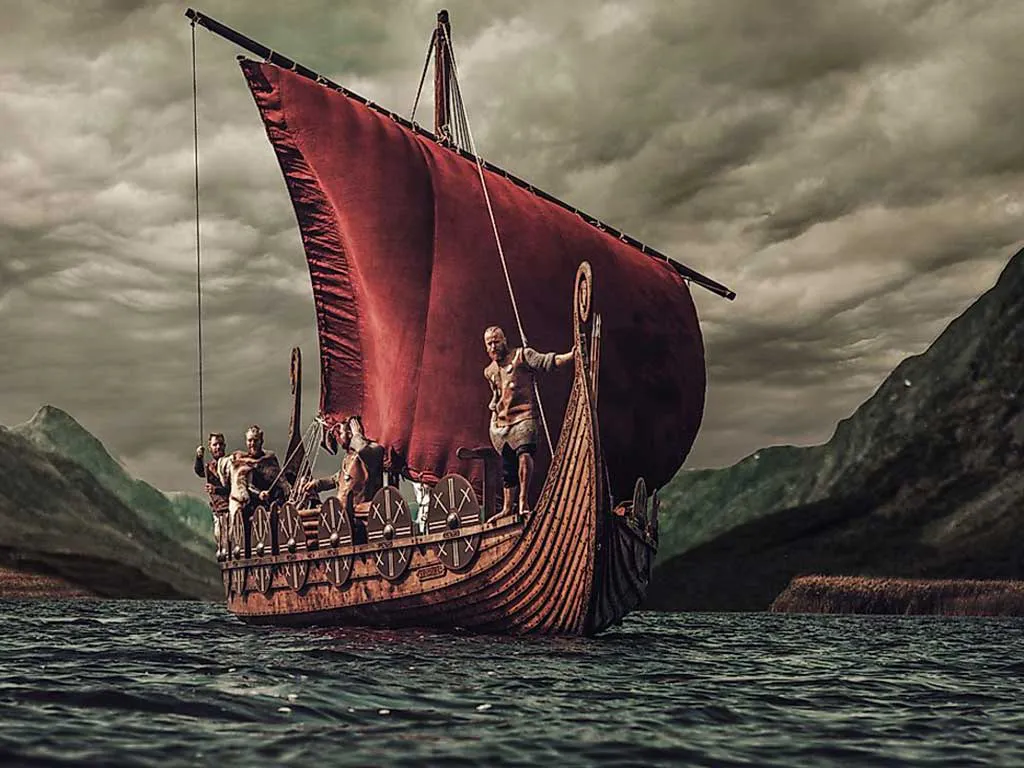
Bandits and Warbands of Soderfjord

source
Soderfjord is not a safe or stable realm. It is split up into competing and sometimes warring jarldoms, and law and order is in short supply. The ethos of the Northern Reaches involves a warrior code of strength of arms, courage and seeking death in battle, with a certain survival of the fittest.  Combined with the stretches of forest that cover much of the lowlands, and it becomes easy for bandits, brigands and worse to lurk in hideouts to prey on villages, travellers and the like - those who cannot defend themselves and fight back are liable to swiftly fall prey to those who take whatever they want. Some of these bands seem quite mundane and will fit into the description of bandits as given in the B/X D&D rules, armed with hand weapons, leather armour and only enough basic training to be slightly better than the peasants they are trying to rob. But then there are others, with the weapons and skills of professional warriors and the attitude of predators.  

Here are the most prominent and notorious of raiders that might be encountered. 

Rethgar's Reivers specialise in raiding from their longship, The Reiver's Razor. They have a secret base set into the cliff of a fjord, with an illusion covering the entrance. The Reivers know this well enough that they can sail their longship in between the two dead trees that stand either side of the disguised entrance. Rethgar's Reivers are mostly exiled or renegade warriors, formerly in service to one of the Jarls or other feudal lord. Some fled after committing crimes, others grew angry and disillusioned with their former lieges. Although the reivers as a whole do not profess any particular faith or deity, some have affinity with either Hel, Loki or Chaos in general. Others simply have a strong hatred of the Jarldoms and the society that forced them into exile. Rethgar is a fugitive from Ostland, having previously been part of a Jarl’s bodyguard who had an affair with the Jarl’s wife and then tried (and failed) to kill his liege lord.  

  • Leader: Rethgar the Hated (human male, 8th level fighter, Align C, Str 16, Int 13, Wis 12, Dex 10, Con 13, Cha 14)
  • Base: The Reiver’s Razor (longship), no known fixed location
  • Members: 12 Recruits (1st level fighters), 14 Reivers (2nd level fighters), 2 lieutenants (4th level fighters)

The Bloodbeak Ravens are both bandits and mercenaries, fighting and raiding for whatever money they can get. They are consumate opportunists, and can even engage in trade if the other side seems too tough to rob. At other times they have turned to slave-trading if they think that it won't be too much trouble. They are utterly unreliable and can switch sides or turn on employers on a whim, particularly if they sense weakness or a chance for wealth. They are also wide-ranging and nomadic, they have been seen in both Ostland and Vestland and even around Landfall in southern Norwold, never settling down for long. Those who know of their reputation will avoid them if possible - only the naive or desperate would try to deal with the Bloodbeak Ravens.  

  • Leader: Skottir the Ruthless (human male,  9th level fighter, align C, Str 15, Int 10, Wis 14, Dex 16, Con12, Cha 17), Mahalvak (human female, 5th level magic user, align C, Str 8, Int 16, Wis 16, Dex 10, Con 13, Cha 14)
  • Base: None (itinerant)
  • Members: 30 footmen (1st level fighters), 20 horsemen (2nd level fighters), 3 lieutentants (4th level fighters)

File:DeathDealer.jpg
By Frank Frazetta -
frankfrazetta.net, 
Fair useLink
Hel's Horsemen are among the worst of a bad bunch. As their name suggests they are all mounted on warhorses, and many of them do indeed follow Hel, Goddess of Death. They revel in slaughter in a way that other bandits and warbands do not bother with, and will leave their victims prominently displayed as a horrible warning to others. Their leader is a terrifying figure known as the Deathdealer, who has an uncanny, perhaps supernatural, ability to sense and recruit murderers and psychopaths, even offering to spare their lives if they put up a good fight, ensuring that Hel's Horsemen are the most brutal and bloody of the warbands. He rides a huge black stallion and wields a magical battleaxe and shield. His downward horned helm is distinctive and believed to be cursed by dark powers. 

  • Leader: Deathdealer (Human male 15th level Chaos Warrior, Align C, Str 18, Int 12, Wis 10, Dex 12, Con 18, Cha 7), Agathi, Queen of Skulls (6th level cleric of Hel, align C, Str 13, Int 12, Wis 17, Dex 8, Con 11, Cha 12)
  • Base: Unknown but believed to be in the Snowvale Valley
  • Members: 10 Slayers (3rd level fighters), 5 Skull-takers (5th level fighters), 2 Spinecrackers (7th level fighters), 4 priests of Hel (3rd level clerics), all are chaotic

Garrath's Woodsmen are skilled at stealth and ambush within the forests of Soderfjord. They are aided in this by some elves who have taken a dislike to the Jarldoms as a whole and who see Garrath's Woodsmen as useful in slowing the encroachment of civilization. Garrath and his woodsmen tend to ignore the peasantry and instead focus on those who have wealth, particularly the Jarls and their households. This does not mean they are necessarily benevolent or have any sense of social justice, merely that they do not waste their time on low-value targets. Garrath will sometimes recruit common bandits from smaller gangs into his band, particularly if they prove capable of using his stealthy hit and run tactics. 

  • Leader: Garrath the Slick (human male, 6th level fighter, align N, Str 13, Int 14, Wis 14, Dex 13, Con 10, Cha 14), Sherthi the Quiet (Male Elf 5th level spellsword, align N, Str 16, Int 13, Wis 10, Dex 12, Con 10, Cha 14)
  • Base: Underground beneath the Hollow Oak, in the forest between Soderfjord City and Gudholm
  • Members: 4 Spellswords (3rd level elf spellswords), 5 scouts (2nd level elf rangers), 20 foresters (2nd level human fighters), 20 woodsmen (3rd level human fighters), 3 lieutenants (4th level human fighters).  

Ottothar's Sea Serpents are piratical raiders who are based in Ostland and will sail across the seas to plunder the coasts, fjords and rivers of Soderfjord in their longship The Brine Venom. In this respect they are similar to Rethgar's Reivers. However, they are entirely given over to the Cult of Chaos and are led by a Chaos Warrior and a chaotic cleric who somehow commands a pack of hellhounds who travel with them on the ship. 

  • Leader: Ottothar (human male, 7th level Chaos Warrior, align C, Str 16, Int 12, Wis 10, Dex 12, Con 14, Cha 12), Hallath (human male, 5th level cleric of Chaos, align C, Str 13, Int 10, Wis 15, Dex 11, Con 14, Cha 15) 
  • Base: The Brine Venom (viking longship) and also The Forsaken Keep in Sognesholm, Kalslo Island, Ostland
  • Members: 25 raiders (2nd level fighters), 3 raider bosses (4th level fighters), 4 dark adepts (2nd level clerics), 5 Hellhounds (as monster entry, 4HD each). All are chaotic

Wulfgar’s Howling Brethren are a small, select band of lycanthropes who will sometimes resort to man-eating as well as plunder and pillage. They have conducted some raids in their human form during the day but on the nights of the full moon they will attack villages in their animal or hybrid forms. They try to be careful not to let infected victims live unless they are certain they want to recruit the target. Wulfgar himself is a werewolf, and there are three other werewolves, three wereboars and a neutral-aligned werebear who is sometimes sickened by the werewolves wanton violence but does not know where else he would belong. [Although the rules could do with some revision, a DM could use my old rules for scalable werewolves here.] 

  • Leader: Wulfgar (Male Werewolf, 6th level fighter)
  • Base: Somewhere in Moderfeld, eastern Soderfjord
  • The Pack: 3 werewolves, 3 wereboars, 1 werebear (as monster entry). Wereboars are neutral with chaotic tendancies

The Swooping Hawks are a band of marauders who have tamed a number of griffons and now use them to launch aerial attacks on villages, ships and caravans. They were formed by the mage Vaargen Clawscar (named for a face that was horribly slashed by an angry griffon in an attempt to subdue it). Because their griffons cannot carry too much loot, the Swooping Hawks look for targets with high-value lightweight treasure such as gems, jewellery or sometimes valuable people for kidnapping. Unusually they are led by a woman, Kelthi the Unwanted. Vaargen tends to stay behind in the Eyrie, a lair in the Hardanger Mountains, though he occasionally comes along on raids riding his own griffon Fury. They are accompanied by a small flock of harpies known as the Sisters of Song who leave the bandits alone as long as they can feed on targets. 

  • Leader: Kelthi the Unwanted, (human female, 8th level fighter, align C, Str 16, Int 12, Wis 12, Dex 10, Con 13, Cha 16), Vaargen Clawscar (human male 12th level magic user, align C, Str 8, Int 17, Wis 12, Dex 13, Con 15, Cha 12)
  • Base: The Eyrie, a mountain base somewhere in the eastern Hardanger mountains
  • Members: 8 Skyriders (4th level fighters mounted on griffons), 6 wingriders (3rd level fighters mounted on giant hawks), 4 Sisters of Song (Harpies, as monster entry)