Showing posts with label ProductReview. Show all posts

Saturday, 13 June 2026

My thoughts about Gaz8: The Five Shires and high-level Halflings


Art by Clyde Caldwell, source
I like this one. Interestingly it is written by Ed Greenwood, who of course is famous for being the creator of the Forgotten Realms. It's interesting that TSR also asked him to work on other worlds such as Mystara here, and I think he rose to the challenge well. 

It's difficult to write about D&D halflings without thinking about Tolkein's hobbits. The name of the nation, the Five Shires, is a clear homage to the Shire where Frodo and Bilbo Baggins lived and where Tolkein's most famous adventures (The Hobbit and the Lord of the Rings) started. So are these halflings just hobbits with a name changed for copyright reasons? Not exactly. There are similarities, with the rolling countryside and sylvan forests. But these halflings are tougher and are more willing to both defend themselves and explore the wider world. In fact there is a halfling militia, halfling commandos/vigilantes known as Fangs and halfling pirates on whom there is a whole chapter. This differentiates them from Tolkein’s hobbits sufficiently to grab my interest. 

And they do need to defend themselves. The biggest and most obvious threat is the orcs of the Cruth Mountains. Throughout the history of the land the orcs have raided, invaded and occasionally tyrannised the halflings. However, they have also had major problems with both humans and dwarves. The dwarves are no longer a substantial influence in the area. The most significant human threat is from the Black Eagle Barony in the east, just over the border in Karameikos, though pirates on the Sea of Dread (from Ierendi and possibly Minrothad and other coastal realms) have also been an occasional problem, particularly around maritime trade. Halflings have also had horrible experiences with mages of Glantri, whom they now fear and distrust. Although it can be assumed that orcs and halflings are automatically enemies, the halflings of the Five Shires have enough friendly and business interactions with humans that many more opportunities for intrigue and diplomacy can be found. Is that merchant from Karameikos actually a spy for the Black Eagle Barony? Is it possible to persuade the pirate captain to leave the coast of Seashire alone? The wandering Glantrian wizard has generated a lot of suspicion but is he responsible for some disappearances in nearby villages? 

And despite mostly being peaceful villages and rolling countryside, the Five shires have their own collections of carnivorous monsters, particularly the Deep Glaurant. Unlike some gazetteers, the opportunities for adventures and dungeons are plentiful in the Five Shires, and I am glad for that, even if the resident halflings have reservations.  

High level Halflings

One of the aspects of halflings explored in this gazetteer is what happens with halflings after 8th level. According to the B/X rules, halflings can reach a maximum level of 8 (Sheriff, or in this gazetteer Knight-Guardian). This is a severe restriction even in Expert-level campaigns where halflings will find themselves left behind while human characters are continuing on to name level, and even elves and dwarves have a bit more growth available. There are two possible answers to this. Firstly the attack ranks and accompanying abilities detailed in the Companion Rules are a solution for those halflings that prefer to keep a martial focus and develop their weapon skills. Secondly this gazetteer introduces the Halfling Master, a sort of prestige class that gives halflings that qualify powers similar to druids. However, at least according to the Gazetteer these halfling masters are guardians of the Five Shires, not wandering adventurers. If DMs stick to this idea then perhaps becoming a Master is not a good option for a halfling PC hoping to join his high-level adventuring companions in far off lands and deep dungeons. If the DM drops this requirement then Masters could become a bit too popular, eclipsing the martial halflings progressing through attack ranks. I have not quite decided on my prefered way of handling this. 

This does sort of reflect my post on high level elves where borrowing ideas from Gaz5: Elves of Alfheim, I went with the idea of high-level elves progressing as either Elven Lords (with relatively simple advancement) or Elven Wizards (who require specialist training in Alfheim to progress to the next level).  What if halfling masters could wander from the Shire and join their human and elven adventuring party, but when they are ready to level up they need to spend time (two months or so) in the Shires, training with their fellow masters?  If they don’t or cannot return to the Shires then their progression is paused. This seems like a reasonable compromise though I have not playtested it. 

Long-running followers of this blog might remember I created the Halfling Defender class long ago, a sort of fighter/cleric for halflings. But that was for Kaelaross, long before I got hold of this gazetteer. I have barely noted its existence since writing about Mystara, and as such I don’t think I’ll use it, at least not in Mystara. In some ways this is a bit of a pity. Dwarves have the standard dwarf warriors and also dwarf clerics (a class from Kaelaross that I have brought over to Mystara) while elves have their standard elf spellswords (casting magic user spells while wearing full armour) and the elven ranger. Halflings, at least at low levels, seem to just have one class to choose from. But seeing as Halfling Masters fulfil the role of halfling clerics, Halfling defenders now seem rather redundant. I shall ponder this but for the moment defenders are out, masters are in. 


Sunday, 18 May 2025

Descent into Avernus Homebrew #1: The Thayan Compound

 Diverging a bit from my usual Basic D&D, I thought I would go over some of the stuff I have come up with in 5E D&D for the campaign I am currently DMing, Baldur’s Gate: Descent into Avernus. 

Spoiler alert: many of the things I will be discussing involve plot points in the published book. If you are a player playing through the same campaign book, then you have been warned. 

Descent into Avernus is a bit of a mixed bag. It has some great ideas and set pieces but joining them up in a way that the PCs want to follow is not always clear in the published book.  Furthermore, the adventure requires advancement at a much higher rate than the encounters in the book will allow. Advancing automatically after two or three encounters regardless of XP is not my preferred way of PCs levelling up. So some of these homebrew encounters are opportunities for the PCs to earn sufficient XP to get to the levels needed to move onto the next crucial parts in the adventure. 

Side Quest #1: The Red Wizard Enclave in Elturel

This side quest was created for three main reasons. Firstly to award the PCs some magic items. Secondly to award the PCs enough XP to take on the Elturel Cemetery. Thirdly to secure a source of food for the refugees in the High Hall cathedral in Elturel. The background here is that the Red Wizards of Thay have set up a trading enclave  (actually a walled compound) within Elturel, and this was dragged into Avernus along with the rest of the city. 

The acolyte in the High Hall, Pherria Jynx, knows of a magic item, a minor Cornucopia, that can conjure sufficient food to keep the refugees in the High Hall crypts alive. The Cornucopia was last seen being sold to the Red Wizards at their Enclave. The PCs are requested to retrieve it, with the incentive that they can keep any other magic items they find.

The Red Wizards tried to defend themselves against the devils of Avernus by summoning demons to protect them. This did not work out as planned and the demons have run amok in the enclave. Some red wizards are slain, others barricaded in their rooms, terrified. Thus the PCs find themselves investigating this walled compound, with a combination of angry demons, scared apprentice wizards and random magic items. 


Key to map: 

    1) Apprentices’ living quarters & Kitchen: 1 shadow demon (as Monster Manual) + 1 deceased neophyte

    2)  Apprentices’ dormitory: 3 Red Wizard Neophytes (see below for stats). All three are scared and will welcome any rescuers. Braddock in particular is questioning why he joined the Red Wizards at all. 

  • Catrina (human female)
  • Braddock (human male)
  • Welph (human male)
    3) Stables. Contains 3 dead horses, slain by demons

    4) Senior Mage's Living Room. Nothing of interest except some nice chairs and carpet. 

    5) Senior Mage's Bedroom: Denthoros is a Mage (as per Monster Manual), a Neutral Evil human male who is the surviving leader of the Red Wizards still in the compound - his senior in the enclave has plane-shifted on his own back to Faerun leaving Denthoros and the others to their fate. Denthoros intends to survive and will do whatever it takes. He will only attack humanoids if they seem intent on attacking him, though any fiends will be treated as hostile. His wooden chest by his bed holds 250gp, 1200sp and his spellbook. Crucially Denthoros holds the key to to the Vault (room 10) and will only hand it over if offered something worthwhile. 
    6) Kitchen and Food Stores. A Barlgura Demon is in here and will attack any mortals or devils. Denthoros (room 5) is aware of this demon. The demon has devoured or spoilt any food that had been here.
    7) The Shop Floor. In here is a Chasme Demon (as Monster Manual) that will attack any mortal. There were shelves holding various baubles and trinkets for sale but the chasme has smashed everything into worthless scraps. However, behind the counter are three bags, one with 43sp, one with 60gp and one with 5pp. 
    8) Corridor
    9) Spell Components Stores: 1 Red Wizard Junior (stats as below) + 2 Veterans (as per Monster Manual). Similar to Denthoros in room 5, the Red Wizard Junior (human female, name Eriadnee) and her two guards are not interested in unnecessary fights and will try to negotiate their way out. They all know that Denthoros holds the key to the vault (room 10) but will only offer this information if pressed or offered something in return. They are trapped here by the chasme in room 7. 
    10) The Vault: This room is sealed by a locked steel door. Denthoros the mage in room 5 holds the key. Inside are 1 shadow demon +2 dretches (all as in Monster Manual). Also in here are locked boxes containing:
  • The Cornucopia (a horn that constantly provides food on demand, enough to feed dozens of people every day. 
  • A Bag of Holding
  • A suit of Chain Mail +2
  • A Wand of the War Mage
  • A pair of Bracers of Defence +2


Red Wizard Neophyte:

Medium Humanoid, Neutral Evil, based on 2nd level wizard

AC: 10, HP: 9,  Speed: 30ft

Str 10 (0), Dex 10 (0), Con 13 (+1), Int 15 (+2) Wis 12 (+1), Cha 10 (0)

Saving Throws: Int (+4), Wis (+3)

Skills: Arcana (+4), Insight (+3)

Senses: passive perception (12)

Languages: Common, Thayan, Abyssal

Challenge: 2 (450xp)

Special Equipment: Dagger, red robes

Action: Dagger, melee attack (+2 to hit, 1d4 damage)

Spellcasting: Red Wizard Neophytes are spellcasters of 2nd level using Intelligence (spell save DC 14, +4 to hit with spell attacks)

At Will Cantrips (3 known): Acid Splash, Fire Bolt, Light

1st L spells (3 slots): Charm Person, Fog Cloud, Silent Image


Red Wizard Junior:

Medium Humanoid, Neutral Evil, based on 4th level wizard

AC 12, HP 21, speed 30ft

Str 10 (0), Dex 10 (0), Con 13 (+1), Int 17 (+3) Wis 14 (+2), Cha 12 (+1)

Saving Throws: Int (+5), Wis (+4)

Skills: Arcana (+5), Insight (+4)

Senses: passive perception (13)

Languages: Common, Thayan, Abyssal

Challenge: 4? (1100xp)

Special Equipment: Dagger, red robes of Protection +1, Ring of Protection +1

Action: Dagger, melee attack (+2 to hit, 1d4 damage)

Spellcasting: Red Wizard Juniors are spellcasters of 4th level using Intelligence (spell save DC 15, +5 to hit with spell attacks)

At Will Cantrips (4 known): Acid Splash, Fire Bolt, Light, Message

1st L spells (4 slots): Charm Person, Fog Cloud, Silent Image, Sleep

2nd L spells (3 slots): Invisibility, Detect Thoughts, Web

Description: Red Wizard Juniors are deemed competent enough by the Red Wizards of Thay to be entrusted with basic tasks and minor responsibilities. They are sometimes found looking after Thayan camps while team leaders are leading missions, or perhaps leading a patrol of minions, looking for minor foes of the Red Wizards. Red Wizard juniors have survived their apprenticeship and are a bit more aware of the manoeuvring and backstabbing among the Red Wizards, so are not as trusting of their fellows (Insight skill and Detect Thoughts spell are more used on their colleagues in the Red Wizards than their obvious enemies). 


Note that as the DM I awarded XP rewards for peacefully dealing with Red Wizards and retrieving the Cornucopia and bringing it back to the High Hall. 


Thursday, 12 December 2024

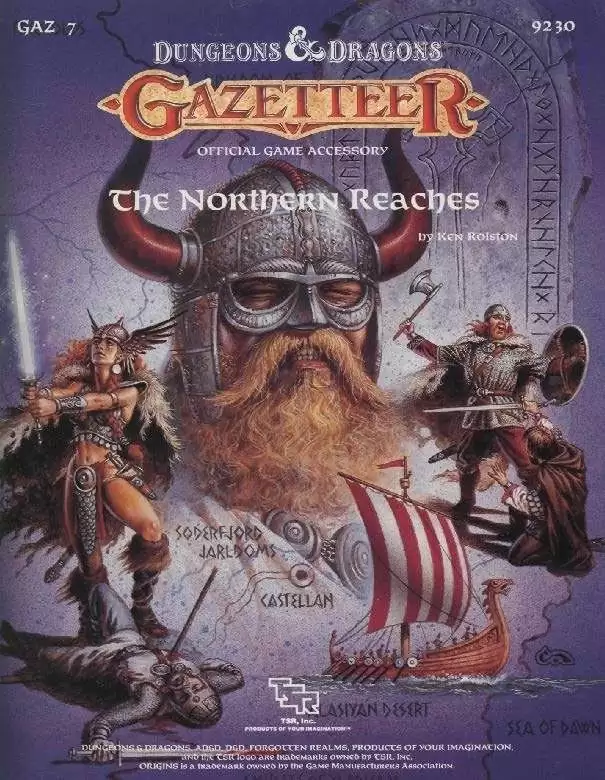
Thoughts about Gaz7: The Northern Reaches


I like this one. It is in contrast in tone and adventure style to Gaz9: The Minrothad Guilds. Here it shows the brutal, perhaps bloodthirsty, streak in the culture of this land, with lots of opportunity for conflict and adventure, which seems to be in stark contrast to the rather peaceful and boring Minrothad islands.

I’ve gone through the player’s pull-out section. I like the descriptions of the land and the people, the laws and attitudes. The rules I take with a pinch of salt and I may not incorporate them all as written.
  • The personality traits I think are interesting suggestions but I would more likely to use them as guidelines for the DM to roleplay NPCs, rather than as actual game mechanics. 
  • The skills are something I have noticed in other gazetteers but not really paid much attention to. But it’s nice for rounding out a PC or NPC. 
  • The list of Norse names is always useful. 
  • The part on clerics and their rune magic is interesting and I would certainly use this for NPCs. In fact part of me wants to start creating new runes right away but I ought to see how the published runes work first. They are not just simple spells. However, I am also wary of game balance issues - the Know Runes spell does involve a ritual of considerable hardship and risk but after that the cleric with runes has power that clerics from other lands simply do not have access to.
One aspect that I noticed is the introduction of a pantheon of deities that many other gazetteers simply do not address.  This is the classic Norse pantheon, with Odin, Thor, Frey and Loki. My head goes off on different directions with this one. What about the other Norse deities, described in Deities and Demigods? Tyr, Balder, Frigga and Heimdall could all be brought in.  
But also how do these gods fit in with immortals that were previously mortals who found the path to immortality? My gut instinct is to put these ones in a different category: Elder Immortals, who were never human.  
Although not exactly the same pantheon, the category of Elder Immortal can also include Kagyar from the Dwarves of Rockhome and Apep from the Nithian (i.e. Egyptian) pantheon. In fact, if I am to take the Norse pantheon on board in this campaign it opens up the possibility of other pantheons in other nations and regions, which changes the focus away from Law vs Chaos that has been the predominant religious and metaphysical conflict so far in this campaign. Would these Norse immortals take sides in Law vs Chaos? Or do they ignore it, staying neutral in an uncaring way? Loki and Hel are chaotic, while Tyr is Lawful but even then that does not mean they are integrally tied to these cosmic forces but merely an indication of their behaviour and attitutes, like most mortals. 

The three nations of the Northern Reaches, old-fashioned and brutal Ostland, the more civilized Vestland and the fragmented and somewhat anarchic Soderfjord Jarldoms, offer three different environments in which to set adventure, but all of them seem to offer plenty of excitement and opportunities for brave heroes. The raiding culture and reliance on strength and combat prowess over law, trade and diplomacy, particularly in Ostland, makes for great human opponents who fight first and ask questions later. I would say in terms of alignment that even if the raiders think they are simply carrying on a tradition that they have held for centuries, to anyone else (especially those targeted by them) these norse raiders are no better than orcs, goblins or chaos warriors - indeed their actions are seen as chaotic at least in outcome if not in philosophy. This raises the question in my mind: were vikings the original murder-hobos? I’m sure the monks of Lindisfarne would say yes. 

And yet there is also opportunity for diplomacy, trade and perhaps espionage. The Ethengar Khanate, the Heldannic Knights and the Emirates of Ylaruam are all neighbours who at least want to keep an eye on the Northern Reaches, maybe do business with them and perhaps even influence the decisions of the leaders. Vestland is trying to shift from a raiding culture to a trading culture, and while not everyone in Vestland agrees with this change, it is perhaps safer to do business here than in either Ostland or the Jarldoms. Of course, a merchant may well hire adventurers to protect him and his interests from those who prefer the old ways. 
Trade links extend all over the Sea of Dawn and can take merchants and adventurers far afield, from Norwold to Thyatis, from Alphatia to the Pearl Islands. This reflects real-life vikings who found themselves in North Africa, Ireland, England, France, Sicily, Russia, Greenland, Byzantium and even Nova Scotia in North America, trading, plundering, colonising and fighting as mercenaries as the opportunities presented themselves. In some ways I see vikings as the ultimate opportunists, roaming around, judging situations and settlements and deciding what is best for themselves. 

The  non-human races of the Northern Reaches, particularly gnolls, trolls, kobolds, gnomes and dwarves, are all mentioned and briefly discussed. The first three (trolls, gnolls and kobolds) are perpetual foes of the humans, making the mountainous borderlands to the west and south very dangerous. Although expeditions against them might be a tad simplisitc, perhaps even hack and slash, it is at least straightforward and always available as a way of finding loot and action. 

The dwarves, including the Modrigswerg (moulder dwarves) and gnomes are a different matter, and although it is possible that some may be hostile, it is usually much more a matter of how the PCs approach them. Dwarves are much like those in Rockhome and many are descended from the dwarves of Rockhome. Gnomes are not given as much description having driven to near extinction by kobolds but I like to think of them as similar to rock gnomes found in Karameikos, with warriors and tricksters. I don't feel tinker gnomes fit this setting. They would be very rare, and perhaps not even having their own settlements, but as enclaves and refugees with dwarf clans. I suspect the author of Gaz7 (Ken Rolston) did not expect any gnomes to have survived. 

The Modrigswerg are a subrace of unpleasant, unhinged dwarves who are still remarkably skilled at creating powerful magic items. As a DM and creator of adventures I reckon they could fill a variety of roles from outright villains to someone the PCs need to negotiate or trade with, to a source of wondrous items that can become either plot McGuffins or rewards for successful quests. They are tricky and truculent, and difficult to work with, and often quite treacherous. Yet their crafting skills make them extremely useful. There is even a paragraph about their skill and imagination in creating dungeon traps - they could probably teach the goblins of Zugguth Peak about how to build really nasty traps.  In terms of AD&D & later editions they have elements of both duergar (their greed and brutality) and derro (their paranoia, mental instability and isolationism). I like them already....

A combination of various subterranean races means that the Northern Reaches, particularly the areas on the mainland, have substantial cave complexes and excavated lairs. Thus the Shadowdeep, Mystara’s underground realm, extends substantially under the mountainous parts of the Northern Reaches. 

At the end of the DM’s book there is a substantial adventure set in the Falun Caverns, formerly a gnome settlement, now overrun with kobolds.  I would be tempted to use my own rules for humanoid NPCs here, with kobold warriors and nobles having levels in the warrior class, and kobold wiccas being replaced by shamans, but to each their own. There are also shorter adventures including “The Defence of Otkel’s Stead” and “The Jarl’s Hall”. 

I can see myself using the Northern Reaches a lot on this blog. 

Thursday, 29 February 2024

B3 Palace of the Silver Princess: My thoughts and ideas

Although I had some awareness of B3 from way back, I first learned what B3 was about when I bought B1-9: In Search of Adventure, a compilation of the early Basic D&D modules. It was edited and shortened, so B1-9 by necessity of limited space only had the two actual dungeon levels, with a short introduction about the Eye of Arik, pruning a 36-page module down to 15 pages. For many years I accepted that was it. However, recently I have acquired a PDF of the orange cover printing of B3. For those of you who do not know, there were 2 versions of B3 Palace of the Silver Princess. The first one had an orange cover, the second had a green cover. The orange version was recalled after concerns about it's content, best explained here. But copies survived and somehow someone created the PDF that I now have. I actually don't have a copy of the green-cover version but I am assuming that it contained the material that appears in B1-9. 


This version has some black and white illustrations by the likes of Erol Otus and Roslof, including some that are definitely old-school, such as the questionable Illusion of the Decapus and the downright weird ubues (three headed hermaphrodites!). 

In my readthrough I also noted that some encounters were left blank, in a way very similar to B1: In Search of the Unknown, discussed previously.  The DMs were expected to fill these in as they saw fit. Referring back to B1-9, these blank encounters have been filled in and I expect B1-9 uses the contents of the green cover version. 

The Lands Around the Palace

The orange cover version was written before the release of the Expert set and the establishment of the Known World (south-east Brun). There is a map of the surrounding area, which does not neatly fit into the Known World - later on the Mentzer Expert set would place the palace in the eastern half of Karameikos, north of Rugalov village, in the hills southwest of Penhaligon. However, the orange-cover map shows "The Princes of Glantri" in the south-east. If we take this to be true it radically changes the location to the other end of the Known World map. 

The orange-cover version has a brief overview of this map, with various locations given a paragraph each. Personally I am tempted to go with elements of this original map and shift the module to the mountains and valleys to the northeast of Glantri perhaps between Morlay and Malinbois. The actual map is not considered particlarly accurate - the more up-to-date maps of Glantri take precedence, but the names and descriptions of the settlements and patches of wilderness can be shifted around on the map of Glantri. This leads me onto an intriguing tangent - a Basic/Expert campaign set in Glantri: however I don't think I'll expand on that here, although this map and its accompanying descriptions certainly offer many places to explore. The module alludes to this as well, suggesting wilderness encounters once the PCs reach Expert level (i.e. 4th level or higher)

Another question that has sprung to mind is what about the realm of Haven? Is it only the small area immediately surrounding the palace? Or the whole of this map? I like the idea that Haven was most of what is on this map, up to the escarpments that lead to Glantri. Since the fall of the palace to chaotic forces, the vicious and chaotic ruler of Gulluvia now controls the areas marked out on the map by the border of territory. The ruler, a sorceress called Dh'mis, was trained in Glantri and is in league with the forces of Chaos, perhaps steering higher authorities in Glantri away from the palace and the toe-hold the forces of Chaos have in this area, and I would say she at least tolerates the cult of Chaos if not actively embraces it. 

Expanding the Palace 

Outbuildings and other ruins: the two maps of the palace, the upper and lower levels, are assumed to be the whole palace. This is up to the DM - the maps provided in the module could just be for the central keep - there could be curtain walls, towers and a courtyard with stables, smithy and the like. 

Deeper levels of the dungeon: What if the passages in areas 1D and 1E were not completely caved in, or perhaps the rubble blocking the passage could be cleared? 

The Cult of Chaos certainly has an influence within the Palace itself. The cleric in the upper level, Carathandamus, is chaotic and I imagine him as being the cult representative in the palace. How much influence and control he can exert on other inhabitants is up to the DM - he has his own retinue of two dwarves and a werebear, but beyond that he may give other residents of the palace a wide berth, particularly the less intelligent ones. 

One thing I have noticed in the differences between the B1-9 version and this orange cover version is that the orange one has no mention of The Eye of Arik, a cursed gem that has spread its chaotic influence through the palace, attracting monsters and sending residents mad.  Instead there is just a very valuable ruby, “My Lady’s Heart”. Although it is worth 10,000gp to those who find it, it does not have magical properties. The B1-9 version has destroying the Eye of Arik thereby lifting the curse as the mission, the main reason for entering the palace. This choice of versions is really up to the DM - are his players noble heroes or greedy treasure-hunters? Of course, having just one version of the module may make this moot. 

New Monsters of the Orange Cover version

  • Archer Bush
  • Baric
  • Bubble
  • Decapus
  • Diger
  • Ghost
  • Jupiter Bloodsucker
  • Marble Snake, Giant
  • Marmoset, Giant
  • Poltergeist
  • Purple Moss
  • Ubue

A number of these are not native to Brun but from Davania - the Jupiter Bloodsucker, the Giant Marmoset, the giant Marble Snake and the Decapus all have populations in that dense jungle far to the south. This raises questions of what are they doing so far from home - I suspect they were brought here as biological curiosities by an academic expedition funded by a Prince of Glantri . They were temporarily held at the palace but before they could be forwarded to Glantri City, disaster struck the palace and they escaped into the rooms and hallways where they remain. 

In terms of using these monsters elsewhere they are a mixed bunch. Some, like the Decapus and Poltergeist seem very reusable. Others I find difficult to take seriously. The Ubues are notoriously odd while bubbles just don’t seem like monsters, more like they should be a magical hazard. 


Wednesday, 4 October 2023

AD&D Modules in this Campaign

source

Those of you who follow this blog may have noticed I am familiar with AD&D (both editions!) as well as D&D 3E and 5E (I skipped 4E and joined the nascent OSR). I am aware of at least some of the modules released for the various editions, and while I have placed B/X modules generally where they are suggested in official material, AD&D and later editions do not have official adventures based in Mystara. One question that has occurred to me is should I import modules from other editions and worlds into B/X Mystara? 

Does it fit into Mystara?

It could be argued that one of the things that makes a campaign world special and memorable is the adventures set within the world. This is how PCs and therefore players experience the campaign world. By copying and pasting adventures from Greyhawk or Forgotten Realms into Mystara, am I homogenising the game into a generic-fantasy mess? The adventures I have written on this blog in the last few years  have been with the Mystara campaign in mind. There are some published adventures that, while good in their own right, are too closely tied to their original world for me to comfortably convert them to use in Mystara. The Dragonlance modules in particular fit this category, as does WGA modules (the Falcon trilogy set in the City of Greyhawk, and Vecna Lives) and the FRE1-3 (Forgotten Realms Avatar trilogy set in the Time of Troubles). I would happily borrow ideas, maps, names, monsters and even encounters, but not try to convert the whole module.  

Are the rules and characters relatively compatible with B/X D&D? 

There is also the aspect of different rules, particularly for player characters and therefore NPCs. B/X proudly sticks to the peculiar idea of Race as Class, and there are only 4 classes for humans. AD&D and later editions have class and race as separate (albeit AD&D has restrictions on some combinations). Furthermore AD&D introduces classes that have no direct equivalents in B/X D&D - and although the Companion rules introduce the Paladin and the Druid, and Mystics are introduced in the Rules Cyclopedia, these “classes” function very differently from the Paladin, Druid and Monk of AD&D.  If an adventure relies on these different classes, not to mention rangers, barbarians, bards, assassins and illusionists, it probably won’t convert very well to B/X D&D. Similarly class/race combinations such as elven clerics, dwarf thieves and halfling druids may be found in AD&D but would be difficult to stat out if one stuck to the B/X rulebooks. One could create new B/X classes to describe such characters (as I have done with elven rangers, dwarf clerics, halfling defenders (a variant of halfling clerics) and gnomes) but this seems like a lot of work for just converting a module. There are other aspects of the AD&D rules that do not have equivalents in B/X. Psionics and magic resistance are things that are not found in B/X and an adventure that relies heavily on one of these might seem odd in Mystara. 

Do the monsters work in Mystara and B/X D&D?

Monsters usually fare better at being converted though there may be raised eyebrows at some creatures from the Monster Manual or Fiend Folio appearing in Mystara. With the AD&D great wheel of the outer planes relying on the two-axis alignment of Law vs Chaos and Good vs Evil, the role and philosophy of devils, daemons/yugoloths and slaad may be difficult to fit into the single axis Law (=Good) vs Chaos (=Evil) that is found in B/X. I think it is interesting that the early B/X editions (Moldvay & Cook) shied away from anything like demons, though with Mentzer's BECMI some creatures from the Plane of Nightmares appeared as quasi-demons (Malferas, Nightmares and Soul Eaters). I actually have no problem with the concept of demons travelling from the Planes of Chaos to Mystara, so in terms of lore any AD&D module that uses demons can still work. 

Nonetheless, the original idea of a module was for a fairly self-contained adventure or dungeon that could be dropped into and used in a campaign with minimal fuss and work. And those adventures that neither rely too much on the campaign setting nor on rules for characters can work in this regard.  


My Ideas for Particular AD&D Modules

This list is not comprehensive, and is really based on my own familiarity. As far as the rest of this blog and my variant of Mystara is concerned, these modules and settings do not exist, and I do not expect to reference them in later blog posts about the campaign.  So here are my quick ideas about particular modules:

  • S1 Tomb of Horrors: Acerak was a particularly chaotic and malevolent Alphatian mage who created his infamous tomb in the rugged mountains on the borders of Ylaruam and Soderfjord Jarldoms. 
  • S2 White Plume Mountain:This volcanic mountain and its associated dungeon is found in a small uncharted island between Aloysius Island and Roister Island in the southern seas of Ierendi
  • S3 Expedition to the Barrier Peaks: The Barrier Peaks are a nickname for what are officially the Amsorak mountains to the northwest of Darokin and west of the Principalities of Glantri. The strange "magic" found in the dungeon is similar in many ways to the weird technomagic of Blackmoor. Some wizards and sages are curious and want adventurers to return samples of these artefacts. 
  • S4 Lost Caverns of Tsojcanth: Tsojcanth was the mountainous lair of a particularly nasty and chaotic Glantrian witch called Iggwilv, set in the Wendarian Ranges north of Klantyre, on the northern border of Glantri. She may well have been involved in the Cult of Chaos. 
  • T1-4 The Village of Hommlet and the Temple of Elemental Evil. Something of a borderline case but if it turns into a Temple of Elemental Chaos, it becomes better suited to this campaign. The Village of Hommlet and the ruined moathouse are in northern Karameikos near Threshold, while the actual Temple is further north in the Black Peaks. Iuz and Zuggtomoy are either turned into or replaced with a Prince and Princess of Chaos
  • C1 The Lost Shrine of Tamoachan. This could be set in the jungles of Davania, perhaps not far from Herakanthia
  • C2 The Ghost Tower of Inverness only appears occasionally on the west coast of Hattias, in southern Thyatis, not far from the town of Grey Bay. 
  • D1-3 & Q1 Against the Drow: The drow are so distinctive to AD&D and are markedly different to the Shadow Elves of Mystara that I'm not sure if this is suitable for conversion. Nonetheless, a DM playing fast and loose with lore could say that the drow are a different, rival subrace of elves from the Shadow Elves, or perhaps split away from the less psychopathic shadow elves when both were driven underground by the surface elves.  
  • G1-3 Against the Giants: These start with the Steading of the Hill Giant Chief in Vestland of the Northern Reaches., the Rift of the Frost Giant Jarl further north in the Mengul Mountains west of Heldannic Freehold, and the Hall of the Fire Giant King back south underneath the Three Fires Volcanoes in the northeastern tip of Glantri. 
  • A1-4 Scourge of the Slavelords: Rather than terrorizing Woolley Bay, the slavers are the scourge of the southern shores of Brun where the continent meets the Sea of Dread. Karameikos, the Five Shires and Darokin are all raided. The slavers have been able to set up lairs around the islands of Ierendi, especially the volcanic islands. 
  • H1-4 The Bloodstone Modules: Probably best set in Norwold and geared towards Companion level characters. 
  • I1 Dwellers in the Forbidden City: Northern Davania, far from the shore. The city could be and abandoned attempt by Thyatis to establish a colonial city, or perhaps it was built by a lost civilization older than the Thyatians, perhaps the same one that created the Lost Shrine of Tamoachan. . 
  • I3-5 Pharaoh Trilogy: Set in northern Ylaruam, using the ruins of the forgotten Nithian Empire. 
  • L1 The Secret of Bone Hill. Lendore Isle is a small isle in the Minrothad cluster, and Restenford is on the southern coast. There is some trade with Minrothad City and the Baron of Restenford nominally pays fealty but for the most part it is left to its own devices. 
  • U1-3 The Sinister Secret of Saltmarsh, Danger at Dunwater & the Final Enemy are all set in and around Aloysius Island in the southern waters of Ierendi. 

I'm sure that readers will have their own ideas on where these modules could be placed, and also their own favourite modules that I have not listed here. Others may feel that converting some modules to B/X is too much work. This is all fine because I am not taking this post too seriously nor am I going to include these modules in further blog posts about this Mystara campaign. They are merely suggestions if you are so inclined.  

source


Thursday, 27 July 2023

My Ideas about the Minrothad Guilds

The Official Version of the Minrothad Guilds

South of Karameikos, east of Ierendi and west of Thyatis there is a cluster of islands where merchant-princes, privateers and craftsmen ply their trades - the Minrothad Guilds. This is based on Gaz9 in the Known World gazetteer series. 

Art by Clyde Caldwell. source

My feelings about the official version of Minrothad? Unimpresssed. It does not grate against my perception of verisimilitude the same way as Ierendi does - I consider it far more plausible. But I am not that interested in the adventures the setting is geared towards. The authors decided this was a place of commercial and political intrigue but I prefer D&D to be about action, adventure and high fantasy. Maybe I am just not the target audience?

There is a lack of substantial terrestrial wilderness. The seas around the islands are wild in their own ways but sailing in a ship has a different sort of dynamic to a party hiking or riding through hills and forest. And the B/X rules simply don't have the range of maritime monsters to inspire many seafaring adventures, unless one finds monsters and animals from either supplements such as AC10 Creature Collection or from other editions such as 1st Ed AD&D. Having said that there are various aquatic races and monsters in the Sea of Dread that can threaten adventurers and the ships they sail on. 

There is also a lack of ruins and dungeons. Again I understand the writers were not interested in that sort of adventure. But to ignore that aspect of D&D completely for a whole nation such as Minrothad is a mistake in my opinion. Perhaps I am being harsh here - I remember my discussion about dungeons in Karameikos. The absence of named dungeons in the gazetteer does not prevent DMs from placing their own dungeons and ruins. But its not as if the gazetteer has much background to suggest suitable dungeons. 

There is a lack of bad guys and monsters, at least on land. I know that this is intentional and that situations in the Minrothad Guilds are intended to be either morally vague or complex. I don't mind that in some situations, but to have a whole gazetteer where the party is almost discouraged from fighting seems weird and not the sort of D&D I would choose to play. I should add that this is something of an exaggeration - there are some bad guys, most notably pirates, but there is nothing in the gazetteers that suggests a threat to towns, cities or institutions of Minrothad that would require the intervention of brave adventurers to save the day.  

Finally the guilds themselves don't cover trades and professions I would have expected while covering some rather mundane crafts that I would not have bothered with. Although there is a chapter on religious beliefs in Minrothad there is no explanation as to whether clerics are involved in the guild structure that the rest of the nation is composed of. Meanwhile we know who the master of small shell workers is. But there is no mention of entertainers such as jesters or musicians. Somehow I find the guilds that are meant to make this nation unique to be actually a bit boring. Minrothad has no dragons, no ogres, no hordes of savage orcs, but there is a chance the PCs might encounter some unruly cabinet-makers.... 

Part of me is tempted to just ignore this nation. The authors of the gazetteer and I have different ideas about what is interesting and exciting. Maybe this is acceptable? After all, not every nation needs to be a hotbed of adventure and conflict, and having the Minrothad Guilds as the most stable and peaceful nation in the Known World of southeast Brun might not be so bad.  But another part of me has other ideas. 

My ideas about the Guilds of Minrothad 

While reading Gaz9 I ended up thinking about some other D&D settings with very different takes on guilds - Planescape's city of Sigil with its 15 factions (at least before the Faction War) and Ravnica, City of Guilds, ported over from Magic: the Gathering and given D&D 5E stats in "Guildmaster's Guide to Ravnica" with its 10 guilds. I'm not going to directly copy either of these over to Minrothad but to me they both show how interesting, dramatic and radically different the groups that make up a fantasy society (either a collection of islands or a city-state) can be. 

The guild structures laid out in the gazetteer were once true but have now been replaced. In 990 AC the Guild Master Oran Meditor reorganised the guilds. This caused a lot of turmoil and anger, but the reforms have nonetheless stuck.  Firstly guilds can have branches, sub-guilds that specialise. This allows for particular professions to maintain their own unique traits within a larger general guild

Several new guilds have sprung up, most notably the Guild of the Spiritual, the newest political guild. Its branches include a branch for each of the major faiths in Minrothad (as detailed in Gaz9 Players' booklet). However, the Guild of the Spiritual also includes the Undertakers and Gravediggers Branch and the Orphan-keeper and Alms-giver Branch. The Guild of the Spiritual is the obvious guild for clerics, but not everyone in this guild is necessarily a cleric. Visiting clerics of other faiths can join the guild of the Spiritual but are not required to join a specific branch. 

The Guild of Governance is a new political guild based in Minrothad City that now includes the Lawyers and Judges branch, the Record-keepers Branch and interestingly the Public Works Branch that keeps roads, bridges, docks and other public infrastructure in working order. This guild is quite small but since the decisions of the judges in the guild are widely (though not universally) accepted, it has rapidly become very influential. It has also absorbed those who worked in the Treasury and the Master Treasurer, currently Eliz Blanceer, is the head of the Guild of Governance. The Senechal of Minrothad City is now considered the deputy guildmaster and the person responsible for keeping an eye on the Guild of Governance, making sure it stays neutral and honest. The Jailers and Executioners Branch of this guild is particularly feared. 

The Privateers Guild was mentioned in the gazetteer but not incorporated into the guild structure. It has now been turned into the Privateers Branch, now part of the Mercenaries Guild. Officially it is considered Minrothad's navy, ready to defend the island from seaborne threats. Unofficially members of the Privateers Branch are little better than state-sanctioned pirates. 

The Merchant-Sailors Guild is still the most powerful and influential guild but it has no branches - instead it has companies, similar to modern commercial companies or perhaps the great merchant houses of Darokin. Nearly all members of the Merchant Prince class are part of this guild and although a few are solo traders, many have banded together into companies to pool their resources and talents. 

There is some leeway as to which character classes can join which political guild. Previously all fighters were expected to join the Mercenaries guild, all magic users joined the Tutorial Guild and thieves joined the Thieves Guild. Now the guilds will accept members of different classes at their discretion. This means that there are a few battle mages, battlefield chaplains and sneaky scouts among  the Mercenaries Guild, the Tutorial Guild has a few bodyguards and clerical scholars, the Thieves Guild has a few heavy enforcers and criminally-inclined mages, and the Spiritual Guild has a few temple guards and devout mages. But the majority of each guild are of its traditional character class. 

The Family Guilds are furious with the Guildmaster who decreed that they should be open to members of any race as long as they are competent at their profession and are loyal to the guild. Previously each guild had been very race-specific (Guild Corser for humans, Guild Elsan for Water Elves, Guild Hammer for Dwarves, Guild Quickhand for Halflings and Guild Verdier for Wood Elves). Now although most of each guild's members are of the traditional race, more and more of other races are being accepted, albeit grudgingly. There have been accusations of harassing and ostracising those who do not fit the guild's traditional membership. 

Guild Corser has established the Farmers Branch, a fairly broad-ranging group who all focus on producing the basics for food to feed the Minrothad Guilds and maybe beyond. The Butchers Branch, the Chefs' Branch and the Bakers Branch all cook and prepare the food and sell it to the public. But the guild master is still annoyed at losing the Master Magic Dealer who was transfered to the Tutorial Guild.

Guild Quickhand has founded the Entertainers Branch, where acrobats, actors, jesters and musicians and even storytellers all find their place in the guild structure. 

The big threat to the Minothrad Guilds is not invasion but infiltration. The Cobra Cabal is a shadowy conspiracy to subvert and take over the existing guilds. Unlike the Cult of Chaos, the Cobra Cabal is primarily driven by greed rather than ideology - a criminal organisation that seeks to acquire as much money and influence as it can without being confronted by the authorities. The Cobra Cabal seeks to establish its agents in every guild and hopefully every branch. Agents and members of the Cabal have already established themselves in both the Merchant-Sailors Guild and the Privateers Guild where they can command several ships. Crew who are not loyal to the Cabal have been replaced by various means including fatal "accidents" at sea. Similarly there is a company within the Mercenaries Guild, the 15th Company, that has become effectively the Cabal's own soldiers. The Thieves Guild is aware of a number of their members who have defected to the Cabal and the master is worried that there are some who have yet to declare their true allegience openly. 

I shall cover non-guild matters in a later post.

Saturday, 3 September 2022

From Mystara to Tekumel: B/X Adventures in the Empire of the Petal Throne


I am aware that this blog is focused on Basic & Expert D&D and the world of Mystara (the Known World from the Expert set) so I will try to make this post a one-off. 

I reckon that the original Empire of the Petal Throne (EoPT) rules are close enough to B/X that it does not take much to convert or mash-up the two sets of rules. They are both derived from Original D&D, and as such have stats such as descending AC, Hit Dice, movement. I myself have the magenta rulebook (pictured above) so I will be working from that as the EoPT rules. 

Character classes in EoPT are Warrior, Magic User and Priest - these can considered equivalent to the Fighter, Magic User and Cleric classes of B/X. However, the treatment of spells is quite different. Here in EoPT rather than memorising and preparing spells in a Vancian way, priests and MUs have skills.  These are far fewer in number than B/X spells, though they are mostly usable once per day, becoming reusable after a rest. These skills are (in order of escalating power):

Magic User:

  • Control of Self
  • Illusion
  • Clairaudience
  • Clairvoyance
  • Telekinesis
  • Astrology
  • Medium
  • Nature Control
  • Necromancy
  • Control Underworld Creatures
  • The Gray Hand
Priest:
  • Know Two Modern Languages
  • Know Two Ancient Languages
  • Production of Light
  • Detect Good/Evil
  • Cure Light Wounds
  • ESP
  • Telepathy
  • Protection From Evil/Good
  • Cure Serious Wounds
  • Control Person
  • Remove Curse
  • Revivify

Then there are the Bonus Spells, and I believe that priests and MU share the same list of bonus spells, split up into 3 groups of escalating power. How the DM wants to handle this is up to them. Personally I would ignore the skills-based magic of EoPT and give spellcasters of Tekumel the Vancian spells of B/X. Although this is quick and easy, I admit one loses some of the EoPT flavour. Perhaps some of the skills and bonus spells could be converted into B/X spells?

Thieves are conspicuous by their absence in EoPT. Are they just hiding in the shadows? Personally I would allow thieves to operate within Tekumel as normal. However, they are socially and legally in a tenuous position, so they do not make their presence known to the authorities and keep their activities as discrete as possible. They operate from the shadows, both figuratively and literally. Nonetheless I can see other DMs disallowing thief characters in order to maintain the Tekumel flavour.

Non-human races is where things get rather weird. Tekumel is intended as a deliberate break from the traditional inspirations of D&D. There are no dwarves, elves or halflings - instead there are a variety of alien races, ranging from the vaguely humanoid (Pygmy folk, Hlutrgu) to the utterly bizarre (Ahoggyas). From what I can tell, there are no rules for players to use these alien races as PCs. Although outside the scope of this post, I am sure it is possible to create rules to use them. Since B/X uses race-as-class, I would suggest that each race that the DM approves of should be given its own class. In fact, such races need not be limited to just one class - my own variation of B/X gives elves, dwarves, gnomes and halflings a spell-casting class and a non-spellcasting class each. However, for a brand new world I would not try to introduce a whole slew of classes at once but perhaps create and introduce them one at a time perhaps testing them out as NPCs before allowing players to use them as PCs. 

Alignment is close to B/X D&D, with Stability and Change replacing Law and Chaos, and each side having 5 greater gods and 5 lesser gods.This shows the common roots of these games in OD&D.  Treating Law as Stability and Chaos as Change should be feasible. I get the impression that while Change definitely has evil tendencies, Stability is not always as benevolent as B/X Law - in AD&D terms Change is Chaotic Evil, while Stability is more Lawful Neutral. 

Movement is measured in inches, which hark back to OD&D's origins as an offshoot of Chainmail wargaming rules, and thus the measurement in inches would be on a tabletop with miniatures, not in the game world. But this can easily be multiplied by 10 to get the B/X movement in feet/yards.

Saving throws are against four categories:

  • Poison
  • Spells
  • Paralysis/Hypnosis
  • Eyes (see below)
These have some equivalence with B/X although fudging with unusual cases may be required. 

There are other rules, the majority of which are close enough that conversion should not be a problem.

The World of Tekumel 

Tekumel is alien and bizarre, in its wildlife, its culture, its languages, its architecture and so many other aspects. As I mentioned before, it is a deliberate avoidance of the Tolkein-based tropes and archetypes that had already (1975) become well-established in D&D. No Greek, Norse, Celtic or Egyptian mythological creatures such as dragons, centaurs, goblins or medusae. Instead Tekumel is an alien planet, settled by humans millenia ago and then catapulted out of Earth's universe into a different universe where magic works. There is a gradual shift between the earth-based species introduced by humans and the native wildlife, a sort of ecological war of attrition. 

Getting there is up to the DM, but there are various methods, including Spelljamming, World Portals, being transported by curses or Wish spells. 

Mundane equipment that new adventurers might buy is quite different due to the absence of iron, bronze or other metals Instead arms, armour and tools are fashioned from Chlen hide, great armoured beasts domesticated by humans.

Magic items have a different range and include magical books (not listed in B/X but touched on in AD&D) and Eyes (small, gem-like devices that offer a particular effect each, such as the Eye of Aerial Excellence that allows the user and some companions to fly). 

 Language is one area that I am not brave enough to delve into fully. The author, MAR Barker, like JRR Tolkein, used his fantasy setting as a basis for an entire fantasy language, Tsolyani. I admit that I just use it for proper names (individuals, settlement names etc) and alien species. Mind you, I suspect most fans of Tolkein are not fluent in Elvish. Barker also devised Tsolyani script, the fictional world's alphabet, which I am not going to learn, but it definitely adds to the world's sense of depth and otherness. 

Dungeons and the Underworld in Tekumel have a unique premise that I like but is difficult to implement in Mystara. Every few centuries, cities in the Empire of the Petal Throne are expected to undergo a process of Dintlana, or Renewal. This involves covering over the entire surface of a city and building on top of the covered remains. Although the lower buildings and their cellars and basements are supposed to be filled in, this is not always done properly, and chambers are buried deeper and deeper as the centuries and millenia progress. 

Culture is very much centred on tradition, rituals and rigid social structure of great and ancient empires (which fits in with the alignment system of Stability vs Change), the greatest of which is Tsolyanu, the titular Empire of the Petal Throne. It is loosely inspired by various Meso-American (who also did not use iron until Europeans came along) and south Asian cultures but then very much goes off in its own direction. 

Monsters include unique types of undead, as well as weird and inhuman intelligent races and animals, few of which resemble species on Earth (and then it is probably coincidence). Demons are mentioned but not really described though I'm sure a motivated DM could introduce them with appropriate stats. Turning undead is not mentioned as far as I can tell, so whether B/X clerics can have any effect on Tekumel undead is up to the DM. 

Clearly I have only given the briefest glimpse of this vast and fascinating world. Much more information is available both in the published game books available on DriveThruRPG, and  the Tekumel Foundation, as well as fan-generated material on the web. 

As far as this blog is concerned, I probably won't do more articles about EoPT/Tekumel - there is plenty of scope for more material, adventures and grand vistas on Mystara But as far as I cam concerned Tekumel is still in the same fictional multiverse as Mystara, and if your players are getting bored with the same old dwarves, elves and goblins, you can shake things up by dropping them into the great city of Jakalla with its sprawling underworld beneath. 

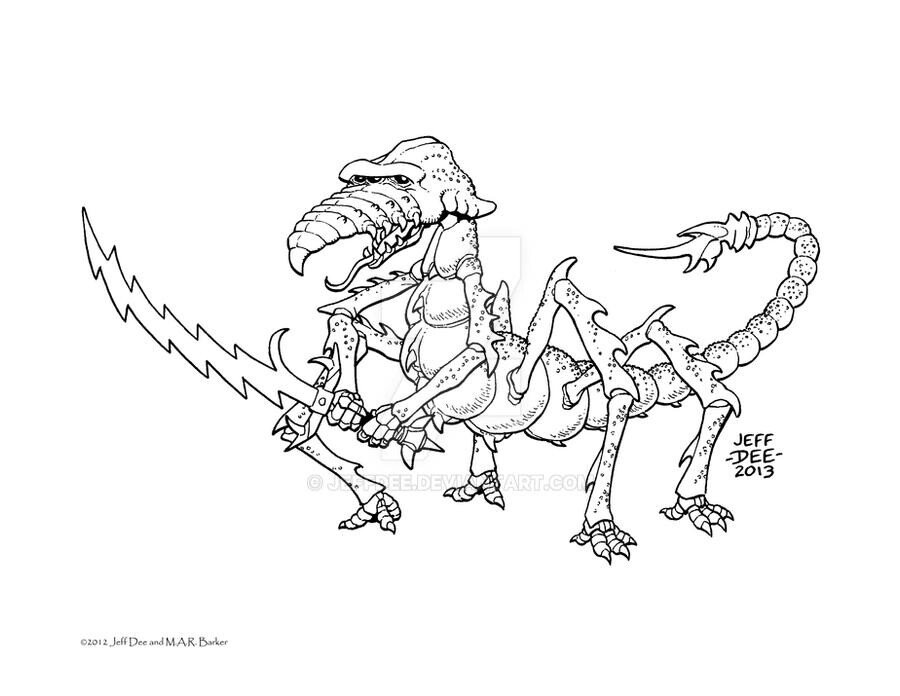
Art by Jeff Dee, source


Saturday, 7 May 2022

My Overview of Rockhome

Illustration by Clyde Caldwell, source

The Kingdom of the dwarves is right in the middle of the Known World and shares borders with many other nations, including Darokin, Ylaruam, the Northern Reaches (Soderfjord Jarldoms and Vestland) and the Ethengar Khanate. Yet strangely enough not many adventures are set in it. A few possible reasons spring to mind:

Dwarves, the predominant race, only have 1 character class according to the core rules. Both Gaz6: The Dwarves of Rockhome and I have added the Dwarf Cleric class, which are similar to each other. Which one you choose is up to you as a group. But even so, 2 classes does not offer quite as many NPCs and possibilites as the basic 4 for humans (fighter, cleric, thief and magic-user). So dwarves could seem all a bit samey. And the absence, or at least rarity, of arcane magic  reduces possibilities in that area. 

Rockhome is fairly stable politically. There are no rivals to the throne, no major rebellions and no imminent invasions. 

There is no mentions of ancient civilizations within its borders. There is no equivalent of Nithia or the Lizardmen of Mogreth that Ylaruam has, or the Traldar of Karameikos. 

But there are good reasons why the dwarves of Rockhome could be hosts to lots of adventures:

Lots of external enemies. The obvious ones are the humanoids - the orcs, goblins, trolls, ogres and the like, some of whom have established footholds within the borders of Rockhome. Although Rockhome does not share a direct border with the Broken Lands, they are not so far away and humanoids can move through the Orclands of north-eastern Darokin with impunity. But there are other enemies. Glantri may not consider itself a true enemy, more like ruthless investigators, but the dwarves of Rockhome view them as threats to be dealt with. The Ethengar Khanate raids the dwarves because, well, that's just what they do. The Elves of Alfheim are perpetual rivals with the dwarves, and goading each other seems to be a common hobby, almost a sport. 

The many connections to other civilized nations means opportunities for trade, diplomacy and espionage, including some that are quite far away, such as Thyatis, Alphatia, Karameikos and Ierendi. All of them would like to benefit from Rockhome's mineral wealth. 

Lots of borderlands. It is no coincidence that a lot of Rockhome's population is centred around the two lakes Stahl and Klintest. This is where the agriculture is and where trade and travel is easier. That leaves a lot of land area, predominantly mountains and near the national borders, with not much  marked on the map. And as any good DM knows, just because an official map doesn't have anything marked on it, it doesn't mean the DM can't put anything there. Humanoid tribes are the obvious choices but there are many less obvious ones, including monstrous lairs, independent human realms and perhaps dwarves who have lost contact with the rest of the kingdom. Blank areas on the map are simply empty canvases for DMs to do their own doodles and perhaps a real piece of art. 

Dwarves are excavators of epic dungeons. The name of the game is Dungeons and Dragons, and dwarves are very talented at carving out homes, strongholds, mines, workshops and so much more into the deep earth. Although the dwarves hold onto many of these underground structures (such as Lower Dengar), there are others that have been abandoned or the dwarves have been driven out. My own contribution to this is Tarrag Duun in Karameikos, but you can bet your last d20 that there are more like that dotted around the borderlands of Rockhome. Tarrag Duun itself was inspired by Tolkein's Mines of Moria and the kingdom of Erebor based within the Lonely Mountain, both created by Tolkein's dwarves. The Mines of Moria are, in a way, the Ur-dungeon, the prototype on which so many other dungeons have been based. 

Dwarves have their own magic. Although they do not have magic-users, dwarves have access to means and ways of creating their own enchanted weapons, armour and other magic items. And their clerics, although in some ways similar to human clerics, could well be given access to powers and spells their human counterparts are not aware of. Dwarves can achieve immortality and become saints, exalted or even chaos princes. And despite what the gazetteer says, Kagyar is quite capable of sponsoring heroic dwarves he considers worthy of immortality. This means there are ascended dwarf saints with their own clerics and sects that I intend to look at in a later post. 

Dwarf History is long. This ties in to the excavating dungeons and perhaps also the discovery of dwarven magic items. 2,800 years have passed since Kagyar created the first dwarves (1800 BC) and a lot of things have happened since then, even within the relatively stable land of Rockhome. Towns, fortresses and family lineages have risen and fallen. Battles have been fought, plots schemed and occasionally thwarted, works of art created and perhaps lost, other nations have been traded with, fended off and negotiated with.   

In short, there are a lot of adventures to be had in Rockhome, and I intend to write about some of them in this blog. 

Monday, 2 May 2022

My ideas about Norwold

Norwold was introduced in CM1: Test of the Warlords, the first adventure module written with the Companion Rules in mind. Being further north than the "classic" Known World, it has a cooler, subarctic climate and borders on true arctic wastelands to the north. Since one important aspect introduced in the Companion Rules was PCs building and managing dominions, there was a certain expectation (and indeed encouragement) that PCs should try to set up their own strongholds and fiefdoms in this region. This was complicated by the two great empires of Mystara, Thyatis and Alphatia, who both wanted to rule this region and its resources. PCs could ally themselves and their dominions to one of these great nations. 

Illustration by Clyde Caldwell, source

My ideas about Norwold

As my basic map, I am starting with this magnificent piece of cartography by Robin (6inchnails on Deviant Art) though I expect I will add my own stuff to it. 

Map by Robin/6inchnails: source

The wildlife in this region is dominated by iconic creatures of the Ice Ages, including woolly mammoths, woolly rhinos, sabertooth tigers, cave bears and dire wolves. Mammoth steppe and tundra make up wide stretches of the wilderness. As this is D&D, there are quite a few magical monsters as well as natural animals, including white dragons, frost giants, winter wolves and arctic variants of established monsters including the all-white arctic griffon and the dread arctic chimera (with the heads of a white dragon, musk ox and polar bear instead of the usual red dragon, lion and goat). Random wilderness encounters are found in this post.

So my ideas include this region being not just for characters of Companion level (15th-25th)  but also Basic and Expert (1st-14th). I reckon if the DM is sensible about what encounters the PCs run into, the Norwold region could be the setting for an entire campaign. There are plenty of humanoid and human tribes to keep low level characters occupied, including familiar goblins, ogres, bugbears and the less common quaggoths and taer. Neanderthals have made parts of Norwold their hunting territory. 

The competition between the Thyatians and the Alphatians brings its own adventures, particularly if the PCs take sides, even if they don't yet have their own dominions or strongholds. Direct warfare, trade disputes, diplomacy towards native allies and espionage all benefit from the skills that adventurers can bring. The Alphatians are primarily based in Alpha, on a peninsula jutting into the Great Bay of Norwold. Oceansend used to be a Thyatian possession but is now independent, with only cultural ties to Thyatis. Landfall has experienced both Thyatian and Alphatian influence but is now in the grip of the criminal gangs. 

The Heldannic Knights are another national faction that can make its presence felt in the south of Norwold. Aggressive, territorial and capable of both great nobility and terrible brutality, I envision them as similar to the Teutonic Knights of northeastern medieval Europe, launching their own crusades against what they consider the inferior pagan tribes. Although they might be cautious where the two great empires of Alphatia and Thyatis are concerned, they are certainly not cowed into submission.  

Although in the normal course of wilderness adventures the weather is usually not serious enough to count as a threat, in Norwold the weather and seasons can be deadly, particularly winter and blizzards. I have included some of these in my random encounters for Norwold. Rules for frostbite, hypothermia and similar cold-weather effects should be considered by the DM and any sensible PC. Starvation and the ability to start camp fires become serious issues. Norwold is no place for the weak or unprepared. 

Finally there are the Arvorians, a truly ancient race not that different from elves. Their civilization was  contemporary of ancient Blackmoor. But while Blackmoor dabbled with science, the Arvorians turned to darker, more malevolent powers from other planes of existence. If the Blackmoor civilization was D&D meets Star Trek, the Arvorians were D&D meets Call of Cthulhu. And despite the cataclysm that destroyed Blackmoor and changed the globe, they have not entirely died out. Deep beneath their shattered ruins scattered across the north of Norwold there are surviving Arvorians and they still follow their evil and chaotic powers of darkness. Even worse, they seek to summon and unleash their alien patrons on an unsuspecting Mystara. The Arvorians have also lured various chaotic humans including Chaos cultists into their plans, with the promise of destroying the forces of Law and Order. Just as chaotic cultists can use orcs and goblins as pawns to further their games, so to the Arvorians manipulate and encourage the human forces of Chaos to act on their behalf, and thus on behalf of powerful beings that seek to inflict damnation and destruction across the whole of Mystara.