Thursday, 27 July 2023

My Ideas about the Minrothad Guilds

The Official Version of the Minrothad Guilds

South of Karameikos, east of Ierendi and west of Thyatis there is a cluster of islands where merchant-princes, privateers and craftsmen ply their trades - the Minrothad Guilds. This is based on Gaz9 in the Known World gazetteer series. 

Art by Clyde Caldwell. source

My feelings about the official version of Minrothad? Unimpresssed. It does not grate against my perception of verisimilitude the same way as Ierendi does - I consider it far more plausible. But I am not that interested in the adventures the setting is geared towards. The authors decided this was a place of commercial and political intrigue but I prefer D&D to be about action, adventure and high fantasy. Maybe I am just not the target audience?

There is a lack of substantial terrestrial wilderness. The seas around the islands are wild in their own ways but sailing in a ship has a different sort of dynamic to a party hiking or riding through hills and forest. And the B/X rules simply don't have the range of maritime monsters to inspire many seafaring adventures, unless one finds monsters and animals from either supplements such as AC10 Creature Collection or from other editions such as 1st Ed AD&D. Having said that there are various aquatic races and monsters in the Sea of Dread that can threaten adventurers and the ships they sail on. 

There is also a lack of ruins and dungeons. Again I understand the writers were not interested in that sort of adventure. But to ignore that aspect of D&D completely for a whole nation such as Minrothad is a mistake in my opinion. Perhaps I am being harsh here - I remember my discussion about dungeons in Karameikos. The absence of named dungeons in the gazetteer does not prevent DMs from placing their own dungeons and ruins. But its not as if the gazetteer has much background to suggest suitable dungeons. 

There is a lack of bad guys and monsters, at least on land. I know that this is intentional and that situations in the Minrothad Guilds are intended to be either morally vague or complex. I don't mind that in some situations, but to have a whole gazetteer where the party is almost discouraged from fighting seems weird and not the sort of D&D I would choose to play. I should add that this is something of an exaggeration - there are some bad guys, most notably pirates, but there is nothing in the gazetteers that suggests a threat to towns, cities or institutions of Minrothad that would require the intervention of brave adventurers to save the day.  

Finally the guilds themselves don't cover trades and professions I would have expected while covering some rather mundane crafts that I would not have bothered with. Although there is a chapter on religious beliefs in Minrothad there is no explanation as to whether clerics are involved in the guild structure that the rest of the nation is composed of. Meanwhile we know who the master of small shell workers is. But there is no mention of entertainers such as jesters or musicians. Somehow I find the guilds that are meant to make this nation unique to be actually a bit boring. Minrothad has no dragons, no ogres, no hordes of savage orcs, but there is a chance the PCs might encounter some unruly cabinet-makers.... 

Part of me is tempted to just ignore this nation. The authors of the gazetteer and I have different ideas about what is interesting and exciting. Maybe this is acceptable? After all, not every nation needs to be a hotbed of adventure and conflict, and having the Minrothad Guilds as the most stable and peaceful nation in the Known World of southeast Brun might not be so bad.  But another part of me has other ideas. 

My ideas about the Guilds of Minrothad 

While reading Gaz9 I ended up thinking about some other D&D settings with very different takes on guilds - Planescape's city of Sigil with its 15 factions (at least before the Faction War) and Ravnica, City of Guilds, ported over from Magic: the Gathering and given D&D 5E stats in "Guildmaster's Guide to Ravnica" with its 10 guilds. I'm not going to directly copy either of these over to Minrothad but to me they both show how interesting, dramatic and radically different the groups that make up a fantasy society (either a collection of islands or a city-state) can be. 

The guild structures laid out in the gazetteer were once true but have now been replaced. In 990 AC the Guild Master Oran Meditor reorganised the guilds. This caused a lot of turmoil and anger, but the reforms have nonetheless stuck.  Firstly guilds can have branches, sub-guilds that specialise. This allows for particular professions to maintain their own unique traits within a larger general guild

Several new guilds have sprung up, most notably the Guild of the Spiritual, the newest political guild. Its branches include a branch for each of the major faiths in Minrothad (as detailed in Gaz9 Players' booklet). However, the Guild of the Spiritual also includes the Undertakers and Gravediggers Branch and the Orphan-keeper and Alms-giver Branch. The Guild of the Spiritual is the obvious guild for clerics, but not everyone in this guild is necessarily a cleric. Visiting clerics of other faiths can join the guild of the Spiritual but are not required to join a specific branch. 

The Guild of Governance is a new political guild based in Minrothad City that now includes the Lawyers and Judges branch, the Record-keepers Branch and interestingly the Public Works Branch that keeps roads, bridges, docks and other public infrastructure in working order. This guild is quite small but since the decisions of the judges in the guild are widely (though not universally) accepted, it has rapidly become very influential. It has also absorbed those who worked in the Treasury and the Master Treasurer, currently Eliz Blanceer, is the head of the Guild of Governance. The Senechal of Minrothad City is now considered the deputy guildmaster and the person responsible for keeping an eye on the Guild of Governance, making sure it stays neutral and honest. The Jailers and Executioners Branch of this guild is particularly feared. 

The Privateers Guild was mentioned in the gazetteer but not incorporated into the guild structure. It has now been turned into the Privateers Branch, now part of the Mercenaries Guild. Officially it is considered Minrothad's navy, ready to defend the island from seaborne threats. Unofficially members of the Privateers Branch are little better than state-sanctioned pirates. 

The Merchant-Sailors Guild is still the most powerful and influential guild but it has no branches - instead it has companies, similar to modern commercial companies or perhaps the great merchant houses of Darokin. Nearly all members of the Merchant Prince class are part of this guild and although a few are solo traders, many have banded together into companies to pool their resources and talents. 

There is some leeway as to which character classes can join which political guild. Previously all fighters were expected to join the Mercenaries guild, all magic users joined the Tutorial Guild and thieves joined the Thieves Guild. Now the guilds will accept members of different classes at their discretion. This means that there are a few battle mages, battlefield chaplains and sneaky scouts among  the Mercenaries Guild, the Tutorial Guild has a few bodyguards and clerical scholars, the Thieves Guild has a few heavy enforcers and criminally-inclined mages, and the Spiritual Guild has a few temple guards and devout mages. But the majority of each guild are of its traditional character class. 

The Family Guilds are furious with the Guildmaster who decreed that they should be open to members of any race as long as they are competent at their profession and are loyal to the guild. Previously each guild had been very race-specific (Guild Corser for humans, Guild Elsan for Water Elves, Guild Hammer for Dwarves, Guild Quickhand for Halflings and Guild Verdier for Wood Elves). Now although most of each guild's members are of the traditional race, more and more of other races are being accepted, albeit grudgingly. There have been accusations of harassing and ostracising those who do not fit the guild's traditional membership. 

Guild Corser has established the Farmers Branch, a fairly broad-ranging group who all focus on producing the basics for food to feed the Minrothad Guilds and maybe beyond. The Butchers Branch, the Chefs' Branch and the Bakers Branch all cook and prepare the food and sell it to the public. But the guild master is still annoyed at losing the Master Magic Dealer who was transfered to the Tutorial Guild.

Guild Quickhand has founded the Entertainers Branch, where acrobats, actors, jesters and musicians and even storytellers all find their place in the guild structure. 

The big threat to the Minothrad Guilds is not invasion but infiltration. The Cobra Cabal is a shadowy conspiracy to subvert and take over the existing guilds. Unlike the Cult of Chaos, the Cobra Cabal is primarily driven by greed rather than ideology - a criminal organisation that seeks to acquire as much money and influence as it can without being confronted by the authorities. The Cobra Cabal seeks to establish its agents in every guild and hopefully every branch. Agents and members of the Cabal have already established themselves in both the Merchant-Sailors Guild and the Privateers Guild where they can command several ships. Crew who are not loyal to the Cabal have been replaced by various means including fatal "accidents" at sea. Similarly there is a company within the Mercenaries Guild, the 15th Company, that has become effectively the Cabal's own soldiers. The Thieves Guild is aware of a number of their members who have defected to the Cabal and the master is worried that there are some who have yet to declare their true allegience openly. 

I shall cover non-guild matters in a later post.

Wednesday, 19 July 2023

The Avenite Crystals of Aalthir

Avenite is a very rare mineral, crystal clear like glass but much lighter, almost weightless. It is found on the Elemental Plane of Air and also occasionally on cloud islands on which cloud and storm giants build castles. Named by a Thyatian alchemist wizard after the old Thyatian name for bird, Aves, because it enabled constructs to fly like a bird. 

Avenite can be enchanted to levitate when a Fly spell is cast upon it, and it can carry vastly more than its own volume, perhaps a hundred times. It also responds well to Permenance spells, so if the Fly spell is made permanent, the crystal will levitate for decades, perhaps centuries. This has proved incredibly useful in creating flying structures, including some Alphatian skyships (though not all use Avenite), flying building and even flying cities. 

It is massive Avenite girders running through the underbelly of Aalthir that keep it afloat.  Without them supporting the city structure, Aalthir's million tons of rock, earth, buildings, goods and people would crash down to the surface, killing everyone in the city and causing devestation for miles around. These Avenite girders were installed underneath the city before it ever lifted off, the girders were then enchanted and then the rock underneath was removed to detach the city from the ground. 

Avenite, as one can guess, is a very valuable mineral, and therefore worth stealing. It is possible to remove the Avenite from the foundations of Aalthir though if enough is taken this of course will affect the buouyancy and stability of the floating city. 

The illegal miners are a gang from the less salubrious quarter of Aalthir where non-mages live, including manual workers, dwarves, halflings and a few actual thieves. They chip away at the crystals that then fly up to the top of the tunnel in which they are digging. The crystals are prised off the ceiling and into a bag of holding where they can be carried around with neither upward forces nor bulk - bags of holding are ideal for smuggling the Avenite crystals out via the Hall of Portals. Customers for these fenced crystals include mages and engineers from across the Known World, especially Thyatis and Glantri, Alphatia's major rivals, who have no qualms about an Alphatian city falling to its doom. 

Here is a quick map of the tunnels into the Avenite crystal girders. As can be seen, the mine starts with a ledge protruding from the side of Aalthir's rocky base from which the thieves have worked inwards. The small pool of water is where the miners accidentally hit a drainage pipe - the water is from the streets  above and is dirty and smelly. 


This could be modified and extended for a far more complex network of tunnels and chambers. Also the stats for the miners and their guards is left to the DM so the encounters can fit the level of the player characters.

It is unlikely any wild monsters will have found their way into the tunnels as the entrance is a mile above the ground, and half the time it is over seas and oceans. Nonetheless it is possible for flying creatures that nest in caves to find their way in - giant bats, stirges and harpies spring to mind. It is also possible that the thieves or maybe their overseers have brought along or summoned monstrous guardians such as constructs, animated undead or elementals. 

Monday, 19 June 2023

Liches of the Known World

art by Dave Trampier from
1st Ed AD&D Monster Manual
From a game point of view liches are not part of the Moldvay/Cook B/X rules but they are introduced later on, first in Frank Mentzer's Masters Rules and then also in the Rules Cyclopedia. Liches were formerly magic users of levels 21-36, and so are powerful and share many aspects with living NPC mages. Personally I am not keen on the idea of liches being just one more random monster rolled as a wandering monster in a dungeon - I see them as powerful NPCs, with personalities, backgrounds and connections to other NPCs. They could be major villains, perhaps playing an ongoing role within a campaign and their influence may be felt far from their lairs. 

Liches are above all intelligent and should behave so. A lich is loathed to tackle adventurers who have a real chance to destroy it - the lich will pick fights that it is sure it can win. A lich will use all the resources available to it - allies, undead minions, living servants both human and monstrous, mechanical traps and of course magic - lots of magic. A lich will have accumulated a range of spells and magic items, perhaps some of which are unique. A lich that is caught unawares by adventurers is more likely to be annoyed with itself than with the adventurers, though it will do what it can to neutralise the threat, probably by killing the adventurers first, before considering where it went wrong. 

Although the phylactery described in the AD&D rules is not mentioned in the Masters rules, the DM may well rule that liches of Mystara have similar phylacteries that house their souls. If their bodies are destroyed but not the phylactery, the lich will reform within a week. Thus any adventurers intent on destroying a lich will need to find and destroy the phylactery either before or within days of slaying the lich's body. As one might expect, liches can be very cunning about both the form and the hiding place of their phylacteries. 

In Mystara most liches come from nations and cultures with a strong tradition of magic and wizardry. These places are most likely to produce the powerful mages who then take the step into lichdom. Alphatia and Glantri are known to have been the home of several liches. But liches are by no means restricted to these places. Here are a selection of notable liches in my version of Mystara.

Notable Liches of the Known World

Rahotep of the Shadows (30th level MU): Rahotep is found in the lower levels of the ruins of Allaktos in Ylaruam. As his name suggests, he was originally a Nithian sorcerer, and a skilled one at that, leading a circle of likeminded sorcerers at Allaktos and having several apprentices under his command. During the fall of ancient Nithia he took the transformation into undeath. He is not the only lich in Allaktos but he is both one of the most powerful and also more sane liches - while some threw themselves into sanity-draining soul magic, Rahotep only dabbled with it. He currently leads a faction  of undead within Allaktos that seeks to take control of the dungeon complex. What they then plan to do is unknown but Rahotep has nothing but contempt for living mortals, so once he starts looking out beyond Allaktos, the consequences of his actions could be terrible for the inhabitants of Ylaruam. His two weaknesses are firstly he is not entirely sane - he is egotistical and megalomanic, believing that he is unbeatable and destined to reconquer all of Nithia. Secondly he has not been keeping up with the outside world - he has been so focused on what has been going on in Allaktos with fellow undead he is not aware of the rise of Al-Kalim and the Eternal Truth in Ylaruam or even the rise of the Thyatian Empire. Any world events since the fall of Nithia seem to have passed him by. 

Meltherrion (28th level MU): Meltherrion is found underneath Corunglain in northern Darokin. He transformed into a lich only a hundred years ago. He is in many ways chaotic, selfish and ambitious, but he bears no ill will towards his country or the inhabitants of Cornuglain. However, he hates and despises orcs and goblins who slew his brother, nephew and nieces when he was still a mage's apprentice: he has therefore become an unexpected ally of Darokin against the encroaching hordes from the Broken Lands. Meltherrion's lair is deep below the streets of Cornuglain, guarded by various constructs and summoned things including living statues, golems and earth elementals. The humans in the city above are generally not aware of him so leave him alone but the humanoids, particularly goblins and kobolds, have started tunnelling under the city, and occasionally into his lair. When this happens he unleashes his fury on them, and then uses magic (Rock to Mud, Stoneshape and Wall of Stone) to reseal the intruders' tunnels. Only a handful of living humans are aware of Meltherrion, including Desmona Starstriker, the resident archmage of Cornuglain. Although uneasy about having a lich lair directly underneath the city, she has accepted Meltherrion is the lesser of two evils. Maggie Tremontaine, a prominent cleric within Cornuglain, is less tolerant and believes that Meltherrion will eventually become a greater threat than the humanoids of the Broken Lands. 

Ellaria the Studious (36th level MU): Ellaria is from Alphatia and throughout her life, even as a child, she was fascinated by the study and research of arcane magic. Shortly before she became a lich, she jumped onboard the flying city of Aalthir where she still resides, albeit in a secluded tower. She became a lich mainly because she wanted more time to study and research - she has so much work to do and so many topics to investigate and a human lifetime is simply not long enough. If engaged in conversation about magic, especially research and new spells or new magic items, she becomes both friendly and talkative. If however, she is interrupted in a way that she does not care for, she will react with extreme annoyance, which generally means the swift destruction of whoever is disturbing her. Ellaria has a number of living apprentices (mages of levels 10-20) who act as her agents and emissaries, bringing research materials, dealing with city authorities and keeping prying eyes away. Interestingly enough Ellaria can tolerate these apprentices as long as the topic being taught interests her. They in return have a powerful and very knowledgeable tutor and patron (matron?). She occasionally wanders the flying city at night, using both practical and magical disguises. The city authorities suspect that Ellaria is not entirely normal but can prove nothing and until she does something that warrants intervention, the city council has decided to leave her and her apprentices alone. 

Zaggratch the Damned (30th level MU): Zaggratch dwells deep under Derothgar the Fortress of the Damned. She is the arcane advisor to Baelforg Soulripper and some in the cults of Chaos say she is the true power behind that throne.  Zaggratch took a shortcut to lichhood by asking the powers of Chaos for assistance. She is now fully committed to the philosophy of Chaos and seeks ascension to become a Chaos Princess. She has visited other worlds to find resources she could exploit in her quest for more power - one of these was Oerth, the World of Greyhawk, where she learned about Vecna. Vecna has now become a sort of role model for Zaggratch - she wants to establish a realm of undeath and terror across Mystara and eventually perhaps ascend to the ranks of the immortals. Derothgar is not much of a dominon from her point of view but she considers it a start, a base from which to expand across the Known World. 

Anashfet (26th level cleric): Anashfet is described in detail here. Unusually, he has chaotic clerical powers rather than magic-user spells. 


art by Jeff Easley from D&D Masters Rules

Monday, 12 June 2023

Logos Location #4: Kamroth's Cairn

Introduction

Thanks to Dyson Logos' generosity, he has made a large number of his high quality maps available for use. I have decided (with his approval) to incorporate these into locations within Mystara. 

This is a quick dungeon adventure aimed at a party of 3-6 characters of levels 4-5 using the B/X D&D rules with a few of my own creations. 

Kamroth was a vicious and notorious worshipper of Chaos and a raider and reiver on the borderlands in the north of Karameikos. For more than 20 years from 922AC to 943 AC he caused terror and misery among the Traldar humans (of which he was once a member) and the Callarii elves, launching raids south from his base to the north of Karameikos. In battle he wielded a terrible blood red sword called Widowmaker while one of his lieutenants would bear the Screaming Standard, a cursed banner that would utter encouragement of vile deeds, praise to dark powers of Chaos and blood curdling shrieks.  He was slain by a champion of Law in an ambush set in an apparently defenseless village called Threshold. His warband was dismayed and fell back, retrieving his body for burial befitting his status in their eyes. They constructed a mighty underground tomb complex. Many of his original followers then wandered off or died, but some still remember his brutal exploits. 

Now a new up and coming Chaos Warrior, Lord Tergian, has decided to take up Kamroth's mantle, and Kamroth's Cairn has once again become a base of evil and aggression. The final straw that has prompted the civilized authorities to action was raiders slaughtering several farmsteads only a few miles from Threshold. Although orcs and goblins might have done similar, the few survivors reported that these raiders bore the Screaming Standard into the fray. This incursion of Chaos must be stopped now and the Screaming Standard and those who stand with it must be destroyed. 

Cartography by Dyson Logos, source
Note about the dungeon: Most of the areas here are lit by torches and lanterns because the chaotic human inhabitants cannot see in the dark. 
Repeatedly encountered monsters with the same stat blocks are given stats further down. Although default hit points are given, feel free as DM to roll hit points yourself if you prefer. 

Key to the map: 

  1. Upper guard post: 1 ogre + 1 chaos guard (F3). These two are on guard duty and will attack any intruders. There is a small table and 3 stools. There are tankards of ale on the table. 
    1a) Latrine. The cupboard on the east wall is the latrine for the dungeon, with a big sturdy bench with a hole cut out over a very deep pit. The stench is horrible and anyone opening the door or entering the latrine must save vs poison or be nauseated (-2 to hit & saving throws for 1d6 turns). 
  2. 4 gnolls + Vestagar the chaos vicar (AC 2, Mv 60ft, HD C4 (16 hp) THAC0 16, Att 1 mace for 1d6+2, Save C4, Ml 10, Align C, XP 200, equipment: banded armour, shield +1, mace +1, dark robes, unholy symbol, 66gp, 20pp, spells: Cure Light Wounds, Rage, Hold Person)
  3. 2 ogres +1 ogre Leader Garroth (AC 4, Mv 90ft, HD 6+2 (28hp), THAC0 13, Att 1 oversized axe for 1d10+2, Save F6, Ml 11, Align C, XP 350, equipment: oversized chainmail, oversized axe). This room has 5 oversized mattresses and is the ogres' main room. Garroth has accumulated a lot of treasure, both from bribes and plunder, which he now keeps in a big leather sack under a flagstone (containing 2300gp, 12,000sp and 500pp), which is not well-hidden (anyone looking around this room will notice the flagstone looks wonky). 
  4. Lower guard post: 1 troll (AC 4, Mv 120ft, HD 6+3 (33hp), THAC0 13, Att 2 claws/1 bite for 1d6/1d6/1d10, Save F6, Ml 10, Align C, XP 650, renegerate 3hp/round except from fire & acid) stands guard here. He has only a small bandolier with 3 pouches, first one has a collection of rat skulls (just the troll's hobby, nothing magical), second has 3 amber gems worth 200gp each, and third one has a silver and jade necklace of elven design worth 1000gp. 
  5. This grand chamber has a central lower section with huge square pillars along its length. To either side are balconies 10ft up with low (2ft) metal railings running along the edges and a high ceiling (20ft above the balconies, 30ft above the lower centre). 
    a) Grand chamber north: 3 ogres in lower centre, 4 gnoll archers (stats as gnolls but also carrying longbows and 10 arrows each) up on the west balcony. The ogres will charge straight into melee while the gnolls have a bit more tactical sense and will use their bows to attack spellcasters and the like
    5b) Manticore nest: Here is a manticore (AC4, Mv 120ft/fly 180ft, HD 6+1 (hp 34), Att 2 claws/1 bite for 1d4/1d4/2d4 or 6 tail spikes for 1d6 each (180ft range), Save F6, Ml 9 Align C, XP 650). It has had its treasure confiscated after it ate an ally (an ogre) though it has managed to hold onto one item, a perfect opal gem worth 2000gp. The manticore will use the layout of the room, its flying and its shooting spikes to its advantage, flying from one side of the chamber to the other to avoid stronger intruders and attack weaker ones. 
    5c) Grand Chamber south: 2 monstrous statues that are actually 2 gargoyles (AC5, Mv 90ft/fly 150ft), HD 4, hp 18, 19, THAC0 16, Att 2 claws/1bite/1 horn for 1d3/1d3/1d6/1d4, Save F8, Ml 11, align C, XP 125 each, immune to non-magical attacks) that will attack if touched. Also up on the balconies are 2 cupboards. One (the west) is empty but the other (east) is trapped with a pair of crossbows (2 bolts, THAC0 14, Dam 2d4 each).
  6. Guard barracks: 2 chaos guards are resting here. This room has 3 bunk beds that 6 of the chaos guards use. 
  7. Gnoll chief Regthak (AC 5, Mv 90ft, HD 3 (hp 16), THAC0 17, Att 1 battleaxe for 1d8+2, Save F3, Ml 10, Align C, XP 35, equipment: chainmail, battleaxe +1, dagger, key to treasure chest) + 3 gnolls.  This room has various straw mattresses littered around and it has become the gnolls' informal headquarters. Regthak has a locked chest (the key is around his neck). Inside are 1000gp, 3 zircon gems worth 100gp each, 2 potions of extra healing (heals 3d6+3 damage) and a potion of flying
  8. Kamroth's tomb. The door to this chamber has a notice scrawled in common tongue: "Show respect or face Kamroth's wrath!". This chamber is dominated by a stone sarcophagus in the centre. If disturbed, Kamroth's spirit rises and attacks as a wraith (AC 3, Mv 120ft/fly 240ft, HD 4 (hp 21),  THAC0 16, Att 1 touch for 1d6 + level drain, Save F4, Ml 12, Align C, XP 175, wraiths are immune to non-magical weapons, silver weapons do half damage, immune to poison, sleep and charm. The touch of a wraith drains 1 energy level per hit). There is no treasure here - inside the sarcophagus are the mouldering skeletal remains of Kamroth himself. 
  9.  Training room & armoury. There are 3 gnolls + 2 chaos guards sparring with each other. Against the wall are several wooden dummies, two archery targets and racks with mundane weapons (spears, swords, battleaxes, gnollish longbows) and a barrel with 100 arrows, plus a rack with 4 sets of human-sized scale mail, 3 sets of human-sized chainmail and 3 sets of gnoll-sized scale mail (a bit big for humans). 
  10. Chaos sergeant Bruffun (AC 2, Mv 60ft, HD F5 (30hp), THAC0 14, Att 1 halberd for 1d10+1, Save F5, Ml 10, Align C, XP 225, equipment: Plate Mail +1, halberd , dagger, 65gp, 22pp)  + Magnata the chaos curate (AC 2, Mv 60ft, HD C5 (hp 20), THAC0 16, Att 1 warhammer for 1d6+1 or spell, Save C5, Ml 10, Align C, XP 225, equipment: plate mail, shield, warhammer +1, unholy symbol, dark robes, 40gp, 42pp, spells: Cause Light Wounds, Darkness, Aura of Shadows, Hold Person).
    Magnata is the leader of the chaotic clerics in the cairn and Bruffun is Lord Tergian's right-hand man, mainly responsible for the chaos guards but also keeping the peace between the gnolls and the ogres. They live together here. 
  11. a) Long hall north: 2 Chaos Priests (AC 3, Mv 90ft, HD C3 (hp 10 & 9), THAC0 19, Att 1 mace for 1d6 or spell, Save C3, Ml 10, Align C, XP 50 each, equipment: banded armour, shield, mace, unholy symbol, dark robes, 20gp each, spells: Rage, Cure Light Wounds). They have been tasked to help guard the Screaming Banner. 
    11b) Long hall centre: The Screaming Standard. This grim icon is an ivory white banner with a monstrous face painted on with some sort of dried blood, mounted vertically on a bronze pole. It is enchanted in several ways. Firstly on command when held by a chaotic character it will utter exhortations to chaotic troops and yelling praise to the powers of Chaos - this is similar to a Bless spell, giving friendly chaotic creatures within 120ft +1 to hit rolls, damage and morale checks. Secondly if a lawful character approaches within 10ft while it is unattended it will behave as if a Shrieker, screaming for attention (alerting the chaos priests at 11a and chaos guards at 11c and any other creatures within 60ft). Thirdly on command by a chaotic character of 5th level or more it will roar, causing any unfriendly creatures to save vs spells or be affected by a Fear spell. All the chaotic creatures in this dungeon revere it as an unholy artifact, a gift from the dark powers of Chaos. The banner is in its own alcove between two monstrous looking statues. Unlike area 5c these really are just statues. 
    11c) Long hall south: 4 chaos guards who will respond if the Screaming Banner is disturbed. 
  12. Chamber of Serpents: This room contains a pool in which there are 3 rock pythons (AC 6,  Mv 90ft, HD 5 (hp 21, 24, 18), THAC0 15, Att 1 bite for 1d4 or 1 squeeze for 2d4, Save F3, Ml 8, Align N, XP 300, If bite attack is successful the python will wrap itself around target and squeeze for automatic 2d4 damage per round (no need to roll to hit)) which attack anyone who comes near. 
  13. Lord Tergian the Chaos Warrior (AC 1, Mv 90ft, HD F7 (hp 40), THAC0 10, Att 1 sword for 1d10+3, Save F7, Ml 12, Align C, XP 950, equipment: Plate Mail +2, Widowmaker (two-handed sword +2, Chaotic alignment, Int 8, Ego 8, spec powers Bleeding Wounds: anyone hit by widowmaker suffers damage as normal and also loses 1d4hp per round for 2d4 rounds or until healing magic is used), dagger, 2 x potion of extra-healing (3d6+3 hp healed). This is Lord Tergian's quarters, including his bed, chest of personal belongings and some rather sick trophies. Both Lord Tergian's armour and Widowmaker are suitably gothic and ornate, both being made out of Hellforged Iron
  14. empty
  15. 1 Rhinoman (AC 3, Mv 90ft, HD 7+7 (35hp), THAC0 12, Att 1 weapon/1 horn for 1d8+2/1d4+2, Save F7, Ml 11, Align C, XP  450, Charge:20ft or more charge distance gives +2 to hit with both attacks & double damage)+ treasure. This rhinoman is utterly loyal to Tergian who saved it from the sadistic wizard that created it. In return the rhinoman guards Tergian's treasure hoard, 2 chests, the first contains 25,000sp and 4000gp, the other contains 2400gp, 480pp, a scroll with the MU spells Sleep, Magic Missile and Ventriloquism, a wand of Web spells (6 charges left), a silver and ivory helmet of dwarven design with intricate engravings of dwarven heroes worth 600gp and 6 gems worth 300gp each (2 tourmalines, 2 spinels and 2 beryls)
  16. empty
  17. Storage chamber: this is guarded by 2 gnolls + 1 chaos guard.  It contains the provisions used by the residents, including lots of bread, salted meat, potatoes, barrels of beer and wine, and less savoury items for the more ravenous monsters.  
    17a) Stairs down. At the DM's discretion this could be a simple dead end, or it could lead on to deeper and darker dungeons. 

Stats for commonly encountered monsters

Chaos Guard: AC 4, Mv 90ft. HD F3 (14hp each), THAC0 16, Att 1 sword for 1d8+1, Save F3, Ml 9, Align C, XP 50, equipment: chainmail, sword, shield, dagger, 2d6gp

Gnoll: AC 5, Mv 90ft, HD 2 (9hp each), THAC0 18, Att 1 weapon for 2d4, Save F2, Ml 8, Align C, XP 20, equipment: scale mail, shield, spiked club or gnoll-axe, 4d6sp

Ogre: AC 5, Mv 90ft, HD 4+1 (19hp each), THAC0 15, Att 1 club for 1d10, Save F4, Ml 10, Align C, XP 125, equipment: oversized club, 2d6gp

Destroying the Screaming Standard and Widowmaker 

The Screaming Standard (from area 11b) and the intelligent sword Widowmaker are both useful magic items in themselves and also revered symbols of the power of Chaos. Whoever wields them commands respect from many chaotic humans and other creatures, as Kamroth once did and as Lord Tergian does now. Destroying them would remove two rallying points for the forces of chaos and thus be a good thing for the forces of Law and civilization. Although these two chaotic magic items could be considered by the DM to be just as breakable as non-magic equivalents (i.e. the banner could just be burned and the sword broken with a sledgehammer to the flat of the blade), I prefer the idea that such vile magics are not so easily undone.  

Destroying Widowmaker can only be done in a place where magical weapons are forged. It is suggested that there is an abandoned dwarven Forge of Power lost somewhere in the southwest of Rockhome, but nobody knows who or what lurks therein these days. The Screaming Standard is more problematic as magic (such as Silence 15' radius) is needed just to shut it up and stop it attracting attention. But it can be destroyed by having a high level (12th or higher) lawful cleric casting Dispel Magic and then Dispel Evil on it (the Dispel Evil drives out the lesser demon actually bound to the standard). This will temporarily render the banner inactive and vulnerable, but then it must be washed in a fountain of holy water within an hour or else the demonic spirit will return and reanimate the Screaming Standard. 


Sunday, 4 June 2023

The Order of the Amethyst Rose

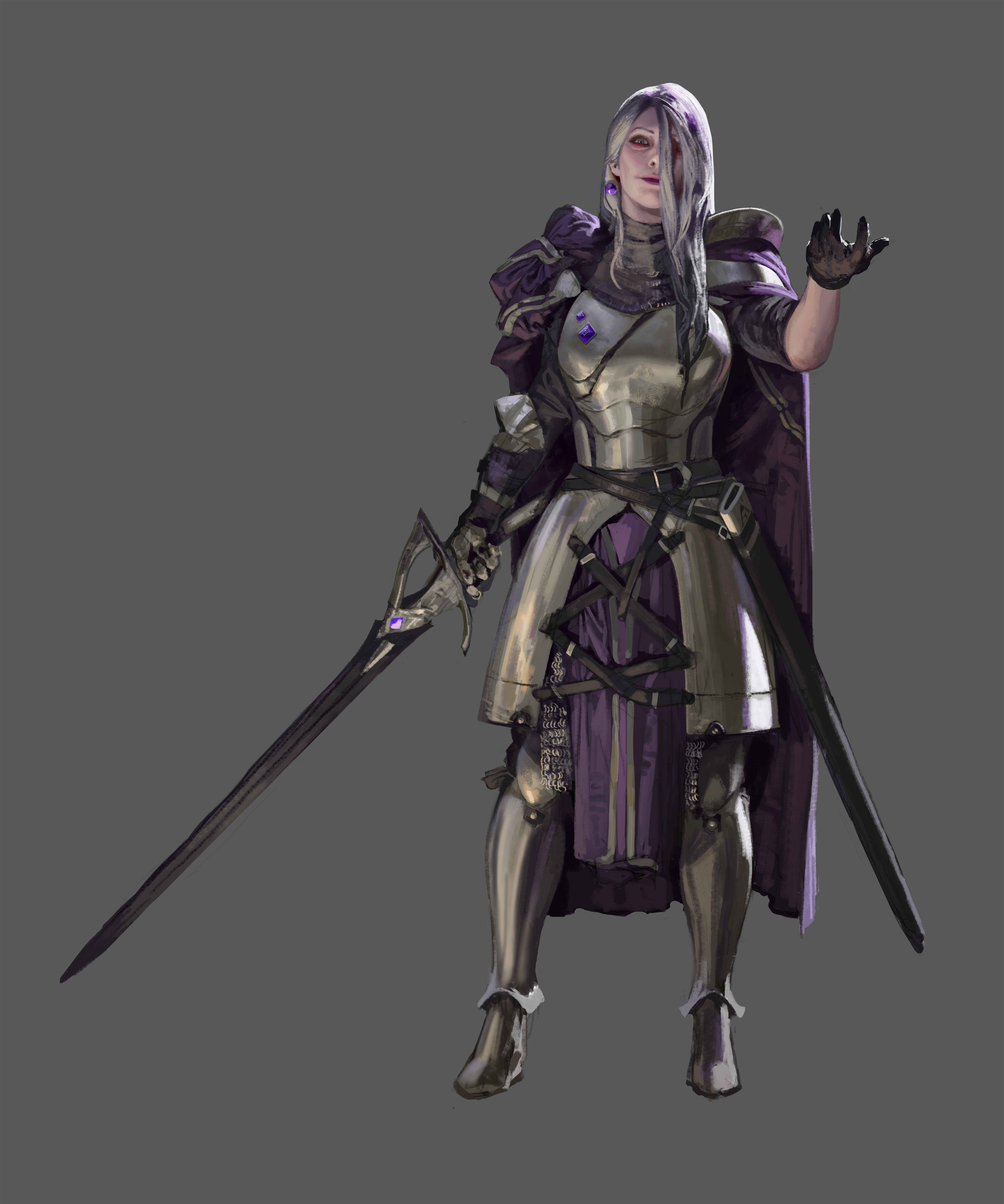
Image by chavi-dragon, source

History of the Order

This order of knights and clerics was founded in Thyatis City in 630AC after a series of crimes and scandals involving chaotic cultists rocked Thyatian society, including incidents of demons being summoned. The Order of the Amethyst Rose was established to protect the Empire of Thyatis from the forces of Chaos, especially Chaos Cultists and demons. The order started out small and with good intentions. There were notable successes including the apprehension of an Imperial advisor in a shrine of Chaos in Hattias as well as the destruction of a nest of doppelgangers that had taken over an inn. The knights and clerics had purple vestments, surcoats and shields with a white flower symbol. 

In the early days of the order there were some remarkable heroes including Saint Julus Vespasius, a heroic cleric who tracked down and destroyed a vampire and its undead minions almost single handedly, and Lord Appodocius, the knight who wielded the great sword Havoc-bane. At other times the order would work with more secular authorities such as town watch and law courts to bring the followers of chaos to justice. Good and decent people liked and respected the order while Thyatian authorities viewed them as a useful ally against subversive cults. 

As the Order's fame grew and the forces of Chaos had to be countered in various towns and cities across the Thyatian Empire, the order established Chapter Houses in cities, small estates and large town houses where the knights could gather, find hospitality and plan their efforts against Chaos. To facilitate running the order, merchants and accountants were brought in. There were some wealthy patrons as well as a few bequests from nobles and merchants who had found their heirs had turned to chaos (or were just not deserving of their inheritance). 

By 900AC the Order of the Amethyst Rose had become rich and powerful and no longer the idealistic, zealous hunters of evil-doers it once was. The order's influence was strong and woe betide anyone who was criticised by or even worse investigated by the Order. But its focus had turned to managing its money, its estates and its political influence. The order had become increasingly self-serving. And it was starting to make enemies in Thyatis, few of whom had any allegience to the dark forces of Chaos. People became cynical and untrusting of what they saw as a holy facade covering a corporate and materialistic operation. The Order also made several blunders, arresting a Duke on suspicion of Chaos Worship only for it to be shown in court that the Duke had been set up by his envious brother. A so-called witch that one fanatical cleric of the order denounced was seized by a mob and hung from a tree, only for it to be revealed that she was just an ordinary magic-user. The Order expelled that cleric and tried to distance itself from the incident but the damage was done. And there were rumours among merchants that the order was using its position and reputation to gain better deals in the marketplaces. Although the Emperor and his household were never directly threatened by the order, the Imperial Court could see the wealth and power of the order increasing. 

The Fall

In 955AC there was an influx of recruits into the Order. A few of these were fighters hoping to become squires then knights. Others were clerical acolytes. One particular trio were scribes and clerks. They had some minor clerical abilities but were put to work in the order's treasury. And thus three Chaos Cultists infiltrated the Order. Exactly why they did this is still debated but there are several theories that are not mutually exclusive. Firstly the Order of the Amethyst Rose was still a threat to the cults of Chaos in Thyatis and neutralising it would have made Chaos worship somewhat safer. Secondly embezzelment is a very profitable crime if you can get away with it. Thirdly they may have been assisted and perhaps encouraged by other parties. They also managed to recruit some disillusioned and bitter members of the order, usually among the lay staff but at least two knights joined in this treachery as well. Resentment against the order was bolstered by bribes from embezzeled funds. The moles also upset those the order dealt with, sending out inappropriate demands for payment (both in tone and in accounting inaccuracy) and sending letters from the order to various Thyatian nobles  and merchants demanding favours and concessions. The Grand Master of the Order had no idea this was going on and if his lieutenants knew, they did not inform him. 

In 958 AC the Order of the Amethyst Rose came crashing down. Clerical divination by independant priests was not very thorough but the question "Are there chaos cultists in the Order of the Amethyst Rose?" was replied with a Yes. This was damning evidence for most folks including the Imperial court. The theory that the Order was like both fireman and arsonist, setting up Chaos cults and then publicly uncovering them and gaining wealth and glory as rewards circulated around Thyatis. 

At the time there were about 50 knights, 20 clerics and over 120 lay members of the order at the Amethyst Citadel, the headquarters in Thyatis. The Thyatian authorities and army first tried to enter the Amethyst Citadel armed but peacefully but the Order refused. The army then assaulted the Amethyst Citadel, with fatalities on both sides. The Grand Master and surviving members of his council were arrested on charges of worship of Chaos, as well as most of those captured alive in Thyatis. Many who resisted arrest were killed  by the army. The real chaos cultists had set up several shrines of Chaos within the Order headquarters, then fled the Citadel and then tipped off the authorities about the shrines, thus providing yet more evidence that the members of the order simply could not explain. 

Beyond the capital the Order fared little better, with chapter houses and other estates seized, and known members arrested. There were skirmishes between Thyatian authorities and the knights of the Order, such as a dozen soldiers and three knights dying in Port Lucinius when the Chapter House was stormed. Some nobles and court officials were not so hasty in their judgement and a number of members were released after being stripped of their titles and fined heavily (for the crime of being part of a banned organisation). Those who had friends outside the order willing to vouch for them were dealt with more leniently and some independent clerics realised the charges were unreasonable when multiple castings of Detect Chaos on arrested members gave no clear results. Nonetheless, the order as an organisation was finished and its members under a cloud of suspicion if not outright disgrace. 

What is left now?

The surviving members went their different ways. About one in five completely lost their faith in the philosophy of Law and became renegades, mercenaries or bandits, angry, bitter and cynical. A few even went so far as to swing completely the other way and become followers of Chaos. The Bloodied Rose was a notorious mercenary company of former knights of the Amethyst Rose, known for its amoral and uncaring attitudes that wandered the north of Thyatis (Rebius, Kantrium and the Imperial Territories) for several decades after the destruction of the original order. They had the fighting skills they had learned in the order, but none of the morality or honour. 

Some simply changed jobs entirely, becoming carpenters, merchants, inn-keepers and the like, giving themselves new lives completely separate from their lives in the order. Most people encountering them would have no idea that they were disgraced fugitives from a outlawed organisation. 

Some gave up on the order but not on the principle of Law and what the order had originally stood for. In the year after the disolution of the order, various churches of Law around the Known World and Isle of Dawn had influxes of recruits from Thyatis. The Church of Law in Specularum was bolstered by ten clerics and twice as many fighters offering to be temple guards. Fifteen Thyatian knights joined the Order of the Griffon in Specularum. Another three clerics turned up looking for shelter and jobs at the Reclusium of Serenity. Having heard of the fate of the Order of the Amethyst Rose, these churches were often quite thorough in their vetting - they had no wish to accept chaos cultists that had infiltrated one organisation into their own. A few knights of the order became questing adventurers, not attached to any church, order or liege-lord but doing on their own what they believed was necessary to fight Chaos. 

The Order of the Shattered Rose is the unofficial successor to the original order. Founded in 988AC, it has tried to learn the lessons of the past, and focuses on both combatting Chaos (both cultists and monsters) and also internal security and discipline. The Order of the Shattered Rose can seem a little paranoid about who it trusts and who it lets join but given what happened to its predecessor, this is understandable. The Order of the Shattered Rose has its headquarters in Kerandas City. But it has no chapter houses and does not seek property or wealth - it has rules about discarding or donating away things that are not strictly necessary for combatting Chaos. It donates excess money to the Thyatian Church of Law.  The Thyatian authorities are aware of the Order of the Shattered Rose and tolerate it but view it with some suspicion - it was set up by former members of the Order of the Amethyst Rose. But some other Thyatians, especially those with doubts and reservations about the accusations leveled against the original order, think this new order could be a force for good.They remember that the Amethyst Rose had fought the good fight against the evil forces of Chaos, and Thyatis needs people willing to do that duty today. 

The property and estates of the Order of the Amethyst Rose were kept by whoever seized them during the order's downfall - the Imperial government got the Amethyst Citadel and other places around Thyatis City. Other nobles and civic authorities took estates and chapter houses further afield. The Order of the Shattered Rose has made no attempt to reclaim any of these, for to do so would officially link them to the disgraced old order, as well as raising the temptation of acquring properties for the sake of money and vanity. A clean, fresh start means a completely new home, and just one modest home, for the Shattered Rose. 

The fate of the wealth accumulated by the Amethyst Rose is a mystery. It did not stay in one big lump sum. Chaos cultists within the Order immediately before the downfall managed to steal quite a lot, financing the running and operations of chaos cults across the Known World. The imperial and noble forces that stormed the Amethyst Citadel and chapter houses seized whatever they could in the name of fines and reparations. But other deposits, especially those outside Thyatis City, are completely unaccounted for. Were they stolen by other parties? Are they still held in steel vaults deep beneath chapter houses? 

At least some merchants have suggested that a sizeable amount was invested in mercantile ventures - they say some former members, both knights and lay members, set themselves up as merchant traders using money from the order - the order in its latter days certainly gave them the connections, experience and skills to do this. Thus it is believed that some of the wealth-generating operations of the order are still going, despite the end of the militant side of the order. Although some of these merchants are entirely self-serving, keeping the profits for themselves, some others remember what they once stood for and channel some of the profits to good causes, such as churches of Law, noble orders of knights and charities. When the Order of the Shattered Rose acquired its headquarters in Kerandas, it was able to pay for the manor house thanks to a generous donation from an anonymous patron. The donation came in a chest that contained thousands of gold coins and a large amethyst geode that some say looked like a flower. 


source

Sunday, 28 May 2023

The Book of Hidden Dimensions

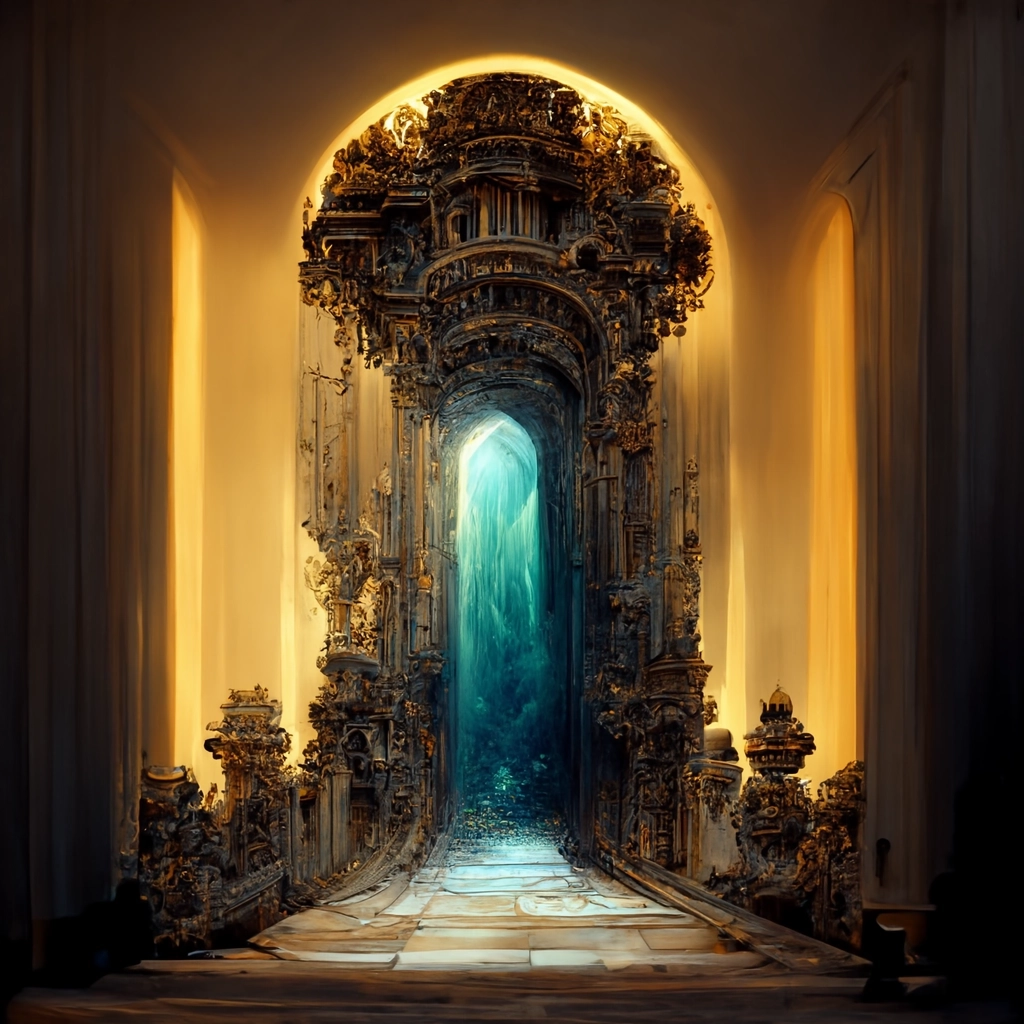
source

There are many spells that are beyond the standard spells of the magical colleges, and they come from many sources. The Alphatian wizard Nebulon lived and worked over a century ago in the city of Shiell and he studied non-Euclidian geometry - impossible spaces and shapes. He wrote of his findings and new spells in a book, the Book of Hidden Dimensions. His students and apprentices made several copies of this and at least one of these copies found itself on the Floating City of Aalthir

The book itself contains quite a lot of mathematical theory and equations that non-wizards probably would never understand and even most wizards would find it difficult to wrap their heads around the concepts Nebulon tried to explain. Note that generally speaking Nebulon was interested in altering and manipulating dimensions not the Planes of existence so spells that involve the planes (such as Gate and Contact Other Plane) are not addressed. Nebulon himself modified some spells to make use of extra dimensions rather than planes of existence, such as his version of Leomund's Secret Chest. 

There is also a section on magic items that caught Nebulon's attention, including several pages on how to create a Bag of Holding and something known as a Portable Hole. 

The main attraction of the Book of Hidden Dimensions is the collection of spells in the second half. Some of these are well-established, others have been borrowed from other worlds while a few are of Nebulon's own making. The spells include:

  • Haste (3rd level)
  • Slow (3rd level)
  • Dimension Door (4th level)
  • Teleport (5th level)
  • Teleport Any Object (7th level, Companion Rules, doubles as Teleport Without Error)
  • Magic Door (7th level, Companion Rules)
  • Summon Object (7th level, Companion Rules)
  • Timestop (9th level, Rules Cyclopedia)

All of these are established spells that many wizards in Alphatia and beyond are at least aware of and usually have access to. There are also two modified versions of existing spells that suited Nebulon's sensibilities:

Passwall (5th level spell). This modified version does not actually affect the wall, but creates two connected dimensional portals on either side of the wall, so rather than making the wall section disappear, it simply creates an interdimensional shortcut to bypass the wall. 

Maze (8th level spell, Companion Rules). This modified version of the Maze spell does not use the Astral Plane as the usual version does but uses a convoluted pocket dimension that the trapped creature must find its way out of. While the creature is trapped in the pocket dimension, other people observe a vertical shimmering line where the target was when they were hit by the spell. On escaping the maze the target creature emerges from this shimmering line which then promptly closes up. 

 Then there are spells that Nebulon has acquired from other worlds and modified to suit his tastes:

  • Deeppockets (2nd level Wizard spell, 2E AD&D PHB)
    Range: Touch
    Duration: 12 hours + 1 hour per caster level
    Area of Effect: 1 Garment
    This spell allows the caster to enchant a specially prepared robe or coat so as to hold far more in its pockets than it normally could. A finely sewn gown, robe or coat of high quality material with unusually large pockets is required. The spell is cast on the garment and its pockets become extradimensional spaces similar to Bags of Holding. The garment can hold a total of 100lb/1000cn weight without any noticable change in wearer's encumbrance or shape (i.e. the extradimensional space negates both weight and volume of anything in the enchanted pockets).Any items placed in it must be able to fit into the pocket slits (maximum 1ft x 1ft in any two dimensions). If at the end of the spell's duration there are items still in the pockets, they are dumped onto the ground next to the caster as the spell expires. The garment is reusable.  
  • Rope Trick (2nd level MU spell, 1E AD&D PHB)
    Range: Touch
    Duration: 2 turns/level
    Area of Effect: Special
    When this spell is cast upon a piece of rope from 5' to 30' long, one end of the rope rises up until the whole hangs perpendicular as if affixed at the upper end. The upper end is in fact fastened to an extradimenional space. The spellcaster and up to seven others can climb up the rope and disappear into this space of safety where no creature can find them. The rope can be taken into the extradimensional space if fewer than 8 persons have climbed into the space, otherwise it stays hanging in the air. Spells cannot be cast across the dimensional interface, nor can area effects cross it. Those in the extradimenional space can see out of it as if there is a 3' x 5' window centred on the rope. The persons in the extradimensional space must climb down prior to the end of the spell or they are dropped from the height at which they entered the space. The rope can be climbed by only one person at  a time. Note that the rope trick spell enables climbers to reach a normal place if they do not climb all the way to the extradimensional space. Also not that creating or taking extradimensiona paces into an existing extradimensional space is hazardous.  
  • Leomund's Secret Chest (5th level MU spell, 1E AD&D PHB, modified from original)
    Range: Special
    Duration: 60 days
    Area of Effect: 1 chest about 2' x 3' x 3'
    This spell enables a specially constructed chest to be hidden within an extradimensional space (in the original this was hidden in the Ethereal Plane). The large chest must be exceptionally well crafted and expensive, constructed for the caster by master craftsmen - the cost of such a chest is never less than 5000gp. Once it is constructed the magic user must have a tiny replica (of the same material and perfect in every detail) made so that the miniature appears to be a perfect copy. The chests themselves are nonmagical and may be fitted with locks, wards and so on as any normal chest. While touching the chest and holding the miniature, the caster chants the spell. This causes the large chest to vanish into the extradimensional space. The chest can contain one cubic foot of material per level of the magic user no matter what its apparent size. Living things make it 75% likely that the spell will fail so the chest is typically used for securing valuable spellbooks, magic items, gems etc. As long as the spellcaster has the small duplicate of the chst he can recall the large one from the extradimensional space whenever the chest is required. If the miniature of the chst is lost or destroyed there is no way, not even with a Wish spell, that the large chest can return. If the large chest is not retrieved before the spell duration elapses there is a cumulative chance of 5% per day beyond the end of the spell that the large chest is lost.     
  • Duo Dimension (7th level MU spell, 1E AD&D PHB, modified from original to ignore references to the Astral Plane)
    Range: 0 (Caster only)
    Duration: 3 rounds + 1 round per level of caster
    Area of Effect: Caster only
    A dui-dimension spell cuases the caster to have only two dimensions - height and width but no depth. He is thus effectively invisible when turned sideways. This can only be detected by  True Seeing (as it is not the same as normal invisibility). In addition the caster can pass through the thinnest of spaces as long as these have the proper height - going between a door and its frame is a simple matter. The wiard can perform all actions normally. He can turn and become invisible, move  and appear again. The caster can cast other spells while in this state. Note that when turned the wizard cannot be affected by any form of attack but when visible he is subject to double the amount of damage for an attack, e.g. a dagger thrust would cause 2d4 damage if it struck a duo-dimensional wizard.  
  • Morden's Magnificent Mansion (7th level Wizard spell, 2E AD&D PHB)
    Range: 10 yards
    Duration: 1 hour/level
    Area of Effect: 300sq ft/level
    By means of this spell the wizard conjures up an extradimensional dwelling, entrance to which can only be gained at a single point on the plane from which the spell was cast. From the entry point those creatures observing the area see only a faint shimmering in the air in an area 4' wide x 8' high The caster controls entry to the mansion and the portal is open or shut on his command. Once observers have passed beyond the entrance they beohold a magnificent foyer and numerous chambers beyond. The place is furnished and contains sufficinet food stuffs for a 9 course banquet for 12 people per level of the caster. There is also a staff of Unseen Servants obedient and ready to wait on those who enter. The atmosphere is fresh, clean and warm. Since the mansion can be entered only through its special portal, no outside conditions can affect the mansion or those inside. Rest and relaxation within the mansion is nromal but the food is not. It seems excellent and filling as long as one is within the palace. The food cannot be taken outside the mansion. Once guests are outside , however, the effects of the mansion's food disappear immediately, and if guests in the mansion have not eaten real food within a reasonable timespan, ravenous hunger strikes and the effects of fatigue and starvation apply as decided by the DM. 
  • Phase Door (7th level MU spell, 1E AD&D PHB)
    Range: Touch
    Duration: 1 usage/2 levels
    Area of Effect: Special
    When this spell is cast the wizard attunes his body and a a section of wall is affected as if by a Passwall spell. The phase dorr is invisible to all creatures save the spellcaster, and only he can use the space or passage the spell creates, disappearing when the phase door is entered, and appearing when it is exited. If the caster desires, one other creature of man size or less can be taken through the door. This counts as two uses of the door. The door does not pass light, sound or spell effects, nor can the caster see through it without using it. Thus the spell can provide an escape route. The phase door lasts for one usage for every two levels of experience of the spellcaster. It can dispelled only by a casting of dispel magic from a higher level magic user. 

Finally there are a collection of spells created by Nebulon himself: 

Nebulon's Hideaway

Spell Level: 5
Duration: 1 hour per caster level
Range: 10'
Area of Effect: 20' x 20' x 20' (in another dimension)
This spell creates a temporary extradimensional space about 20' x 20' x 20' with a door that can be opened or closed by the caster, which can be placed against a wall or in the middle of the ground. When the door is closed, it is invisible and intangible - only a True Seeing spell will reveal it.  As the Hideaway is extradimensional, it ignores normal geometry so the area behind the portal in normal space is entirely unaffected. Characters can enter or leave the Hideaway as often as needed (with the caster controling the door) for the spell's duration. Although empty and unfurnished, the Hideaway is kept at a steady room temperature making it a haven in hostile environments. As with Phase Door and Morden's Magnificent Mansion, spells cannot be cast into or out of the door nor can spell effects pass through. 


Nebulon's Permanent Chamber (Reversible)

Spell Level: 8
Duration: Permanent
Range: 10'
Area of Effect: Special
This improved version of Nebulon's Hideaway creates a permanent extradimensional space of up to 10' x 10' x 10' per level of the caster (so a 16th level magic user could create a chamber 40' x 40' x 10' (16000 cubic ft). The doorway to this extradimensional chamber is permanently open but it may be secured by mundane or other magical means. Each casting of this spell requires a component - a perfect cube of some precious gem such as sapphire, emerald or diamond worth 1000gp, which is consumed in the casting. The walls on the inside of the chamber take on the hue of the gemstone used. 
It is possible to use multiple castings to join several chambers together in the same extradimensional space, perhaps creating an entire extradimensional complex. There is also a reverse of this spell, Delete Chamber, which will destroy a chamber created by this spell - this and a Wish spell are the two only ways to actually destroy Nebulon's Permanent Chamber. Anything inanimate still inside a Chamber when it is deleted has a 50% chance of being dumped immediately where the door was (i.e expelled into the normal dimensions) or 50% chance of disappearing forever (expelled into other, far dimensions). Living things and other monsters are always dumped into normal dimensions (so deleting a Chamber is not a way to kill a creature).    

Nebulon's Joined Doorways

Spell Level: 6
Duration: 1 turn per caster level
Range: 60'
Area of Effect: 2 doorways 6' x 3' each

This spell allows two doorways up to 60' apart to be joined by an extradimensional connection. The two doorways must initially be mundane and must have been seen by the caster. The extradimensional connection cannot be created in the middle of an empty space - there must be a physical door frame or archway to anchor it. Once connected, stepping into one doorway means immediately stepping out of the other one. The doorways are two way and the spell itself does not offer any restriction of who can or cannot enter, though the caster can end the spell at will. This spell has a duration of 1 turn per caster but higher level magic users can use a Permanence spell on the first doorway once cast to make the spell effect permanent. This spell can be used as a prepared escape route or for magical burglaries. Since the distance between the doorways can be vertical, it can be a shortcut between levels of a dungeon or storeys of a building.


Source

Monday, 22 May 2023

A Trio of Lesser Demons

These three species of demon are presented as adversaries that may be allied to forces of Chaos in Mystara. Although I have not really settled on a cosmology for my version of Mystara it is clear that these are not of the mortal realm. Although demons have never been a central part of B/X but more associated with 1st Edition AD&D, I believe they can fit into adventures based in Mystara. I have already introduced some species of demon as part of the Fighting Fantasy monster conversions, namely the Fire Demon, the Ice Demon and the Fire Imp.    

Centipede Demon

No. Appearing1-4
HabitatRuins and Planes of Chaos
Armour Class2
Hit Dice (hp)5+5 ** (27 hp)
Movement90’ (30’)
Attack4 claws
THAC015
Damage1d4 x 4
Special AbilitiesInvisibility, spell- casting, immune to normal weapons
Morale10
Save asMU 5
TreasureStandard
AlignmentChaotic
Intelligence18 (genius)
Size/TypeSmall Outsider
XP575
Centipede demons are advisors and sages to mortal followers of Chaos. They appear as giant centipedes perhaps 3' long with a bald human head on top. Though apparently helpful to those who summon them, they are demons and always seek to cause corruption, damnation and misery. Though usually solitary they do occasionally band together. They may also have mortal followers, either willing or charmed, who will act as servants and bodyguards.

Centipede demons, if forced into combat, attack with their sharp front legs tipped with blade-like claws. They are also immune to normal weapons - silver or magical weapons or spells are needed to hit these demons. They are also immune to poison and disease. However, they prefer to avoid combat, through negotiation or spell use. Centipede demons can use spells as if a 7th level magic user and can turn invisible once per hour for up to an hour as a spell-like ability. Like the spell of the same name, this invisibility is disrupted if the centipede demon attacks magically or physically. Centipede demons often stay invisible most of the time and chaos followers only hear the demon’s hissing sibilant instructions and knowledge. Centipede demons do not care for treasure themselves but they recognise its use in bribing and paying mortal creatures. Thus some will gather coins and trinkets.

Typical spell list:
1st level: Charm Person x2, Magic Missile, Wall of Fog, Ventriloquism
2nd level: Web, Levitate
3rd level: Dispel Magic, Fireball
4th level: Confusion

Serelinzu (Horned Demon)

No. Appearing1d6
HabitatRuins and Planes of Chaos
Armour Class2
Hit Dice (hp)8+16 * (52 hp)
Movement120’ (40’)
Attack4 weapons
THAC011
Damageby weapon+1 x 4
Special AbilitiesCharm Monster, 120' infravision, immune to normal weapons
Morale12
Save asF8
TreasureStandard
AlignmentChaotic
Intelligence12 (very)
Size/TypeMedium Outsider
XP1200

Serulinzu, also sometimes known as Horned Demons, are the sergeants of the Planes of Chaos - they gather and lead small groups of demons against whatever foes are available. They appear as ugly four-armed humanoids with sparse clothing and a pair of horns on their heads. 

They have the ability to Charm Monster, but this only works on chaotic creatures. They can have up to 4 charmed monsters or characters under their control at any one time. In combat horned demons use their four arms to wield any combination of weapons, usually one in each hand. Being demons, serulinzu are immune to normal weapons and can only be hit by silver, magic weapons or spells. They are also immune to disease and poison.  

It is known that twisted summoners have summoned horned demons to act as fiendish lieutenants, using their Charm Monster abilities to extend the number of monsters under the summoner’s sway. They can also charm goblinoid leaders, giving them lordship over tribes of humanoids. Like centipede demons they do not covet treasure for its own sake but recognise its usefulness for influencing mortals. 

Bladed Demon  

No. Appearing1d4
HabitatPlanes of Chaos, Ruins
Armour Class2
Hit Dice (hp)10+10 (55 hp)
MovementFly 240’ (80’)
Attack8 blades
THAC09
Damage1d6 x 8
Special AbilitiesWhirlwind, Dimension Door, immune to normal weapons
Morale12 (Fearless)
Save asF10
Treasure Typenil/incidental
AlignmentChaotic
Intelligence11-12 (Very)
Size/TypeMedium Outsider
XP1600
Bladed Demons are weird and malevolent creatures from the Planes of Chaos that vaguely resemble octopi. They float and fly by magic and have no limbs for movement, only eight tentacles tipped with blades for slashing at their foes as well as a snarling humanoid face where the octopus beak would be. 

Once a day a bladed demon can enter a whirling frenzy for 1 round in which all enemies in 10’ of the demon automatically suffer 2d8+2 damage from the demon’s blades. Bladed demons are also able to use Dimension Door (240’ distance, 1/turn) and detect Law and Detect Magic both at will. They are immune to normal weapons and only take half damage from non-magical silver weapons. As with other demons they are immune to poison and disease.

Bladed demons are the shock troops of demonic armies, flying in fast and getting into close combat. They have some sense of tactics and cunning but are short tempered, violent and rarely negotiate. When summoned to the material plane they are often used as assassins or as terrifying combatants, slicing most mortals limb from limb with impunity.