Thursday, 17 March 2022

Holy Killers of the Eternal Secret

source

Background

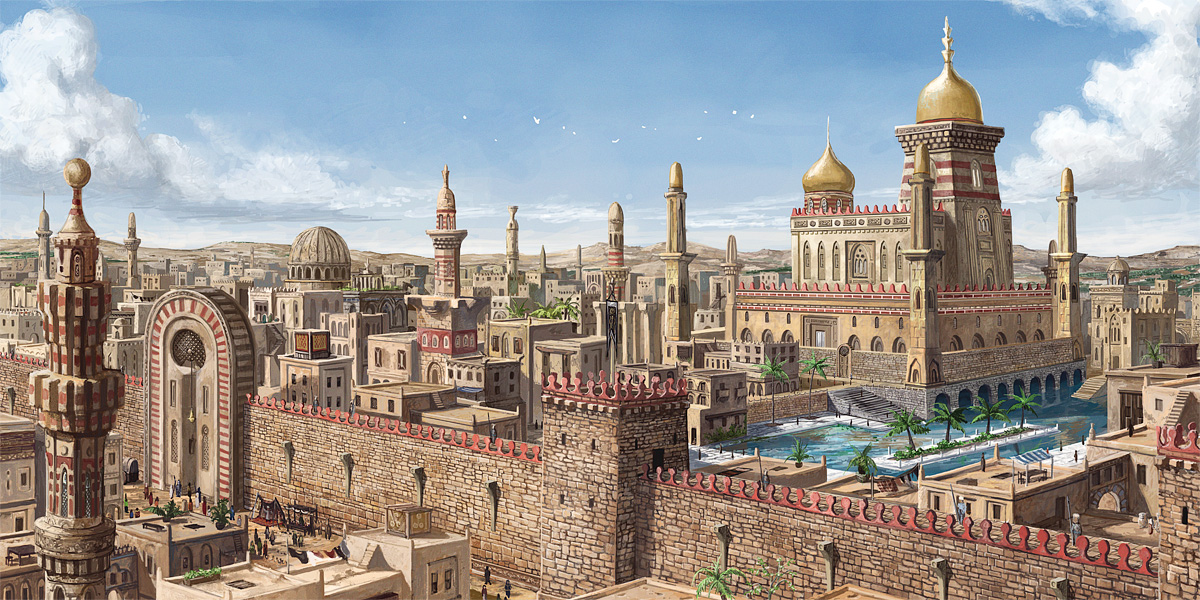
 These are a combination of Islamic Assassins and the Medjai (chaps from Brendan Frasier's Mummy movies who were determined to keep Imhotep and Hamunaptura a secret). They are devotees of the Eternal Truth who are fanatical about keeping Nithia as secret as possible. They are a variant of thieves and prefer mundane skills to magical illusion to stay hidden until they strike. 

Founded long before the rise of Al-Kadim and the spread of the Eternal Truth, they are the most dedicated opponents of ancient Nithia and anyone who tries to bring ancient Nithia back to Mystara. The Holy Killers' most common targets are treasure hunters seeking to unearth forbidden Nithian artefacts to sell to unscrupulous dealers, both native Ylari and those from other nations looking to make their fortune. However, a sinister new enemy has emerged, Nithian cultists intent on resurrecting their destroyed religion.

The Holy Killers' current base is a fortress high in the hills near the border mountains where they train and receive their orders, known as the Citadel of the Bleeding Blade, referred to by members as "the Citadel" . They are led by the mysterious Old Man of the Hills, a cleric of considerable power and charisma who  can convince recruits of the importance and sincerity of the mission so well that many become willing to die for his cause. These recruits come from the urchins, orphans and unwanted children of slaves in the various towns and cities around the Emirates, offered food, shelter, purpose in life and maybe excitement and adventure. 

There are those who have drifted away from the true faith, and now sell their skills to the highest bidder. The holy killers might be in the service of the greater good but they have very marketable skills, and being motivated by the prophet can easily turn into profit motive. Some of these are loners but in Ylaruam city itself there is a shadowy group of them calling themselves the Guild of Assassins. They are even more paranoid and ruthless than the holy killer of the Eternal Secret, and have the dreaded mantra "Nothing is True, Everything is Permitted". 

The Bead of Oblivion only affects a 24-mile hex outside Surra-Man-Raa. This is only a small part of the Emirate of Nithia. Anyone approaching Nithia from another direction (such as Cinsa-Man-Noo or Ylaruam City) won't be anywhere near the bead. The Order of the Holy Killers are aware of the Bead of Oblivion's effect (if not the bead itself), and most stay away from the area outside Surra-Man-Raa. Even if they do enter it (either knowingly to chase a target or accidentally), they only forget about Nithia, not that they are members of the sect and what their target is (though they may magically forget why they are hunting the target). They can always be re-educated as necessary once back at their base. In fact, some of them may not even need to be told the details about ancient Nithia, just that tomb-robbing in the hills of Nithia is a crime against Al-Kalim and the immortals because it risks unleashing terrible evils.

The Holy Killers of the Eternal Truth are a backup if the tomb-robbing intruders avoid the area of effect of the Bead of Oblivion. Immortals may send supernatural agents to cause certain followers to forget about Nithia. But the Holy Killers are a more thorough, less gentle way of dealing with those who have avoided the Bead of Oblivion. And they believe they are doing the work of the Immortals and of Al-Kalim (which they are, in a bloody sort of way).


Game Rules

For these holy killers I am going with the AD&D version of Backstabbing (from 1E AD&D PHB):

Back stabbing is the striking of a blow from behind, be it with club, dagger, or sword. The damage done per hit is twice normal for the weapon used per four experience levels of the thief, i.e. double damage at levels 1-4, triple at 5-8, quadruple at levels 9-12, and quintuple at levels 13-16. Note that striking by surprise from behind also increases the hit probability by 20% (+4 on the thief’s “to hit” die roll).

Holy Killers like B/X thieves can use any type of weapon. But they can only backstab while using a normal sword, shortsword or dagger as their back stabbing technique involves thrusting the blade between certain ribs, which cannot be done with axes, maces or clubs. Backstabbing against non-humanoids (such as animals, magical beasts, constructs and undead) only does double damage as anatomy is not the same. 

Holy killers can and sometimes do use poison, either ingested or insinuated on a blade, though they do not get any special bonuses when using it.  

Holy killers of the Eternal Secret can use most of the standard thief skills. However, they have swapped the thief's ability to find and disarm traps with the new ability to disguise themselves. This is not the same as impersonating a specific individual. but can either be used to look like a specific job, role or the like, such as a palace guard, a merchant or a housewife (base 10% + 3% per level) or simply not appear as the holy killer normally does, so that those who know the holy killer's face are less likely to recognise him (base 15%, +5% per level). Situational adjustments may be applied by the DM (e.g. if in a crowd the holy killer might get a bonus, if being stopped and questioned by a sergeant of the town watch there may be a penalty. Similarly time spent practicing a role and observing those he tries to imitate will give a bonus (noticing how palace guards salute and march, or the accents people in a particular town use).

Ostensibly Holy Killers can be any alignment though most are neutral - they may be killers but they target those who they believe are threats or deserve to die. Some however are chaotic, and enjoy killing too much. These are more likely to abandon the order and join the guild of assassins. 

Image by Zvonimir Grbasic (source)


Monday, 14 March 2022

Magical Wonders of Alphatia

 Alphatia has been around for a long time. At this campaign's current time (1000AC), Alphatia has been colonized and developing for 2000 years. During that time major non-magical threats (humanoid tribes, dragons, giants and problematic non-magical humans) have been dealt with by the numerous archmages. This has left generations of thousands of wizards to experiment, construct and transform things across the continent. Alphatia has become a wizards' giant laboratory and play-pen. 

The motivations for creating these wonders varies but can include defence and security,  attacking enemies and expanding borders, academic curiosity, part of a quest for immortality (especially the Path of the Paragon and the Sphere of Energy), generating trade and wealth or  maybe pure entertainment (some wizards just like to keep themselves occupied). Similarly the size and form of these wonders can vary widely, from magic rings to floating cities. Constructed creatures, magical castles, enchanted weapons, staffs and wands, flying ships (cliched but still popular) and miscellaneous magic items are all the creations of wizards through the centuries. 

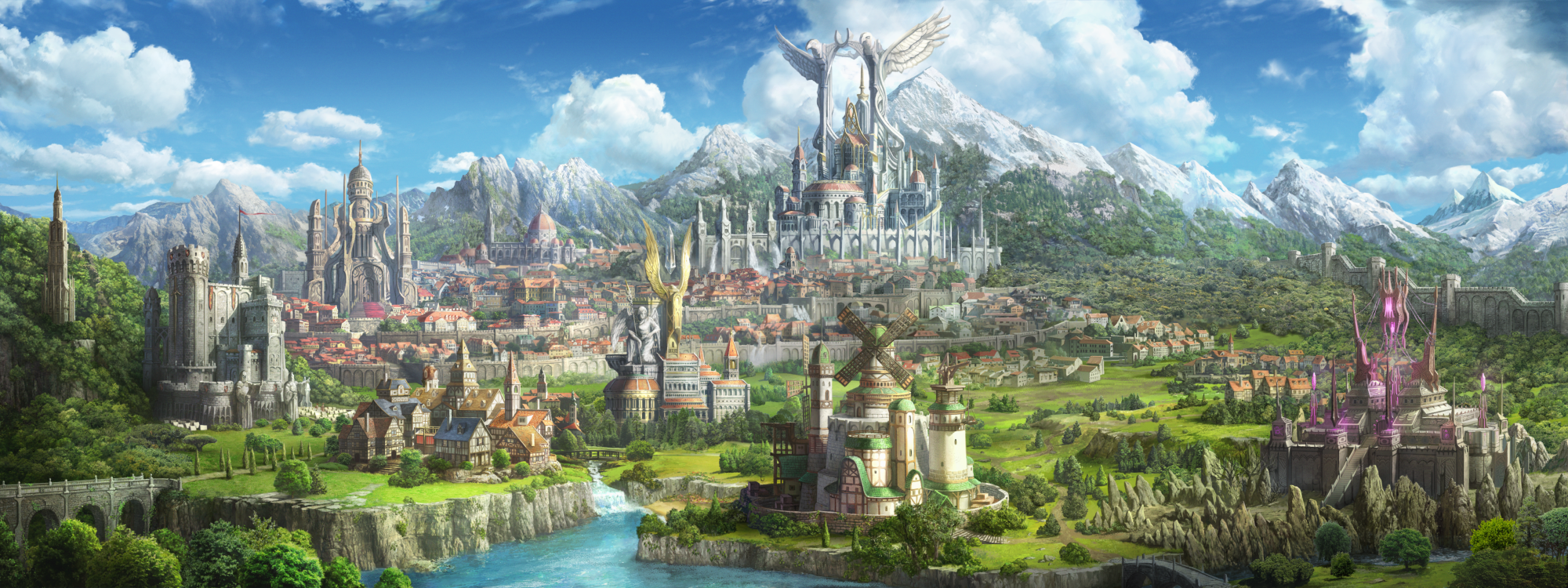
Image by Keith Parkinson, source

As time moves on these may become inherited by their creators' successors, or destroyed, or abandoned. Perhaps their function or the way they are activated has been forgotten. If they are still functional, other wizards are unlikely to just leave it lying around. Sometimes these magical wonders just wander off on their own. 

If the wizard has an interest in biology then modifying species or creating hybrids could become an interesting hobby. Rumour has it that this is how owlbears, thouls and bulettes came into being. Making monsters bigger is also a common experiment, and Alphatia is the home of the gargantuas (from the Companion Set).  For those with a more constructive approach to creating monsters there are numerous constructed creatures that wizards can put their minds to crafting. Golems and living statues (also known as animated statues) are also popular, but there are also rarer ones including drolems, iron cobras, bronze minotaurs, caryatid columns and stone guardians. What happens to these constructs after their masters die can vary wildly. Some can be commanded by whoever wields some controling item (such as a ring or amulet linked to the construct) while others simply cease to respond to anyone elses' command and just stand there, and a few may run amok without a master to control them. 

For those who are not interested in putting in the work of actually making a servitor, there is the option of summoning. Usually this is for the duration of a battle but some mages can bring creatures from elsewhere to serve for much longer periods, such as until a task is complete. Such creatures are generally either elemental (including Invisible Stalkers) or from the Planes of Chaos. Over the course of the history of Alphatia thousands of such creatures will have been summoned, and not all of these will have been destroyed or dismissed back to their planes of origin. More recently twisted summoners have added a whole new range of potential minions, though at the cost of the summoner's soul. Even if the twisted summoner dies, the summoned creatures still remain. 

Gates and portals are sometimes created. These may go anywhere, from the Elemental planes, Ethereal, the Planes of Chaos or Law, or even other worlds on the Material Plane. It could even take people to somewhere else on Mystara or even someWhen else - such as back to the golden age of Blackmoor or forwards to the far future of the Known World. And of course the portals are usually two-way, so creatures and characters can come through to Mystara. 

Excavating dungeons is often part of this - though usually the dungeon is a means to an end and where further experiments and projects are conducted. Dungeons can provide a secretive and secure place where intruders can be kept out, captive and created creatures can be contained and the wizard can have some peace and quiet for serious concentration on their work. The actual number of dungeons across Alphatia is unknown but at least in the thousands. Having said that, wizards may well hand their dungeons on to apprentices who know the traps, guards and should have any passwords and keys necessary for safe access. The apprentice may well add to the dungeon - think of Undermountain in the Forgotten Realms where Halaster Blackcloak the Mad Mage created the bulk of the main levels but his apprentices created their own sections and sublevels. Another prime example is Castle Greyhawk, created by the Mad Archmage Zagyg. And if you think the monikers are similar, think how many mad archmages have been lived in Alphatia over the last 2000 years, where there is a Grand Council of 1000 archmages, many of whom are various shades of Chaotic. Not all of these will have created dungeons (let alone megadungeons) but they all will have had some sort of stronghold as their home, either solitary or shared. The mage does not even need to be maximum level - Wall of Stone, Rock to Mud and Disintegrate are three spells that allow wizards of only 12th level to single-handedly create a basic dungeon, given enough castings of each spell.  

Finally there are spells. There are the standard spells of the magical colleges that nearly every mage has access to (once they reach sufficient level) - there are 12 spells per spell level. These are widely known from Norwold to the Savage Coast, and even non-mages have at least heard of them, and often seen mages cast them (many ordinary folk can recognise a Magic Missile or Fireball when cast). But when a nation the size of Alphatia has wizards researching spells every year over the course of its history, it is no surprise that there are hundreds of non-standard, rarer spells in the personal spellbooks of various mages of Alphatia. These include Greater Mirage (which the Alphatian mage Zembrig used to hide Tandallos Fortress for a number of centuries) and World Portal. Other wizards will go to great lengths to acquire written copies of these spells. 

In short, in Alphatia the threats to civilized folk and opportunities for adventures tend to come from the results of magic and the efforts of wizards, rather than natural or military situations. Whether it be a matter of destroying an out of control elemental, or retrieving a long lost spellbook or reclaiming a dead wizard's stronghold on behalf of his next of kin, the arcane arts and their effects and consequences are found everywhere in Alphatia. 


Thursday, 10 March 2022

Safari Island has gone Wild

 As a sort of follow-up to my ideas about the Kingdom of Ierendi, I have thought a little bit about Safari Island. In Gaz4 it is described as a mixture of managed wilderness and arenas where mock adventures can be played out. Personally I'm not keen on the latter - I'm not interested in "adventures" where neither the threat nor the rewards are real even for the characters. In Gaz4 Safari Island gets several pages so I'm not going to quote it all here. 

Cartography by Thorfin Tait, source

My ideas about Safari Island

The set-up described in Gaz4, with the arenas with the arranged adventures was put together about 50 years ago by the archmage Dhammon who partly viewed it as a business venture, but also enjoyed thrilling guests and audiences, and for about 40 years this worked well. Powerful enchantments kept the captive monsters in the arenas and adventure parks well behaved. The villages of Kodos and Calatupos were renowned destinations for thrill-seeking tourists. Connections with Ierendi island were strong and business was good. There was even a demand for captured monsters from distant lands, particularly dinosaurs from the legendary Isle of Dread, which some brave adventurers attempted and a few even succeeded. The Velociraptor exhibit would always draw large crowds. 

Then something went wrong - horribly wrong. The enchantments that held the captive monsters in check somehow dissipated or maybe were dispelled. A hill giant in a hill-shaped arena that should pretend to capture and devour a young boy actor suddenly lost its temper and flung the poor boy down the steep hill, killing the poor lad. Trolls that were in the same arena and should just scare visitors decided to tear one "adventurer" apart, and almost did the same to his terrified colleagues. 

Monsters that had not previously been recorded on the island started to turn up. Foul play was suspected, and they were right. One of Dhammon's apprentices, Irden, became resentful at always being bossed around by Dhammon and being treated worse than the exhibits (at least in his eyes). He became a Twisted Summoner and one fateful summer he undid all the safeguarding enchantments using Dispel Magic, while unleashing his own chaotic minions. Safari Island descended into chaos and destruction, with boatloads of tourists fleeing the island. Another of Dhammon's apprentices, Arnoth, and his bodyguard the fighter Rogar of Muldune were killed while trying to rescue tourists from the dinosaurs. 

No-one is sure what happened to Irden - some say he was killed by rampaging monsters but others say he still survives in his fortified hideout, guarded by chaotic minions still under his control. 

Ten years later and some stability has come to the island. Calatupos and Kobos are both inhabited but also a lot more fortified to fend off wandering monsters. Pupami has been abandoned as it was considered too isolated and vulnerable. There are tourists and visitors, but the rules and atmosphere have changed considerably. Any visitors have to sign numerous liability waivers and disclaimers of responsibility - anyone leaving the safety of the two fortified compounds is taking their lives in their own hands. Hunting licenses are for sale if the tourists want to take trophies. Killing monsters in self defence is understandable but if killed without a license the island authority claims any treasure and the monster's body. 

The villages are home to both hospitality staff, local guides, fishermen, merchants (some of whom sell tabards for tourists with the motto "I visited Safari Island and survived") and a garrison of well-trained mercenaries (all fighters of at least 3rd level) whose job it is to defend the village and occasionally rescue tourists from trouble. The local guides are mostly reliable but are definitely not heroic - if they see an angry or hungry monster coming for them, they will yell a warning but will still try to run faster than the tourists. The more ruthless guides are generally not so brutal as to actually kill a lone tourist but may well let them be killed by a monster, then loot the tourist's body. 

Despite the proliferation of large predators, there are still a lot of wild herbivores roaming the island including giant boar and aurochs as well as various herd animals and even some rhinos. These support the predator population (and also the humans - local guides will often hunt antelope for food). The island has a range of habitats and as such a wide range of monsters. Close to the villages the monsters are not too dangerous (relatively speaking), and include carnivorous apes, lizardmen, rock pythons and giant chameleons. Further afield, particularly in the mountainous areas, there are more serious threats including wyverns, manticores, hill giants, trolls and of course dinosaurs. Most of the local guides have their limits (regardless of how much money is offered) and will only venture within 10 miles or so from each village. 

The Cliffs of Para on the southwestern coast have many coves, inlets and tidal caves. These have become hidden havens for pirates who have gradually developed some of these harbours into sophisticated bases. They use these to launch expeditions against Thyatis, Karameikos and further afield even into the Sea of Dawn. The pirates do need to be careful when sailing around this coastline for wyverns, pteranodons and small rocs, all of who will pick pirates out of the crows nest or off small rowing boats. These pirates will often visit the ports of Vlaad, Nula and Jortan where there are fewer monsters, but more rivals and less privacy than these secluded coves. Some of these pirate bases are believed to include slave pens - although slavery is officially outlawed in Ierendi, these pirates don't care. They will sometimes raid coastal settlements around the northern Sea of Dread and then sell the slaves to Thyatis or further afield.  

The village of Calatupos often encourages its tourists and visitors to enjoy the warm, clear, calm seas that surround it. This has been popular since the days of Dhammon, but recently a spate of shark attacks has made everyone afraid to go in the water. This is bad for business. At first the village authorities tried to dismiss this but then  several tourists in rapid succession were killed in sight of people on the shore. One particularly large great white shark is suspected, and the authorities would appreciate it if adventurers would hunt it down and bring evidence of its demise. A local fisherman did offer the use of his canoe, but the mercenary captain said "We're going to need a bigger boat".  The shark is not a natural predator but actually a wereshark, a local islander who lives in Calatupos but who goes missing on moonless or new moon nights and returns (resurfaces?) a few days later. 

Sindaba tower is not a tourist destination but a fortified lighthouse maintained by soldiers to guide tourist ships safely into Kobos. It can act as a safe haven for visitors fleeing from monsters in emergencies but this is rare. Similarly North Tower performs a similar function for Calatupos. North Tower used to be the home of Dhammon, Irden and Arnoth and functioned as the headquarters of Safari Island's management. Although it still works as a lighthouse, there are no resident wizards here trying to keep the monsters under control, though rumour has it there are secret passages leading to laboratories and libraries where biomancy research was conducted years ago by Dhammon, Arnoth and Irden while the island parks were being set up. 

Sunday, 6 March 2022

Ideas about Cinsa-Men-Noo

Image by lathander1987, source

Cinsa-Men-Noo is a town in the Emirate of Nithia in Ylaruam. It has a population of 4100 and sits on the inland trade route through the mountains between the Emirates and the Soderfjord Jarldoms.  Its main source of water is the cluster of oases that well up from below the desert - Cinsa-Men-Noo is at the north-east end of this cluster and the town of Tel Al Kebir is at the south-west end. Although governed by different Emirs (Tel Al Kebir is in the Emirate of Alasiya ) the two towns generally cooperate and get along, particularly in matters of defence and security - in matters of trade and commerce they can afford to be a bit more competitive.   

The Emirate of Nithia is dotted with the ruins of ancient Nithia, including the Ruins of Allaktos . As such, some adventurers use Cinsa-Men-Noo as a base from which to launch expeditions into the Nithian hinterlands. Although the sea-port of Surra-Man-Raa is more accessible, it has a problem in the form of a buried artifact (the Obelisk of Ancient Oblivion, which contains the Bead of Oblivion) placed by concerned immortals that wipes the memories of Nithia from anyone passing through. Adventurers and explorers arrive at Surra-Man-Raa with intentions of plundering ancient pyramids and end up wandering around the desert for a few days, returning back to Surra-Man-Raa and leaving empty handed and confused. Cinsa-Men-Noo has no such problematic artifact. However the authorities disapprove of disturbing the sites of the ancient Nithians - they have some inkling of the evil and power that is contained within the crumbling ruins and they have no wish to see it unleashed by careless tomb-robbers. Anyone trying to openly sell ancient Nithian treasures will have such items confiscated by the town authorities. There are, however, some shady merchants willing to relieve the finders of such awkward goods, for a reduced price of course. 

Nonetheless there is one ancient Nithian ruin that the townsfolk would like to see cleared out - the one directly underneath their feet. Cinsa-Men-Noo is built on the old site of the Nithian city of Cinz-Amen. Although the upper structures of Cinz-Amen have been razed, there are still extensive passageways, chambers, tombs and cellars underneath the town. This is occasionally brought to the town's attention when a new construction project breaks into one of these chambers and undead monstrosities crawl out and attack the construction workers. In such cases, adventurers are more than welcome to deal with the problem - they may keep any harmless treasure such as coins and gems but anything that radiates evil (from a Detect Evil spell) will be safely destroyed by town authorities. 


Image by Charles Robertson, source

Cinsa-Men-Noo is both on a busy trade route and also the hub of a number of mining operations. The Nithian Hills are rich with minerals and prospectors will often set out from this town to find new deposits. The hills are dangerous, however, and prospectors and miners are often attacked by monsters, humanoid tribes and human bandits. Adventurers may be called on to help clear away these enemies from a rich deposit the prospector thinks is worth the trouble. In return, the prospector could point the adventurers in the direction of some Nithian ruins he has encountered. Ores are usually processed close to where they are mined and the refined metals are then transported to town and then onto the trade route. 

Cinsa-Men-Noo has a substantial population of dwarves (15%, or about 620), many of whom are involved in the mining and prospecting described above. This includes two small shrines kept by dwarven clerics - one is dedicated to Kagyar, the immortal patron of dwarves, and the other is to the Eternal Truth and Al-Kalim. The members of these two shrines are wary of each other - although they acknowledge each other, there is a certain rivalry and disagreement about who Ylari dwarves ought to follow. The dwarven quarter has a substantial number of blacksmiths, armourers and workshops and these certainly help Cinsa-Men-Noo's economy. 

Cinsa-Men-Noo has some agriculture around the oases, with wheat, dates, oranges and the like all growing nearby. The town does also trade extensively with Tel-Al-Kebir, with Cinsa-Men-Noo providing metals and minerals, and Tel-Al-Kebir providing food, horses and wine. 
In terms of defence, Cinsa-Men-Noo has a garrison of 100 professional troops (all 2nd level fighters or dwarf warriors or higher) who also act as the town guard, but there is also a militia system and in an emergency about 1 in 10 of the townsfolk can drop their day job and don armour and weapons - about 400 militiamen, mostly normal men though a few 1st level fighters among them). 

Some of the characters found in Cinsa-Men-Noo include:
  • Sheik Aldar Allarn (human male, 9th level fighter, Lawful) is the appointed governor of Cinsa-Men-Noo on behalf of the Emir in Surra-Man-Raa. Sheik Aldar is a cautious ruler, and knows he has a good thing here, and doesn't want to mess anything up. He also has genuine concern for the well-being of his citizens and will swiftly react if anything disturbs the peace of his town. 
  • Mufti Karrishi Jullana (human female, 10th level fighter, Lawful) is the captain of the town garrison and effectively the chief of police. She gets on well with Sheik Aldar and together they do their best to protect the town from raiders and miscreants. She is cautious around adventurers, and has many different encounters with them, some good, some bad. If adventurers prove trustworthy and reliable, she may have a few jobs for them. But woe betide anyone questioning why the captain of the guard is a woman...
  • Iman Nizzar ibd-Dalnari (human male, 10th level cleric, Lawful) is the senior cleric in town and the local leader of the faithful in the Eternal Truth of Al-Kalim. Iman Nizzar is the most knowledgeable person in town regarding ancient Nithia, but he is very closed-mouth and cautious about telling people these secrets. He knows both from stories he has heard and also his own occasional experiences that what lies beneath the sands of Nithia should not lightly be disturbed. But when the problem is already in view (such as undead emerging from beneath the town), he is willing to help resolve the situation.
  • Iman Duernor Ironshield (dwarf male, 6th level dwarf cleric,  Neutral) is the chief cleric of the small shrine to the Eternal Truth in the dwarven quarter. His main concern is the well-being of the dwarves in Cinsa-Men-Noo and he will sometimes act as their unofficial spokesman. He is quite relaxed around other races and is even cordial with elves, but he is quite defensive about his faith and does not take kindly to those questioning whether the Eternal Truth is any better than other faiths (particularly dwarf clerics who worship Kagyar). 
  • Maerell Dhambor (human female, 6th level fighter/3rd level Darokin merchant, Neutral) is originally from Darokin but she has moved here because of the trade opportunities. and has adopted many of the customs and styles of Ylaruam. She trades across all the emirates and also into Rockhome and the Northern Reaches, and occasionally all the way to Selenica. She is a useful source of all sorts of items and services that can be traded - if she cannot get it herself, she knows a fellow merchant who can. She also knows members of the Selenica Cooperative. 
  • Zai'rir the Enchanter (human male, 7th level magic user, Neutral) is the court mage. He may not be the most powerful but he is the one the town government calls on. He encourages all mages to register with him at the Office of the Vouchery of Sorcery and also wear a red sash across their torso that townsfolk knows is a sign of a magic-user. He is also interested in what lies beneath Ylaruman, and he is considering hiring adventurers to explore the bottom of the local oasis to see if there is a vertical shaft through which water upwells from the buried Nithian river. 
  • Sharreem Al-Kirkuk (human male, 8th level thief, Neutral) is the landlord of a local inn, the Thirsty Camel, which caters to travellers from outside the Emirates. He is also the leader of an informal network of thieves and robbers. He will often gather information from drunk patrons while serving behind the bar, and pass the information to his partners in crime (for a share of the loot). Any adventurers returning with lots of valuable Nithian loot will definitely attract his attention, and it is not as if they can complain to the authorities...

Wednesday, 2 March 2022

The City of Shiell, Alphatia


Image by Lathander1987, source

The City of Shiell is the capital of the kingdom of Frisland (summary here) and has a population of 15,500 of various races, mostly human. Shiell is a fairly typical Alphatian city, filled with bold and wondrous architecture, often designed by wizards and created by magic. It sits just off from Shiell Lake which acts as a trade route and a source of fresh fish. There is plenty of surrounding farmland where non-magical commoners grow food and raise livestock. There is a small industry for crafting wagons, carriages and carts. 

The city has a long city wall that encloses more than just the built-up areas - the walls also include quite a few fields, gardens and copses. There are many wizard towers and mansions dotted around both inside and immediately outside the city walls - these often have eclectic and eccentric architecture. It is difficult to persuade a 36th level wizard to stick to town planning rules. 

The city skyline is dominated by the Royal Palace, the grandest of buildings in the city, with its two huge statues of Coatls (magical feathered serpents) towering over the palace and the heart of the city. This is the home to the king, Edjer the Twisted. This unfortunate epithet is not because of his character but because of his body - as a young boy he was involved in a horrible riding accident that smashed his pelvis and spine, so he now walks with the help of walking sticks and has a crooked, almost crippled gait.  Edjer is now 24 years old and competent wizard in his own right (17th level M-U, Neutral) but since this is Alphatia, he is by no means the most powerful.

King Edjer has his own "Privy Council" of 6 archmages, (36th level each) plus a general (General Gordolphus, human male, 26th level fighter, Lawful), a master merchant  (Maqueston, human male, 20th level M-U, 6th level Darokin Merchant, Neutral), a high priestess (Matriarch Delmina, human female 30th level cleric, Neutral) and his mother, Ellissia the Dowager Queen (human female, 25th level M-U, Lawful). There had been a spymaster but he was dismissed when it was realised that his skill at subterfuge and stealth could just as easily be accomplished with the right spells. 

The Magical College of Shiell is considered adequate for a small city, with 125 arcane members of staff (the dean of the College is an archmage and one of King Edjer's privy council). There are 1500 magic users of various levels of power registered at the college, most of whom are city residents, though some live further away across Frisland, usually in their own isolated towers or strongholds. There are believed to be another 500 unregistered mages resident in Shiell. 

As well as mages, there is a small force of 200 soldiers who keep the peace among the non-magical population. In the event of unruly mages causing problems, it is often members of the Magical College of Shiell who intervene. There is also the Cathedral of the Wondrous Book, a church of Neutrality that happens to revere exalted magic users - there are 7 particular neutral archmages who have ascended to minor immortality and venerated at the cathedral. The cathedral has 160 clerics of various levels associated with it, though not all these clerics will be in Shiell at any one time. The clerics are often sent out to towns and villages to administer to the lay folk.

There are other archmages in the city, including Derrobbar the Proud who took part in the war against Thyatian barbarians and who helped take the citadel of Newkirk thus securing the city, and also crippled the upstart Thyatian mage Ethanion with a Feeblemind spell. Derrobar feels he has done his duty to his Empire and now wishes to retire in peace, tinkering with various methods of creating constructs, including animated statues (also known as living statues) and golems. 

Gilgarreth the Unrepentant is an archmage that everyone else keeps an eye on. He does not obviously cause problems but his attitude is unpleasant and mean, and there are rumours that he secretly admires the forces of Chaos. Those rumours are correct, and Gilgarreth has now become a Twisted Summoner. (36th level!). He has been creating a dungeon underneath his mansion and is developing it into a combined laboratory, treasure vault, prison and barracks for his monstrous minions. The only monstrous minions that he allows to be seen are the kobolds - as well as excavating and maintaining his dungeon he also uses them to do some of the housework around the mansion. Gilgarreth's plans are uncertain - he has not attempted to attack the city but twisted summoners do not build up a dungeon filled with hordes of chaotic beasts without intending to do something with them. 

Marriselli the Wanderer (human female, 30th level MU, Neutral) is a nice lady when she is around but is often away on her travels. She has made extensive use of World Portals and has used powerful alchemy to create mithril-based portal frames that do not bend or break over multiple uses, so there is no chance of the World Portal closing prematurely. Her mansion sitting on the shore of Lake Shiell is filled with artefacts and trophies from different worlds. She currently enjoys visiting a city called Greyhawk in a world known as Oerth. as well as a very old world she calls "The Dying Earth" which she believes is the original home of how wizards of Mystara memorise and cast spells. 

 Barryabbla is another archmage (human female, 36th level MU, Lawful) who has invented a number of enchantments that can be placed on carts and wagons. There is an industry crafting these vehicles in Shiell, and she will sometimes place enchantments on them as favours to merchants.These include:

  • Wagon of Heavy Hauling: reduce the weight and encumbrance of any non-living cargo placed on it. Any cargo on the Wagon of Heavy Hauling weighs only a third as normal. Once unloaded the cargo resumes its normal weight. 
  • Cart of Swiftness: This cart can travel twice as fast as normal (120' per turn) without ill effects on the horses pulling it. 
  • Wilderness Wagon: This wagon travels at the usual 60' when pulled by horses or mules but can travel through difficult terrain (deserts, mountains, forests & swamps) without any road. As long as the horses or mules can get through, the wagon will effortlessly follow. 
  • Buoyant Cart: This cart will always float in water as long as it is not overladen. Most horses and mules can swim, and if they are harnessed to this cart, they can pull the Buoyant Cart across deep water as long as it is relatively calm (high waves will sink the Buoyant Cart). Oars or paddles can also be used by people on top of the Buoyant Cart.  

Saturday, 26 February 2022

Monsters of Fighting Fantasy: Caverns of the Snow Witch

 Caverns of the Snow Witch is the 9th in the Fighting Fantasy adventure game book series, written by Ian Livingstone and distinctively illustrated by Gary Ward and Edward Crosby. As the title suggests, the action takes place mostly in a cold mountainous environment, with quite a few cold-dwelling monsters. 

Banshee Ghoul 

NameBanshee Ghoul
Armor Class2
Hit Dice (Avg hp)10+10**
Movement90’
No Attacks2 claws/1 bite
THAC09
Damage1d8/1d8/1d8 
No Enc1d4
Save asF`0
Morale10
AlignmentChaotic
TreasureD
Size/TypeMedium Undead
Intelligence12 (very)
XP value2300
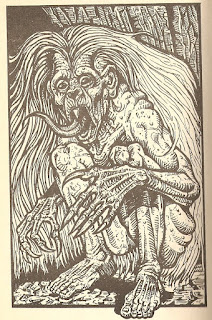
The Banshee Ghoul has similarities to the true Banshee (see the Companion Set), but is a different sort of undead. The banshee ghoul can be easily recognised by its single nostril and single sharp tooth. When first encountered a Banshee Ghoul will start wailing but won't attack immediately. Anyone within 60' hearing the wail must save vs spells or become overcome with fear and attempt to flee. This is also the banshee ghoul's cue to attack. Anyone attacked while under the influence of the banshee ghoul's fear can fight back but at -2 to hit and damage due to panic and fear-induced weakness. Although anyone affected can try to save vs spells every round, the banshee ghoul will continue wailing while in combat, requiring a new save for those currently unaffected by the fear.  Magical silence (such as a cleric's Silence 15' radius) is very effective at neutralising the banshee ghoul's wail. 
Banshee ghouls are immune to normal weapons (+1 or better magic weapons needed to hit) as well as the usual undead immunities (including poison, disease, death magic, Sleep & Charm spells). 
Banshee ghouls are believed to be created when an evil woman dies of grief or heartbreak though some particularly chaotic clerics may also know of spells to create them. 

Bird-man 

NameBird-man
Armor Class6
Hit Dice (Avg hp)4+4 (22hp)
Movement90’/Fly 180'
No Attacks4 claws 
THAC015
Damage1d6/1d6/1d6/1d6
No Enc3d8
Save asF5
Morale8
AlignmentNeutral or Chaotic
TreasureC
Size/TypeMedium Humanoid
Intelligence12 (very)
XP value125
Bird-men dwell in mountains and steep hills and are omnivorous, feeding on animals, fruit, seeds and insects. Most tribes of bird-men leave other humanoids alone, and usually fly away if approached. But some tribes have become chaotic predatory man-eaters, hunting and killing lone travellers. If attacking, a birdman will try to dive from a distance of 60' onto their prey. This means they can only attack with their hind talons but they get +2 to hit and do double damage (2d6 per talon attack) in the first round as they slam into their prey. Furthermore, a successful dive attack will knock their opponent prone. 
Bird-men live in flocks of up to 24 strong and nest in groups on rocky outcrops and tops of cliffs. They have no serious need for treasure but like magpies they like shiny trinkets and will decorate their lairs with sparkling coins, jewelry and gems. A bird-man's hands are dextrous enough to use tools and they can construct simple things, but they eschew weapons, preferring their natural talons. 
In Mystara bird-men are found in the highest mountains of Brun, including the Altan Tepes and the Amsorak mountains though they are few and far between. 


Crystal Warrior 

NameCrystal Warrior
Armor Class3
Hit Dice (Avg hp)8* (36hp)
Movement60’
No Attacks1 weapon
THAC012
Damage3d6
No Enc1
Save asF4
Morale12
AlignmentUnaligned
Treasurenone
Size/TypeLarge Construct
Intelligence1 (animal)
XP value1200
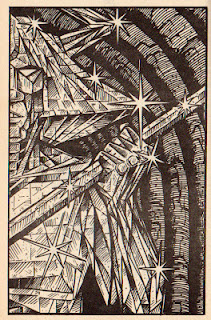
Crystal Warriors are constructs perhaps related to crystal living statues (from the Basic set). They appear as humanoids carved out of clear quartz and like golems and other constructs they are often left to guard areas of importance - although the crystal guardian will not have treasure of its own, it may well be left to guard the treasure of its creator. A crystal warrior will obey the orders of its creator, though this needs to be simple and clear as crystal warriors are not good at discretion or understanding the intent behind a command. 
Crystal warriors are formidable in combat, attacking with razor-sharp crystalline weapons. They are immune to sharp and pointed weapons such as swords, spears and axes - only blunt bludgeoning weapons such as hammers and maces can harm them. Even then the weapon must be of +2 or greater enchantment. Crystal warriors are immune to fire, acid and cold but are still vulnerable to lightning and electrical attacks. As a construct, a crystal warrior is immune to disease, poison, death magic and mind-affecting spells. They are also fearless and fight to the last unless specifically instructed to stop. 
The method of creating crystal warriors is not widely known, and is believed to have originated in Alphatia where an archmage created a squadron of them to guard his mansion and gardens. 

Ice Demon

NameIce Demon
Armor Class2
Hit Dice (Avg hp)14+4* (67hp)
Movement120’, fly 180'
No Attacks2 fists or breath
THAC08
Damage2d6/2d6 + stun or 4d10 + paralysis
No Enc1
Save asF15
Morale10
AlignmentChaotic
TreasureD
Size/TypeHuge Outsider
Intelligence15 (High)
XP value2300
Ice demons are among the most powerful of lesser demons, and usually dwell in Noreesis Vale, a particularly frigid Plane of Chaos, though they sometimes deign to visit the Material Plane to lord over pathetic chaos-worshipping mortals. They are rivals with Fire Demons and the two will often attack each other on sight. 
In combat Ice Demons can punch opponents with their mighty fists. Anyone hit by an ice demon's fist must save vs paralysis or be stunned for 1d4 rounds from a combination of concussion and cold shock. Every other round an ice demon may use its breath weapon, a cone of cold that extends from the ice demon's mouth out to 30' and is 20' wide at the end. Anyone in that area must save vs dragon breath or suffer 4d10 cold damage and be paralysed by cold for 1d4 rounds. Ice demons have massive bat-like wings and can fly if necessary. 
Ice demons are immune to normal weapons and require +1 or better magic weapons to hit. They are also immune to poison, disease and cold damage. Ice demons speak Common and Demonic but can also communicate via telepathy with any intelligent being. 


Night Stalker

NameNight Stalker
Armor Class5
Hit Dice (Avg hp)6 (27hp)
Movement120’
No Attacks2 claws/1 bite 
THAC014
Damage1d4/1d4/2d8 
No Enc1d8
Save asF6
Morale8
AlignmentChaotic
TreasureC
Size/TypeMedium Humanoid
Intelligence10 (Average)
XP value275
Night stalkers are predatory humanoids that are particularly frightening and ghoulish. They prefer to operate in darkness, so are often found in dungeons and caverns, or else at night in borderland areas. They disguise themselves with robes and carry a lantern and from a distance appear to be human - this is part of the night stalker's ruse to lure prey close. Once a humanoid comes close enough the night stalker throws back the hood on its robe to reveal its hideous face - any humanoid in 10' must save vs Spells or be stunned for 1d4 rounds during which the night stalker will attack and try to kill its prey before it can defend itself or flee. 


Tusked Yeti

NameTusked Yeti
Armor Class6
Hit Dice (Avg hp)10+10* (55hp)
Movement120’
No Attacks2 claws/1 bite 
THAC09
Damage2d4/2d4/3d6 
No Enc1d8
Save asF5
Morale9
AlignmentUnaligned
TreasureD
Size/TypeLarge magical beast
Intelligence3-4 (semi-)
XP value900
Tusked yeti are arctic predators, with features of ape and bear all rolled into one body with shaggy white fur. They are capable ambushers and will sometimes burrow under the snow, bursting out when unsuspecting prey wanders by, surprising most creatures on 1-4 on d6. 
Tusked yeti are immune to all cold damage. 
They are sometimes found as pets of either frost giants or white dragons and are known to inhabit the wilder parts of Norwold. .


Tuesday, 22 February 2022

Dungeons as Infestations

source


Lots of dungeons are old, at least within their game world. Among published modules B1: Into the Unknown and  B4: The Lost City deal with old ruins that have not been civilized for a while. In my own development of Mystara I have also added Tarrag Duun and the Tombs of Allaktos, both of which have substantial histories. And outside of Mystara there are other classic dungeons with long histories such as Castle Greyhawk and Undermountain. There are others which were civilised but have been recently taken over by the forces of Chaos, such as B3: The Palace of the Silver Princess and X2: Castle Amber. 

Finally there are those that have been created recently specifically by the forces of Chaos as strongholds and footholds in the lands of humanity and their demihuman allies. These dungeons can be viewed as infestations. Although it is not specifically described as such, I believe that the Caves of Chaos in B2: The Keep on the Borderlands is a good example - the caves are a base for the encroaching forces of Chaos where humanoids such as goblins, orcs and gnolls can gather and prepare for attacks. And like other infestations, it needs to be dealt with otherwise it will spread - first the dungeon at that location will expand, with more areas being excavated and more creatures moving in, and possibly more levels being added. Secondly once the dungeon starts getting crowded, creatures will split off and find new locations to establish new lairs. 

As the dungeon and its population grows, resources are needed, particularly food and weapons. Although a few dungeons may be self-sufficient in that regard (particularly if they have a vein of metallic ore within the dungeon, or a fungal grotto that can be farmed for food), the dungeon inhabitants are more likely to raid villages and caravans for these and other materials. Besides, it is not in the nature of chaotic monsters to work for a living if they can take what they want from human villagers. 

Just as an aside, I've started wondering what the Caves of Chaos would look like if the humanoids kept digging and multiplying? The DM would probably need multiple maps for different levels as cave complexes are dug over the top and underneath each other (in the original B2 map, the cave complexes may be at different elevations but they are not directly above or below each other). In the original, the humanoid forces may be sufficient to threaten impertinent adventurers, but not enough to threaten the keep. If the gathering forces are not dealt with, they may become strong enough to shift that balance of power.   

The Twisted Summoner class I presented earlier is ideal for setting up these sorts of "infestation" dungeons. The kobolds that are the first chaotic minions to be summoned are capable of dungeon excavation, construction, trap-setting and other labour. As the twisted summoner becomes more powerful, more monsters are summoned and more rooms and levels can be added. The twisted summoner may attract apprentices who can then add their own minions to the dungeon population. And once an apprentice twisted summoner is ready (or perhaps flees the dungeon for his life) he can move elsewhere and set up his own dungeon stronghold, and thus the infestation spreads to another area. An example of this is my own Scenario #4 which is low level but still illustrates a twisted summoner setting up his own dungeon, with kobold labourers, hobgoblin troops and the potential to expand as the twisted summoner becomes more powerful. 

Other chaotic humans may move in, such as chaotic clerics and chaos warriors. The twisted summoner may not be setting up the dungeon on his own initiative but on orders from powerful leaders of the Cult of Chaos to provide a stronghold from which cult members may operate against civilization and the forces of Law. 

An alternative to twisted summoners would be the Deepspawn from the Forgotten Realms. These horrible creatures can spawn other biological monsters of different species once they have "sampled" (i.e. devoured) one of that species. I have come up with  system where deepspawn can be scaled by HD and size which also gives limits to the size and power of the creatures it can spawn - a 4HD deepswawn is medium sized and can only spawn small creatures of up to 2HD, while a 20HD deepspawn is gargantuan in size and can spawn huge creatures up to 10HD. At their largest size (24HD, gargantuan) the deepspawn can spawn huge creatures of up to 12HD, which includes 12-headed hydra, fire giants and small red dragons. Fortunately they are restricted to living things, so undead, elementals, outsiders and constructs cannot be spawned. Deepspawn still need the raw organic materials to produce their spawn, and are voracious omnivores, sending out their existing spawn to bring back all sorts of food. 

Deepspawn (by Baxa)

The one major thing that this concept does not involve is treasure. That is not to say that treasure cannot exist in these infestation dungeons but merely that there is no requirement that it must exist. But for the sake of player expectations I would include treasure as plunder from the gathering expeditions launched from the dungeon - as well as bringing back food, metal and timber the raiders from the dungeon may bring back coins, tradeable goods and the occasional magic item. 

Example of a growing dungeon

Stage 1 is really just a hideout for Julgor the apprentice, with just 3 chambers. He has fled here after a band of self-righteous adventurers slew his master in their previous lair, and he only survived by pretending to be a captive villager. 

  1. The Atrium: 3 human bandits + 2 kobolds. The kobolds are under the control of Julgor, while the 3 bandits have simply joined Julgor as he can provide a hideout. 
  2. 5 kobolds. This room also has 8 small (kobold-sized) straw mattresses. The kobolds are all armed with daggers (1d4 damage) and 2 of them also have slings + 10 stones each. In a corner is a large box with tools including small pick axes, shovels and buckets. 
  3. Julgor the abandoned apprentice, 2nd level twisted summoner. This room also has Julgor's bed and a chest of belongings including his treasure and spellbook. 

Stage 2 sees Julgor and his kobolds expand the dungeon. The spoil heaps outside demonstrate the work the kobolds have done. 

  1. The Atrium is now a guard post with 2 human bandits and 1 orc on duty. 
  2. 4 bandits are settled in this new room with 4 crude straw mattresses and a small fire in the centre of the room, and a sack of loot. If the alarm goes up they will rush out and help their mates in area 1. As previously, the bandits are here out of mutual agreement rather than magical control. 
  3. 1 orc boss and 2 wolves are here. The orc boss (stats as gnoll) controls the wolves and can get them to stay or to attack. The orc boss is under the twisted summoner's control but the wolves are not. 
  4. What was formerly Julgor's quarters has now become the orcs' den. In here are 2 orcs, with 4 straw mattresses. There is a dead sheep that is due to be butchered for food. 
  5. Julgor's new quarters. Julgor the Summoner is now a 4th level Twisted Summoner. He has moved his furnishings in here and has also picked up a rather nice bronze statue which he uses as a coat and hat stand. He has got the kobolds to fit his chest of belongings with a poison dart trap. 
  6. The kobold quarters have moved here. There are now just 5 kobolds but one of them has survived long enough in Julgor's service to become quite skilled and tough (1HD).  There are 6 kobold-sized straw mattresses here.
  7. Supplies room. In here are boxes of food, tools, weapons and the like, as well as several barrels of nice wine looted from an inn that was sacked a few weeks ago, and 3 dead sheep (the bandits attacked a shepherd and his flock). 

Stage 3 continues in a similar vein, with more rooms added and Julgor now reaching 6th level. Some of the inhabitants are magically controlled, others are here by other arrangements. He still keeps a contingent of kobold labourers and has plans on making moves on a local village. The traps and alarms are becoming more sophisticated but a mercenary ogre is proving difficult to control - Julgor thinks it may have been a mistake to hire him, and is considering fireballing the brute. 


Wednesday, 16 February 2022

The Battle of Duke's Road Keep


Image by Doug Chaffee (source)
A terrible disaster has been narrowly averted! Just a few days ago Duke's Road Keep, in northern Karameikos, close to the border with Darokin, was assaulted by a powerful force of orcs and ogres. In several places the curtain wall was breached though thankfully the inner keep held. The garrison of Karameikan soldiers and various allies held out until the chaotic humanoids gave up and slunk back to their caves.  

What is Officially Said about Duke's Road Keep 

From Gaz1: The Grand Duchy of Karameikos:

Duke's Road Keep: This fort lies in the mountain pass on the Duke's Road, right at the border between Karameikos and Darokin. Though also mountainous and cold, this is a more cheerful place because of the constant traffic passing through from Selenica to points south. This fort is garrisoned by the Fourth Division, Duke's Road Battalion (nicknamed "The Goblin-Crushers" for their successful military operations carried out against the mountain goblins).

My ideas about what has happened:

A band of 30 dwarf prospectors were the first to spot the orc and ogre horde advancing from the east through the mountain valleys. The dwarves hurried to the keep on their ponies, both for their own protection and also to warn the humans. However, they in turn were spotted by the orcs, and there were several running skirmishes with worg-riding orc scouts trying to stop them. 12 dwarves made it back to the keep, raising the alarm and allowing an hour to organise the defences - this was only possible because 8 other dwarves decided to make a heroic last stand in a narrow gorge, blocking the worgs and their orcish riders for as long as they could before they were overwhelmed. 

The garrison sent riders in each direction of the Duke's Road, warning travellers and caravans of the impending attack. Two caravans made the decision it was safer to stay in the keep than be caught out on the open road by the savage raiders. One caravan heading north to Darokin tried to outrun the orcs but their burnt and bloodied remains were found a few days later. 

Estimates from survivors in the keep put the enemy forces at about 2000 orcs, and at least 120 ogres. About 2/3rds of the orcs were just regular infantry, with spears, axes and shields, but there were companies of orcs with crossbows and shortbows, as well as 100 surviving worg-riders. They came well-prepared for an assault, with many orcs carrying siege ladders to scale the walls, and goblin slaves hauling carts carrying ballistae, catapults and their respective ammunitions. Some of the goblins were carrying shovels, pick-axes and other mining equipment. 

The Dukes Road Keep defenders were 244 soldiers of the Karameikan Army, 4th Division, Duke's Road Battalion ("The Goblin-Crushers"), plus 120 resident civilians (of whom 33 could pick up weapons and fight), 43 caravan guards from the two caravans sheltering in the keep, the 12 surviving dwarf prospectors who first spotted the attacking orcs, the resident chaplain Theodocius (human male 6th level cleric, Lawful) and his 3 adepts (2nd level clerics, Lawful) and a band of adventurers who were on their way to Castellan Keep, looking for fortune and glory.

The battle was brutal and bloody, and went on from the initial attacks at dusk through the night until dawn. Siege ladders were put against battlements and the human defenders desperately tried to kill or knock the orc assailants off the ladders before they could get a firm foothold on the parapets.Toppling a siege ladder over (often with orcs still climbing it) would rouse a cheer from the humans.  Arrows , quarrels and ballista bolts were exchanged by both sides. The orcs were very exposed and were usually not organised enough to form a shield wall against the incoming arrows. 

The gatehouse came under attack from ogres wielding a tree trunk as an improvised battering ram, and the portcullis and gate were eventually smashed down, but before the orcs and ogres could charge in the mage from the visiting adventuring party, Vericonia (human female, 6th level MU, Neutral) used her prized possession, a Wand of Webs, which held the attackers in its sticky webs as they tried to get through the gatehouse, leaving them immobile and vulnerable to counterattack by the defenders. Despite the orcs and ogres hacking or burning some of the webs, Vericonia kept using her wand, making the gatehouse main entrance impassable with multiple web spells. 

As was previously stated, the orcs and ogres managed to overrun the outer walls in three places, mainly thanks to the siege ladders. This forced the defenders back to the central keep. However, the orcs did not get their siege equipment over the walls and so the siege artillery could not aim at the keep. At one point the orcs tried to swarm over the keep like angry ants but this was when the defenders used the flaming oil, poured over from the inner keep's ramparts and scorching anything near the base of the keep's walls. Over a hundred orcs and a dozen ogres were burnt within that minute, and it was at that point that some orcs began to retreat, despite the exhortations and threats of their commanders and chiefs. 

In a final attempt to break the defenders, the great ogre chief Wolfripper started smashing at the inner keep's door with his huge axe, and to the defenders' consternation he was successfully chopping his way in.  At this point the battalion commander Tyllion of Kelvin (human male, 7th level fighter, Lawful) opened what was left of the door and took on the ogre chief in single combat. It was a closely fought battle, with both inflicting terrible wounds on each other. Wolfripper let out a terrible roar that chilled the blood of all the defenders, but although some flinched or were rooted to the spot in fear, the commander was unfazed and landed the final blow, slicing Wolfripper's neck open. Weak from his wounds and exhaustion, he collapsed in the broken doorway. As a dozen ogres charged at the doorway, a lightning bolt shot out from the keep, over the prone body of  Tyllion and blasted half of the ogres into ashes. "I've been waiting for the right opportunity to use that spell" said Vericonia, the mage of the adventuring party. At this point the remaining ogres turned and fled. Seeing their bigger, stronger allies falling back and knowing the defenders had powerful magic the orcs decided to follow in kind. 

It has been 3 days since the battle. Clerics have been healing the wounded, administered last rites to the dead and dying and praying for guidance. Many graves have been dug. Of the defenders, 86 soldiers, 16 caravan guards, 4 dwarfs and 101 civilians have survived. Tyllion the commander has also survived though he is still recuperating from his duel with the ogre chief and now bears some impressive scars. Repairs are being made to the curtain walls and other stonework damaged by catapults and the like. Outside the Keep, on the other side of the Duke's Road, a horrible pile of nearly a thousand orc and ogre corpses now festers. 

If the PCs arrive at Duke's Road Keep, they may have missed the main battle but there are plenty of tasks and missions. 

  • Surviving orcs and ogres have regressed back to petty banditry, waylaying travellers on the Duke's Road. They need to be dealt with in an uncompromising way. 
  • Theodocius the Chaplain is convinced that the orcs and ogres would not have come up with this attack by themselves. They are opportunistic, dull and selfish, usually content with attacking farmsteads and caravans. Theodocius wants adventurers to go after an ogre or orc chief and find out who organised this attack. The strategic importance of Duke's Road Keep cannot be ignored. 
  • Tyllion the commander wants emissaries to travel to Highforge where a renowned dwarf architect and military engineer Darreldor Steelhammer (male Dw 5, neutral) is employed by the gnomes. Tyllion wants him to come over to Duke's Road Keep to advise on improving the defences. 
  • Fenrir Bronzehelm (male Dw4, lawful) is one of the few surviving dwarves. He wants the PCs to retrieve the bodies of his fallen comrades, especially those who made a last stand in the narrow gorge. They deserve a decent dwarven burial. 
  • The ogre chief Wolfripper, slain at the climax of the battle, regularly paid fealty and food to the frost giants of the Tomb of the Frost Shamans. When he does not deliver in a month's time, they will send a squad of 3 frost giants to investigate. Is it possible to deal with these frost giants peacefully? Can they be deceived or deterred? 
  • Orc corpses have gone missing from the pile on the other side of the Duke's Road. This is compounded by reports of orcish zombies stumbling west into the Black Peaks. Clearly some necromancy is at work but who and why? Is this necromacer in alliance with the orcs or do they have their own agenda?
  • Surviving ogres of Wolfripper's own personal band were seen retreating northwest and are believed to be holed up in a natural limestone cave. They are led by Spinestomper, an ogre leader and Wolfripper's right-hand brute. Tyllion wants the ogre threat to be finished off. 
  • Tyllion cannot be sure that another attack is not being prepared and wants the defences to be strengthened as quickly as possible. Although he has sent messengers to the Duke in Specularum for reinforcements, he also wants adventurers to escort his treasurer to Selenica to negotiate a deal with the Mercenaries' Guild. The good news is that some merchants who use the Dukes Road regularly could be persuaded to contribute to the costs of the mercenary soldiers.
  • Plorbios the Plump, (human male 2nd level fighter/3rd level merchant, neutral) was the leader of one of the caravans that sheltered in the keep during the battle, and he found himself fighting for his life along side the caravan guards and soldiers. He survived but his merchandise was lost and now he fears bankruptcy. He was moving 20 rolls of fine Pearl Island silk from Specularum to Selenica, but the silk was seized and taken by some enterprising orcs. At a value of 2000gp per roll he is willing to pay a 50% finders fee (1000gp per roll) to anyone who can retrieve his silk and save his business. 
  • A silver and ivory necklace around one of the slain orc chiefs' neck has been identified by Plorbios the Plump as being the same design as the orcs in the Orclands north of Selenica and Hobart Keep. Could orcs be travelling from the Orclands in northeast Darokin to Karameikos? If so, how? How many of the 2000 orcs were from there, instead of local tribes in the Altan Tepes?
  • Theodocius and his sole surviving adept are very overworked. He would like adventurers to travel to the Reclusium of Serenity in the northwest of Karameikos to ask if they can spare any clerics to help with the healing. 
  • The oil that proved so crucial when the inner keep was under attack has been used up, and new supplies need to be found. The best oil is found in the Emirates of Ylaruam, particularly the city of Sulba. But who would be prepared to travel all that way and bring the oil back?
  • What happened to the gang of goblin sappers, seen at the start of the battle? Although they may have simply fled, it is also possible that they are mining away somewhere near the keep, possibly tunnelling under it. Tyllion would like this matter investigated. 
source


Monday, 14 February 2022

My ideas about the villages of Rifllian & Kota-Hutan

 What is officially said in Gaz1: The Grand Duchy of Karameikos on p.39

Rifllian

Ruler: Prestelle (Chief Trader). She is a third level elf and a shrewd trader

Population: 1700, chiefly Callarii elves

Laws: When dealing with human visitors, the Callarii follow the Duke's Law, but in their own affairs follow elvish custom. 

Notes: This is the post where humans come to trade with Callarii elves, trading raw materials and good horses for supplies, equipment and items of elvish craftsmanship. Humans will feel most comfortable in the Silver Swan Inn, which is run (chiefly for human visitors) by Stubbs Platterman, a halfling (first level). 

Image by panjoool, source

Kota-Hutan

Kota-Hutan does not have an official description, though it is mentioned by name in B7: Rahasia as the elven village from which the elf maidens have been kidnapped. 

My ideas: 

B7: Rahasia - Kota-Hutan is the elven village. The Temple of Gray Mountain is where the Rahib lives. No location is given within the module, so I am placing it in the Radlebb Woods, west of Rifllian. 

Elwyn's Sanctuary is a short adventure included in B9: Castle Caldwell and Beyond. As far as this campaign is concerned, Elwyn's Sanctuary is in the hills northwest of Rifllian and southwest of Verge. 

Both the Rahib and Elwyn are part of the Cult of Chaos. The Rahib has actually travelled from Hule on orders from his superiors in the Cult of Chaos to destabilise the elves of Karameikos. 

Humans of Karameikos consider Rifllian as the capital of the Callarii elves. This amuses the elves, as they do not feel the need to have a centre of government - each village and each family is mostly autonomous, and in matters that affect many villages and families there is a gathering of elders at an agreed location (sometimes Rifllian, usually somewhere else). Prestelle does not consider herself to be a ruler, but more of a spokesperson and diplomat. 

However, the elves will agree that Rifllian is an important trade hub, and it is no coincidence that it is close to both Highforge and Kelvin, and close to the main river system of Karameikos which makes trade with Threshold and Specularum easier. Although humans are the main trading visitors, dwarves, gnomes and halflings all occasionally do business here. 

Rifllian has an informal artisans' quarter, where much of the crafting goes on - carpenters, jewellers, leatherworkers, bowyers and weaponsmiths can all be found along Crafts Avenue. There is also the marketplace where most traders visit and deals are made, but sometimes a trader will have a particular craftsman in mind and will go straight to Crafts Avenue. 

Rifllian has no standing army but has a militia system - nearly all elves capable of combat also have a day job, but when the alarm call goes out (either external raiders or internal crime) about a third of the elven population (about 500 elves) can don armour and pick up weapons, ready for action. Of these about half are elven spellswords (fighter/mages), while the other half are elven rangers. 

Pardelli the Falconer (5th level Elf Ranger, Lawful, male) breeds hawks that act as messengers and spotters for the elves of Rifllian. He is believed to possess a Ring of Animal Control that works only on birds. Although it does not live in the village of Rifllian, there is a giant hawk nearby that Pardelli seems to have a good friendship with. 

The Callarii elves generally get on well with other elves, including their eastern neighbours the Vyalia elves and the elves of Alfheim. The Callarii elves are not quite as academic and cultured as those of Alfheim, who consider them a bit simple and rustic, stuck in their corner of Karameikos, rubbing shoulders with uncouth humans. The Alfheim elves sometimes nickname the Callarii "wood elves" - in turn the Callarii consider the Alfheim elves to be a bit haughty and high and mighty, and sometimes refer to them as "high elves". 

The Nehelli tribe of centaurs has been acting strangely recently. Previously they have been willing to trade with elves and even directly with humans (using Rifllian as neutral ground) but now they have been acting aggressively, chasing other races, including elves, out of their tribal territory (the woods south of Rifllian) and shunning contact with the outside world. The elders of Rifllian would like adventurers to investigate, preferably without casualties on either side. Do the centaurs have a legitimate grievance, or are more sinister forces at work? 

The Elvish Truebloods are elf supremacists who resent human intrusion into what they see as their territory. They are similar in methods to chaos cultists and mostly blend in with the rest of the elven population, with members in Rifllian and Kota-Hutan (such as Parnassa Highbrow). Other members who cannot stomach the presence of inferior races (humans, dwarves, halflings) have retreated to a hideout deep in the woods called the Tower of Aelarda Starria. The Elvish Truebloods do not consider themselves chaos worshippers (and despise actual chaos cultists) but many of them act and think in a chaotic way, fuelled by racial pride, hatred of inferior races and fear of the future of elves (not so much extinction so much as dilution and pollution of their bloodlines and culture, and elves gradually being reduced to the level of mere humans).  They claim to be inspired by another group of elves from another world who call themselves "Eldreth Veluuthra". They have not yet acted openly against humans or their elf friends but the time will come. 

Kota-Hutan has a population of about 300 elves and a number of elven NPCs:
  • Galthriel Moonbeam (3rd level Elf Ranger, Neutral, female) is the village's main scout and will lead patrols in the nearby woods, deterring or defeating intruding goblins, orcs and gnolls. 
  • Alhandria (3rd level Elf Spellsword, Lawful, female) is the village's main spokesperson. She often travels to meet other elven elders and is friends with Prestelle in Rifllian
  • Vellorion Blackbow (2nd level Elf Ranger, Lawful, male) is the resident bowyer and fletcher, and is always on the lookout for good quality but responsibly sourced timber for his famous longbows.
  • Callithor Dragoneye (2nd level Elf Spellsword, Chaotic, male) is a trader and traveller, visiting Kelvin, Highforge and Threshold. However, he is also a Chaos cultist and even works with the Rahib on occasions (kidnapping the elf maidens required tip-offs from this treacherous elf). 
  • Parnassa Highbrow (2nd level Elf Spellsword, Chaotic, female) is a member of the Elvish Truebloods. Although not openly hostile to non-elf visitors (at least not when it would be foolish to be so) she is quite condescending and arrogant. She quietly reports any non-elven visitors to her superiors deep in the Radlebb woods at the Tower of Aelarda Starria.
 As well as the Rahib in the Temple of Gray Mountain, Kota-Hutan is also threatened by the Black Viper tribe of orcs who have recently hired a band of gnoll mercenaries. This is the reason why the elves of Kota-Hutan want adventurers to enter the Temple of Gray Mountain - they cannot spare the defenders who may be needed in the event of an orc and gnoll attack.  

source