Sunday, 28 May 2023

The Book of Hidden Dimensions

source

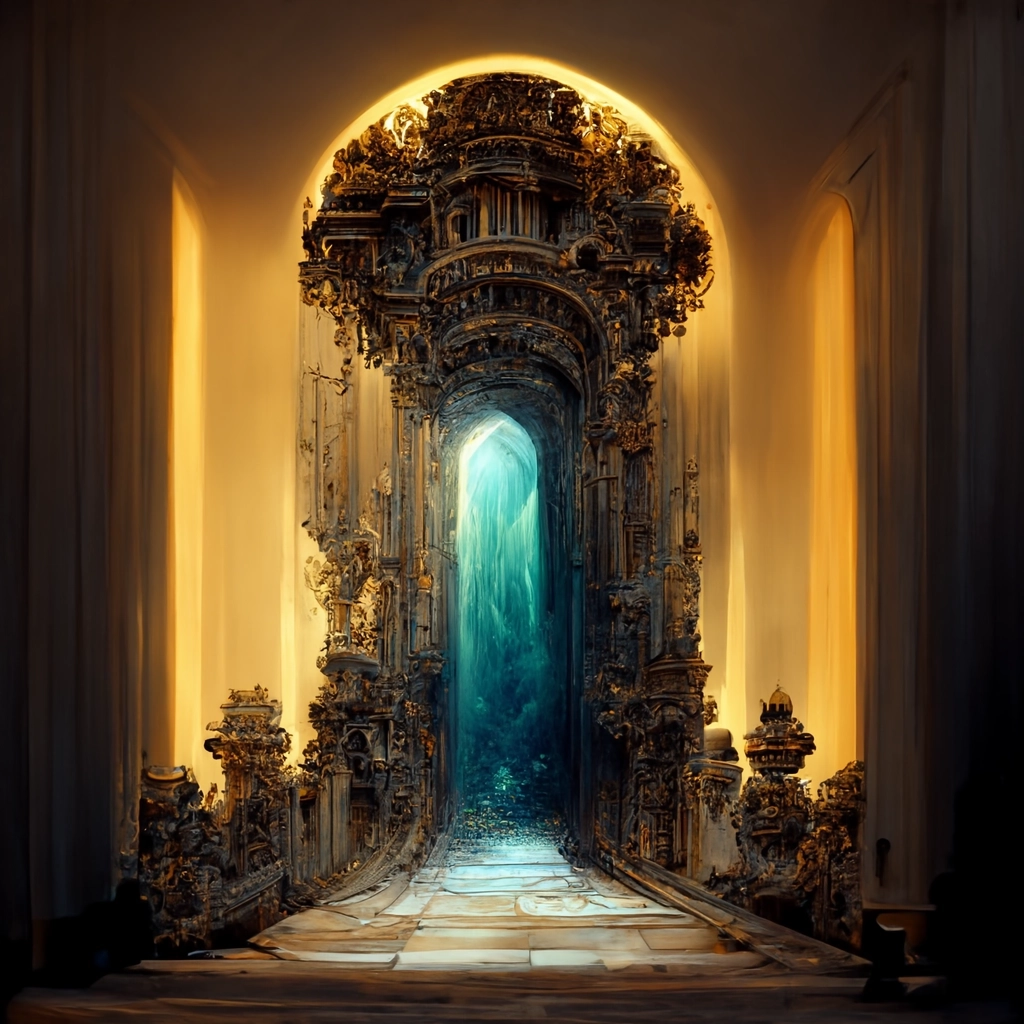
There are many spells that are beyond the standard spells of the magical colleges, and they come from many sources. The Alphatian wizard Nebulon lived and worked over a century ago in the city of Shiell and he studied non-Euclidian geometry - impossible spaces and shapes. He wrote of his findings and new spells in a book, the Book of Hidden Dimensions. His students and apprentices made several copies of this and at least one of these copies found itself on the Floating City of Aalthir. 

The book itself contains quite a lot of mathematical theory and equations that non-wizards probably would never understand and even most wizards would find it difficult to wrap their heads around the concepts Nebulon tried to explain. Note that generally speaking Nebulon was interested in altering and manipulating dimensions not the Planes of existence so spells that involve the planes (such as Gate and Contact Other Plane) are not addressed. Nebulon himself modified some spells to make use of extra dimensions rather than planes of existence, such as his version of Leomund's Secret Chest. 

There is also a section on magic items that caught Nebulon's attention, including several pages on how to create a Bag of Holding and something known as a Portable Hole. 

The main attraction of the Book of Hidden Dimensions is the collection of spells in the second half. Some of these are well-established, others have been borrowed from other worlds while a few are of Nebulon's own making. The spells include:

  • Haste (3rd level)
  • Slow (3rd level)
  • Dimension Door (4th level)
  • Teleport (5th level)
  • Teleport Any Object (7th level, Companion Rules, doubles as Teleport Without Error)
  • Magic Door (7th level, Companion Rules)
  • Summon Object (7th level, Companion Rules)
  • Timestop (9th level, Rules Cyclopedia)

All of these are established spells that many wizards in Alphatia and beyond are at least aware of and usually have access to. There are also two modified versions of existing spells that suited Nebulon's sensibilities:

Passwall (5th level spell). This modified version does not actually affect the wall, but creates two connected dimensional portals on either side of the wall, so rather than making the wall section disappear, it simply creates an interdimensional shortcut to bypass the wall. 

Maze (8th level spell, Companion Rules). This modified version of the Maze spell does not use the Astral Plane as the usual version does but uses a convoluted pocket dimension that the trapped creature must find its way out of. While the creature is trapped in the pocket dimension, other people observe a vertical shimmering line where the target was when they were hit by the spell. On escaping the maze the target creature emerges from this shimmering line which then promptly closes up. 

 Then there are spells that Nebulon has acquired from other worlds and modified to suit his tastes:

  • Deeppockets (2nd level Wizard spell, 2E AD&D PHB)
    Range: Touch
    Duration: 12 hours + 1 hour per caster level
    Area of Effect: 1 Garment
    This spell allows the caster to enchant a specially prepared robe or coat so as to hold far more in its pockets than it normally could. A finely sewn gown, robe or coat of high quality material with unusually large pockets is required. The spell is cast on the garment and its pockets become extradimensional spaces similar to Bags of Holding. The garment can hold a total of 100lb/1000cn weight without any noticable change in wearer's encumbrance or shape (i.e. the extradimensional space negates both weight and volume of anything in the enchanted pockets).Any items placed in it must be able to fit into the pocket slits (maximum 1ft x 1ft in any two dimensions). If at the end of the spell's duration there are items still in the pockets, they are dumped onto the ground next to the caster as the spell expires. The garment is reusable.  
  • Rope Trick (2nd level MU spell, 1E AD&D PHB)
    Range: Touch
    Duration: 2 turns/level
    Area of Effect: Special
    When this spell is cast upon a piece of rope from 5' to 30' long, one end of the rope rises up until the whole hangs perpendicular as if affixed at the upper end. The upper end is in fact fastened to an extradimenional space. The spellcaster and up to seven others can climb up the rope and disappear into this space of safety where no creature can find them. The rope can be taken into the extradimensional space if fewer than 8 persons have climbed into the space, otherwise it stays hanging in the air. Spells cannot be cast across the dimensional interface, nor can area effects cross it. Those in the extradimenional space can see out of it as if there is a 3' x 5' window centred on the rope. The persons in the extradimensional space must climb down prior to the end of the spell or they are dropped from the height at which they entered the space. The rope can be climbed by only one person at  a time. Note that the rope trick spell enables climbers to reach a normal place if they do not climb all the way to the extradimensional space. Also not that creating or taking extradimensiona paces into an existing extradimensional space is hazardous.  
  • Leomund's Secret Chest (5th level MU spell, 1E AD&D PHB, modified from original)
    Range: Special
    Duration: 60 days
    Area of Effect: 1 chest about 2' x 3' x 3'
    This spell enables a specially constructed chest to be hidden within an extradimensional space (in the original this was hidden in the Ethereal Plane). The large chest must be exceptionally well crafted and expensive, constructed for the caster by master craftsmen - the cost of such a chest is never less than 5000gp. Once it is constructed the magic user must have a tiny replica (of the same material and perfect in every detail) made so that the miniature appears to be a perfect copy. The chests themselves are nonmagical and may be fitted with locks, wards and so on as any normal chest. While touching the chest and holding the miniature, the caster chants the spell. This causes the large chest to vanish into the extradimensional space. The chest can contain one cubic foot of material per level of the magic user no matter what its apparent size. Living things make it 75% likely that the spell will fail so the chest is typically used for securing valuable spellbooks, magic items, gems etc. As long as the spellcaster has the small duplicate of the chst he can recall the large one from the extradimensional space whenever the chest is required. If the miniature of the chst is lost or destroyed there is no way, not even with a Wish spell, that the large chest can return. If the large chest is not retrieved before the spell duration elapses there is a cumulative chance of 5% per day beyond the end of the spell that the large chest is lost.     
  • Duo Dimension (7th level MU spell, 1E AD&D PHB, modified from original to ignore references to the Astral Plane)
    Range: 0 (Caster only)
    Duration: 3 rounds + 1 round per level of caster
    Area of Effect: Caster only
    A dui-dimension spell cuases the caster to have only two dimensions - height and width but no depth. He is thus effectively invisible when turned sideways. This can only be detected by  True Seeing (as it is not the same as normal invisibility). In addition the caster can pass through the thinnest of spaces as long as these have the proper height - going between a door and its frame is a simple matter. The wiard can perform all actions normally. He can turn and become invisible, move  and appear again. The caster can cast other spells while in this state. Note that when turned the wizard cannot be affected by any form of attack but when visible he is subject to double the amount of damage for an attack, e.g. a dagger thrust would cause 2d4 damage if it struck a duo-dimensional wizard.  
  • Morden's Magnificent Mansion (7th level Wizard spell, 2E AD&D PHB)
    Range: 10 yards
    Duration: 1 hour/level
    Area of Effect: 300sq ft/level
    By means of this spell the wizard conjures up an extradimensional dwelling, entrance to which can only be gained at a single point on the plane from which the spell was cast. From the entry point those creatures observing the area see only a faint shimmering in the air in an area 4' wide x 8' high The caster controls entry to the mansion and the portal is open or shut on his command. Once observers have passed beyond the entrance they beohold a magnificent foyer and numerous chambers beyond. The place is furnished and contains sufficinet food stuffs for a 9 course banquet for 12 people per level of the caster. There is also a staff of Unseen Servants obedient and ready to wait on those who enter. The atmosphere is fresh, clean and warm. Since the mansion can be entered only through its special portal, no outside conditions can affect the mansion or those inside. Rest and relaxation within the mansion is nromal but the food is not. It seems excellent and filling as long as one is within the palace. The food cannot be taken outside the mansion. Once guests are outside , however, the effects of the mansion's food disappear immediately, and if guests in the mansion have not eaten real food within a reasonable timespan, ravenous hunger strikes and the effects of fatigue and starvation apply as decided by the DM. 
  • Phase Door (7th level MU spell, 1E AD&D PHB)
    Range: Touch
    Duration: 1 usage/2 levels
    Area of Effect: Special
    When this spell is cast the wizard attunes his body and a a section of wall is affected as if by a Passwall spell. The phase dorr is invisible to all creatures save the spellcaster, and only he can use the space or passage the spell creates, disappearing when the phase door is entered, and appearing when it is exited. If the caster desires, one other creature of man size or less can be taken through the door. This counts as two uses of the door. The door does not pass light, sound or spell effects, nor can the caster see through it without using it. Thus the spell can provide an escape route. The phase door lasts for one usage for every two levels of experience of the spellcaster. It can dispelled only by a casting of dispel magic from a higher level magic user. 

Finally there are a collection of spells created by Nebulon himself: 

Nebulon's Hideaway

Spell Level: 5
Duration: 1 hour per caster level
Range: 10'
Area of Effect: 20' x 20' x 20' (in another dimension)
This spell creates a temporary extradimensional space about 20' x 20' x 20' with a door that can be opened or closed by the caster, which can be placed against a wall or in the middle of the ground. When the door is closed, it is invisible and intangible - only a True Seeing spell will reveal it.  As the Hideaway is extradimensional, it ignores normal geometry so the area behind the portal in normal space is entirely unaffected. Characters can enter or leave the Hideaway as often as needed (with the caster controling the door) for the spell's duration. Although empty and unfurnished, the Hideaway is kept at a steady room temperature making it a haven in hostile environments. As with Phase Door and Morden's Magnificent Mansion, spells cannot be cast into or out of the door nor can spell effects pass through. 


Nebulon's Permanent Chamber (Reversible)

Spell Level: 8
Duration: Permanent
Range: 10'
Area of Effect: Special
This improved version of Nebulon's Hideaway creates a permanent extradimensional space of up to 10' x 10' x 10' per level of the caster (so a 16th level magic user could create a chamber 40' x 40' x 10' (16000 cubic ft). The doorway to this extradimensional chamber is permanently open but it may be secured by mundane or other magical means. Each casting of this spell requires a component - a perfect cube of some precious gem such as sapphire, emerald or diamond worth 1000gp, which is consumed in the casting. The walls on the inside of the chamber take on the hue of the gemstone used. 
It is possible to use multiple castings to join several chambers together in the same extradimensional space, perhaps creating an entire extradimensional complex. There is also a reverse of this spell, Delete Chamber, which will destroy a chamber created by this spell - this and a Wish spell are the two only ways to actually destroy Nebulon's Permanent Chamber. Anything inanimate still inside a Chamber when it is deleted has a 50% chance of being dumped immediately where the door was (i.e expelled into the normal dimensions) or 50% chance of disappearing forever (expelled into other, far dimensions). Living things and other monsters are always dumped into normal dimensions (so deleting a Chamber is not a way to kill a creature).    

Nebulon's Joined Doorways

Spell Level: 6
Duration: 1 turn per caster level
Range: 60'
Area of Effect: 2 doorways 6' x 3' each

This spell allows two doorways up to 60' apart to be joined by an extradimensional connection. The two doorways must initially be mundane and must have been seen by the caster. The extradimensional connection cannot be created in the middle of an empty space - there must be a physical door frame or archway to anchor it. Once connected, stepping into one doorway means immediately stepping out of the other one. The doorways are two way and the spell itself does not offer any restriction of who can or cannot enter, though the caster can end the spell at will. This spell has a duration of 1 turn per caster but higher level magic users can use a Permanence spell on the first doorway once cast to make the spell effect permanent. This spell can be used as a prepared escape route or for magical burglaries. Since the distance between the doorways can be vertical, it can be a shortcut between levels of a dungeon or storeys of a building.


Source

Monday, 22 May 2023

A Trio of Lesser Demons

These three species of demon are presented as adversaries that may be allied to forces of Chaos in Mystara. Although I have not really settled on a cosmology for my version of Mystara it is clear that these are not of the mortal realm. Although demons have never been a central part of B/X but more associated with 1st Edition AD&D, I believe they can fit into adventures based in Mystara. I have already introduced some species of demon as part of the Fighting Fantasy monster conversions, namely the Fire Demon, the Ice Demon and the Fire Imp.    

Centipede Demon

No. Appearing1-4
HabitatRuins and Planes of Chaos
Armour Class2
Hit Dice (hp)5+5 ** (27 hp)
Movement90’ (30’)
Attack4 claws
THAC015
Damage1d4 x 4
Special AbilitiesInvisibility, spell- casting, immune to normal weapons
Morale10
Save asMU 5
TreasureStandard
AlignmentChaotic
Intelligence18 (genius)
Size/TypeSmall Outsider
XP575
Centipede demons are advisors and sages to mortal followers of Chaos. They appear as giant centipedes perhaps 3' long with a bald human head on top. Though apparently helpful to those who summon them, they are demons and always seek to cause corruption, damnation and misery. Though usually solitary they do occasionally band together. They may also have mortal followers, either willing or charmed, who will act as servants and bodyguards.

Centipede demons, if forced into combat, attack with their sharp front legs tipped with blade-like claws. They are also immune to normal weapons - silver or magical weapons or spells are needed to hit these demons. They are also immune to poison and disease. However, they prefer to avoid combat, through negotiation or spell use. Centipede demons can use spells as if a 7th level magic user and can turn invisible once per hour for up to an hour as a spell-like ability. Like the spell of the same name, this invisibility is disrupted if the centipede demon attacks magically or physically. Centipede demons often stay invisible most of the time and chaos followers only hear the demon’s hissing sibilant instructions and knowledge. Centipede demons do not care for treasure themselves but they recognise its use in bribing and paying mortal creatures. Thus some will gather coins and trinkets.

Typical spell list:
1st level: Charm Person x2, Magic Missile, Wall of Fog, Ventriloquism
2nd level: Web, Levitate
3rd level: Dispel Magic, Fireball
4th level: Confusion

Serelinzu (Horned Demon)

No. Appearing1d6
HabitatRuins and Planes of Chaos
Armour Class2
Hit Dice (hp)8+16 * (52 hp)
Movement120’ (40’)
Attack4 weapons
THAC011
Damageby weapon+1 x 4
Special AbilitiesCharm Monster, 120' infravision, immune to normal weapons
Morale12
Save asF8
TreasureStandard
AlignmentChaotic
Intelligence12 (very)
Size/TypeMedium Outsider
XP1200

Serulinzu, also sometimes known as Horned Demons, are the sergeants of the Planes of Chaos - they gather and lead small groups of demons against whatever foes are available. They appear as ugly four-armed humanoids with sparse clothing and a pair of horns on their heads. 

They have the ability to Charm Monster, but this only works on chaotic creatures. They can have up to 4 charmed monsters or characters under their control at any one time. In combat horned demons use their four arms to wield any combination of weapons, usually one in each hand. Being demons, serulinzu are immune to normal weapons and can only be hit by silver, magic weapons or spells. They are also immune to disease and poison.  

It is known that twisted summoners have summoned horned demons to act as fiendish lieutenants, using their Charm Monster abilities to extend the number of monsters under the summoner’s sway. They can also charm goblinoid leaders, giving them lordship over tribes of humanoids. Like centipede demons they do not covet treasure for its own sake but recognise its usefulness for influencing mortals. 

Bladed Demon  

No. Appearing1d4
HabitatPlanes of Chaos, Ruins
Armour Class2
Hit Dice (hp)10+10 (55 hp)
MovementFly 240’ (80’)
Attack8 blades
THAC09
Damage1d6 x 8
Special AbilitiesWhirlwind, Dimension Door, immune to normal weapons
Morale12 (Fearless)
Save asF10
Treasure Typenil/incidental
AlignmentChaotic
Intelligence11-12 (Very)
Size/TypeMedium Outsider
XP1600
Bladed Demons are weird and malevolent creatures from the Planes of Chaos that vaguely resemble octopi. They float and fly by magic and have no limbs for movement, only eight tentacles tipped with blades for slashing at their foes as well as a snarling humanoid face where the octopus beak would be. 

Once a day a bladed demon can enter a whirling frenzy for 1 round in which all enemies in 10’ of the demon automatically suffer 2d8+2 damage from the demon’s blades. Bladed demons are also able to use Dimension Door (240’ distance, 1/turn) and detect Law and Detect Magic both at will. They are immune to normal weapons and only take half damage from non-magical silver weapons. As with other demons they are immune to poison and disease.

Bladed demons are the shock troops of demonic armies, flying in fast and getting into close combat. They have some sense of tactics and cunning but are short tempered, violent and rarely negotiate. When summoned to the material plane they are often used as assassins or as terrifying combatants, slicing most mortals limb from limb with impunity.

Saturday, 13 May 2023

Scenario #10: The Desecrated Temple of Umsettu

Image by David Roberts, source

This short dungeon is written for an adventuring party of levels 3-5 and is set in the hills north of Cinsa-Men-Noo in northern Ylaruam.  Note there are several monsters that are immune to non-magical weapons so any party venturing in here will need at least 1 magic weapon, preferably several. 

Umsettu was a benevolent deity of ancient Nithia, a cow-headed goddess of livestock and grazing lands. This temple of hers still stands in the desert of northern Ylaruam, not far from Cinsa-Men-Noo. However, in the last hundred years it has been taken over and befouled by forces of the undead under the command of Anashfet. 

So what brings adventurers to this temple? 
  • Local goatherds have actually seen the ruined temple, and mentioned it in taverns near Cinsa-Men-Noo. And everybody knows that those old ruins contain lots of ancient treasure.
  • A merchant arriving at Cinsa-Men-Noo has only half his caravan left after being attacked by skeletal raiders. The undead attackers weren't even interested in the goods he was carrying, just killing the people and draft animals. The skeletal raiders stopped and retreated back from the road to the hills in the northwest. Their trail should not be hard to follow. 
  • A concerned cleric of the Eternal Truth is worried about reports of undead creatures appearing in the hills to the north-west. More specifically he is aware that this could be a pattern. Rumours from goatherds of an ancient temple in the hills is a good starting point.  Is there a master plan or common cause behind these undead?  


Key to the map

  1. The Entrance Hall: This is guarded by 10 skeletons & 5 skeleton archers. The two statues next to the entrance are of Umsettu, a cow-headed Nithian goddess, far too peaceful and serene to be a minotaur. 
    Skeleton: AC 7, Mv 60', HD 1, hp 5 each, THAC0 19, Att 1 weapon for 1d6, Save F1, Ml 12, Align C, XP 10, equipment: hand axe or spear
    Skeleton Archer: AC 7, Mv 60', HD 1, hp 5 each, THAC0 19, Att 1 weapon for 1d6 or 1 arrow for 1d6 (range 120'), Save F1, Ml 12, Align C, XP 10, equipment: hand axe, shortbow, quiver + 10 arrows
  2. Empty apart from jars of very old wheat and barley
  3. 12 skeletal rats, previously giant rats that had been feeding on the offerings of wheat and fruit left in the temple.
    Skeletal Rat: AC 7, Mv 90', HD 1/2, hp 2 each, THAC0 20, Att 1 bite for 1d3, Save NM, Ml 12, Align C, XP 5
  4. Empty though there are murals of Umsettu overseeing shepherds and cattle farmers. 
  5. This room is trapped with blinding gas. Anyone opening the door will break the glass jar with the gas (although a thief inspecting the door has +10% to Find Traps to detect this as it is not well hidden). Unlesss disarmed anyone in 10' of the door must save vs poison or be blinded for 2d4 turns (-4 to hit, -2 penalty to AC) . Furthermore inside there are 5 skeletons that will emerge and attack anyone once the door is opened. 
    Skeleton: AC 7, Mv 60', HD 1, hp 5 each, THAC0 19, Att 1 weapon for 1d6, Save F1, Ml 12, Align C, XP 10, equipment: hand axe or spear
  6. 2 skeletal centaurs are here with shields and bronze-like swords & spears. They will attack any who open the door. They were former allies of Umsettu now corrupted against her in undeath. They both wield magic weapons of Orichalcum - one has a Spear +1 and the other has a Shortsword +1. These could prove useful against later monsters. Also on the floor is a sack with 1600sp. 
    Skeletal Centaur: AC 6, Mv 150', HD 4, hp 19, 22, THAC0 16, Att 1 weapon/2 hooves for 1d6+1/1d6/1d6, Save F4, Ml 12, Align C, XP 75, equipment: spear, shortsword shield
  7. The great Fane. This grand chamber is haunted by 3 shadows that lurk in the dimly lit south end. At the north end is the altar of Umsettu with three statues behind it. The central one is Umsettu the cow-headed goddess herself, while to the left is her cohort a goat-headed male figure and to the right a pharonic figure. All three statues are about 10' tall and standing on 2' high plinths, looking imposing, except they have been defaced and vandalized although the area is still lit by magical Continual Light above the altar. On the altar are 2 candelabras of wrought silver worth 150gp each.  
    Shadow: AC 7, Mv 90', HD 2+2* hp 7, 11, 12, THAC0 17, Att 1 touch for 1d4 + strength drain (1 strength point per hit, lasts 8 turns), immune to charm & sleep, immune to non-magical weapons, surprise opponents on 1-5 on d6, Save F2, Ml 12, Align C, XP 35 each  
  8. Passageway
  9. High Priest's chamber. This room is now occupied by a mummy who is dressed in Nithian priestly regalia. However, those familiar with Nithian religion will note that the mummy's symbols are of Chaos not  Umsettu. Rather than a bed, the mummy has a sarcophagus. Next to it is a chest containing its treasure: 240pp, 2200gp and 4 gems (opals) worth 300gp each. The mummy also wears an amulet of silver and turquoise worth 200gp. It is engraved with Nithian Hieroglyphs that say that this person is a lieutenant or henchman of Anashfet. Although Read Languages may be needed to decipher this, it will indicate that this undead infestation is part of a wider movement. 
    Mummy: AC 3, Mv 60', HD 5+1*, hp 24, THAC0 14, Att 1 fist for 1d12+ disease (Mummy's rot prevents all magical and natural healing until magically cured), Spec Def: Mummies are only vulnerable to fire, spells and magic weapons (+1 or better) and these all do half damage, Save F5, Ml 12, Align C, XP 400.  
  10. 3 ghouls are feasting on the carcass of a desert antelope they have dragged in here. 
    Ghoul: AC 6, Mv 90', HD 2*, Att 2 claws/1 bite for 1d3/1d3/1d3 + paralysis (save or be paralysed for 2d4 turns), Save F2, Ml 12, Align C, XP 25
  11. Empty
  12. 2 Bone Warriors: AC 5, Mv 120', HD 3, hp 12, 15, THAC0 17, Att 1 weapon for 1d8+1, Save F3, Ml 12, Align C, XP 35 
  13. Crossbow trap aimed at west door (to the Great Fane). Anyone entering or exiting this way will be shot at by a series of 4 crossbows, each with THAC0 10 and doing 2d4 damage. However, anyone entering from a different direction will not set off the traps. The crossbows are attached to the ceiling pointing down towards the west door but are poorly hidden and any character will spot them if they look around the room.   
  14. Empty
  15. 6 skeletons are here standing guard. 
    Skeleton: AC 7, Mv 60', HD 1, hp 5 each, THAC0 19, Att 1 weapon for 1d6, Save F1, Ml 12, Align C, XP 10, equipment: hand axe or spear
  16. The great pool. This room is dominated by a large pool of fresh water and on the north wall there is a sign in ancient hieroglyphs - "Pray to Umsettu before drinking the water!" The good news is that it is safe to drink. The bad news is there is a water elemental inhabiting it, merging with the water. If one or more of the PCs pray out loud to Umsettu the elemental will reveal itself peacefully. If the PCs leave the pool alone the water elemental stays hidden but if they enter the pool or drink from it without praying, the elemental assumes they are intruders and will attack. The elemental can speak a halting form of Common and it is possible to convince it that the PCs are not enemies of Umsettu. The elemental is loyal to Umsettu and hates the undead infestation of her temple - if the PCs show that they are intent on destroying the undead the elemental will let them leave this room in peace. The elemental will leave the pool to chase intruders around the room but will not leave the room (so retreat is an option). Incidentally scattered along the west side of the pool are shattered skulls and bones - the remains of undead that came into conflict with the elemental. In the pool (which is 5' deep) there is a metal box that contains a single ruby worth 1000gp. However, the elemental considers this to be an offering to Umsettu and will react violently if adventurers try to take it. 
    Water Elemental: AC 2, Mv 60', swim 180', HD 8, hp 30, THAC0 12, Att 1 slam for 1d8 (2d8 if opponent is in water such as the pool), Special Defenses: Immune to non-magical weapons (+1 or better weapons needed to hit), Save F8, Ml 12, Align N, XP 1200 (DM's discretion 600xp instead for dealing with elemental in non-violent manner).  
  17. Empty
  18. 10 skeletons
    Skeleton: AC 7, Mv 60', HD 1, hp 5 each, THAC0 19, Att 1 weapon for 1d6, Save F1, Ml 12, Align C, XP 10, equipment: hand axe or spear
  19. Empty
  20. Temple Guards - 3 Bone Warriors guard a bronze statuette of Umsettu worth 1300gp though it does weigh 120lb/1200cn. 
    Bone Warrior: AC 5, Mv 120', HD 3, hp 10, 15, 20, THAC0 17, Att 1 weapon for 1d8+1, Save F3, Ml 12, Align C, XP 35   


Thursday, 20 April 2023

Davania's Western Jungle Coast

Davania is the massive continent to the south of Brun where the Known World is, across the Sea of Dread. It is alien to most Mystarans and almost entirely unexplored. The closest civilized land masses are Ochaelea (the southernmost island province of Thyatis) to the north-east and Thanegia Island, the large island at the south of the Serpent Peninsula that is now the homeland of Yavdlom  the nation of Prophets. The western jungle coast is the part that borders the Sea of Dread, from opposite Thanegia to the Thyatian claims in the east near Ochalea. 

1 hex: 72 miles, adapted from this source by Mark Howard

Despite what some Thyatians say, the Thyatian Empire has only a very tentative grasp on the jungle coast - there have been some coastal  colonies established but any advance inland quickly runs into trouble and the surviving settlers retreat back to the coast. The more serious efforts have left Thyatian ruins appearing incongruously in the jungle. The two towns of Cittanova and Raven Scarp are the most notable and most stable of Thyatis' settlements on this wild continent and they have only populations of about 2000 each. The supposed borders of Thyatian influence in the jungles of Davania are really just claims with little power to back them up. Nonetheless, the Thyatian towns of Cittinova and Raven Scarp are still the best jumping off point for adventurers seeking to explore this untamed land. There are also smaller outposts of Thyatian expansion, such as Herakanthia. 

The landscape and vegetation is both immense and challenging. It is mostly tropical rainforest growing across rugged and broken landscapes. Jungle trees cling on to steep escarpments while plateaux with precipitous cliffs tower over lush river valleys. Just moving in a single direction is both difficult and exhausting with numerous detours and ways around geographical obstacles all part of travel here. 

And in the hinterlands the trees grow more enormous the further south one travels. The giant Galthorn trees reach up to 30ft in diameter at the trunk base and are up to 350ft tall. Their mighty boughs can support multi-storied treehouses for intelligent denizens or huge nests for creatures much larger than humans. Many natives will tell you that in Davania the underbrush reaches up to 50ft and the canopy only really starts beyond 100ft off the forest floor. The underbrush includes a wide range of shade-dwelling bushes and shrubs as well as ferns, bamboo, cycads and the occasional carnivorous plant. The vegetation often has its own defences, including poisons, thorns, cutting leaves, stings like nettles and the like. There is food to be found but it takes an expert familiar with this jungle to know which fruit and nuts are safe to eat and which are dangerous. 

Then there is the local wildlife. This is believed to be the origin of many of the monsters found on the Isle of Dread further to the north. Giant reptiles known as dinosaurs are found here, roaming free in herds and packs, including species not seen on the Isle of Dread. These include the top creatures of the food chain here but by no means the only things that will try to kill human-sized prey. The sheer diversity of animals in the jungle means that there are dozens, perhaps a hundred species of animal and monster that will prey on humanoids if given the opportunity.

It is telling that although there are both black and green dragons here, many of these creatures prefer to make their lairs atop massive trees or in the sides of huge cliffs because it is safer from other wildlife such as the infamous Tyrannosaurus Rex. Other dragons of Brun would not even consider showing such weakness or fear about mere wildlife, but then they have not tried surviving in Davania's Jungle Coast. 

Huge herbivorous dinosaurs including brontosaurus, triceratops and stegosaurus all roam the jungle floor in herds, feeding on the lush vegetation. Gargantua have been found here, including massive versions of horned chameleons, rock pythons and pit vipers. There are some large arthropods here, including driver ants, giant black widow spiders and giant scorpions but they do not dominate the jungle the same way the dinosaurs do - they tend to hide in nooks and crannies until night time. 

Though humans have barely hung on by the fingernails to their coastal colonies there are other intelligent races that have adapted and fared better in the Jungle Coast. 

  • Rakastas, the cat-people found on the Isle of Dread are from here. As on the Isle of Dread their culture here is tribal, not civilized. They are nomadic within traditional hunting territories. They have several subraces distinguished by different pattered fur, with tawny light brown ones in the western hills and savannah, golden yellow with black spots in the ruggedest jungle and further to the east the orange with black stripes ones in the slightly lighter forest south of Ochalea. 
  • Jungle Elves are similar to Wood Elves. Their warriors are mostly Elven Rangers - only a few of them have mastered magic. They generally make their homes in treehouses in the boughs of the tallest Galthorn trees. Although other elves who encounter them consider them uncultured, almost barbaric, these jungle elves have developed excellent tribal knowledge of the jungle and how to survive in it. 
  • Phanatons are small agile creatures that can glide using flaps of skin between their limbs. They have a tribal lifestyle and generally get on well with the Jungle elves. Phanatons rarely go down to the jungle floor - they consider it much safer to spend as much time as possible in the canopy gliding from branch to branch. 
  • Gatormen are large powerful reptilian humanoids who prefer freshwater environments including swamps, rivers and lakes. They are vicious towards all warm-blooded creatures though they tolerate each other enough to form tribes up to 50 strong. They sometimes have crocodiles as pets, even the largest giant crocodiles they call deinosuchus. 
  • Aranea are spider-like creatures that are skilled at magical disguise and illusion. They are hated and distrusted by most other intelligent creatures. They particularly enjoy deceiving, trapping and devouring humans from the Thyatian colonies who in turn will try to kill araneas when the opportunity arises. 
  • Minotaurs have adapted well to the jungles of Davania and roam in tribes up to 80 strong - far more numerous and sociable than their cousins in the Known World. But in Davania even minotaurs need to find safety in numbers. These tribes include bosses and kings larger and more ferocious than normal minotaurs. Some minotaur tribes specialise in hunting dinosaurs. 
  • Decapi are octopus-like monsters with multiple tentacles, weird writhing hair on their green torsos and vicious carnivorous maws. They are more intelligent than most give them credit for but they tend not to be sociable, prefering solitude. They are most at home in the canopy, catching birds, monkeys and occasional jungle elves. Some have suggested they are not native to Mystara but come from some alien realm, but even if this were true they have adapted well to the Jungle Coast. 

There was an expedition of Alphatian scholars and explorers, focused on academic study not conquest, who spent two months in an Alphatian Skyship hovering over the jungle, touching down occasionally when safe to do so. One scholar who had studied other jungles said that the ecology didn't make sense - there were too many big animals, especially predators. But another who had talked to many druids had a different idea. She believed that in the Davanian jungle, nature is "turned up to 11", or greatly intensified. Life here in all its forms is bigger, more populous, more diverse, more fecund. Even though there is plenty of death, it is death as part of a food chain, providing food for others and nutrients returning to nature, rather than the nihilistic entropic death espoused by necromancers and death priests. The fact that there no undead have been found here is telling - it may be that the life-force of this ecosystem is too strong, though this is speculation. It is as if in the Davanian jungle coast, life has run riot.  


Thursday, 13 April 2023

Chaos in the Black Eagle Barony

The Black Eagle Barony, ruled with an iron fist by the power-crazed  Baron Ludvig von Hendriks, is the most obvious centre for villanous humans in Karameikos. The Baron commands a sizeable army and a fortress, Fort Doom. The Cult of Chaos operates in a very different way, generally lurking in the shadows of towns and cities, seeking to infiltrate, corrupt and subvert the lawful rule of Stefan III of Karameikos. So how do these two chaotic groups view each other? 

They are in an alliance of convenience. They have no real love or trust of each other, but each can provide the other with assistance. The Cult has a cadre in Fort Doom, and the Barony provides them with a level of security that chaos cultists rarely have outside of Hule. A combination of Karameikos officials and most lawful clerics leaving the Black Eagle Barony alone and also the Baron's army of soldiers keeping the borders secure means that as long as the Chaos cultists do not upset the baron and his officials they have a safe base of operations, launching missions and infiltrators into Karameikos and other nearby lands. 

In return the cultists provide the Baron and his higher-up officials with clerical spells, albeit with a chaotic bent. Most cultists do not go around anouncing their allegience to Chaos to all and sundry as this would be disconcerting even among those as morally dubious as the Baron's household. Instead outside of their own base they hide their chaotic symbols, refrain from preaching chaotic teachings and simply describe themselves as clerics of foreign deities, and many common folk assume they are neutrally aligned. However, there are those who have guessed the true nature of these strange clerics.The cult also provides a certain form of international contact, at least through the network of chaos cults dotted around the Known World. How much information they pass on to the Baron is really up to the cultists. 

The cult has at least three separate bases in the Black Eagle Barony. The Chapel of the Viper is actually within Fort Doom and is the official base of the cult in the Barony. It is not just a chapel but several nearby buildings and a network of cellars and basements underneath that some might describe as a dungeon. Occasionally slaves and other captives are taken down into these cellars never to be seen again. There is also Vlastag Mine, an abandoned silver mine in the hills to the north of Fort Doom, near the road to Luln. This mine has been repurposed by the cult and there are no baronial troops or officials here - the Baron does not even know about this site. Thirdly there is an inn run by the cult in a fishing village on the coast called Ivanov. Of course this inn appears harmless and many patrons are unaware of its true nature. Its purpose in the cult is primarily a safehouse for those entering and leaving the Barony or Karameikos via the sea. The beach where the fishing vessels are pulled up is occasionaly visited by larger, darker vessels hailing from sinister places such as the pirate ports of Ierendi or the Hagiocracy of Hule. Because baronial troops only occasionally pass through Ivanov, these larger ships are rarely noticed by the authorities. The villagers of Ivanov know better than to talk about such matters - they just keep their heads down and hope these strangers just leave them alone. 

The lack of trust between these two groups means that although they are not hostile towards each other they certainly keep an eye on each other, and both have contingency plans if this relationship deteriorates. The Barony has plans to arrest and prompty execute as many of the the Cult of Chaos as can be caught (the Baron's agents monitor known cultists), and the cult as a whole would be banished from the Barony on pain of death. The cult have their own plans - they know they don't have enough on their side for a coup-d'etat so are planning to assassinate the Baron and his immediate heirs and successors, leaving the Barony tearing itself apart in a leadership battle. Chaos will reign indeed. 

NPCs of the Cult of Chaos in the Black Eagle Barony

The following have been borrowed and updated from DDA3  Eye of Traldar by Carl Sargent. 

Torstor Malenkov, human male F4, chaotic. Torstor is both a chaos cultist and  a lieutenant in the Iron Ring slavers. He is a despicable individual, untrustworthy, vicious, cowardly and cruel. He will only fight those unable to fight back properly - if his opponents seem competent he will not risk his own life. He is actually the cult's eyes and ears within the Iron Ring, and although the cult of Chaos and the Iron Ring have no formal agreement, they are aware of each other. 

Gebhard the Torturer, human male F5, chaotic, Gebhard is a chaos cultist who has infiltrated the Baron's organization. Although nominally loyal to the Baron, his true allegience is to the cult. He is a true sadist, which is why he has been given the job of the Baron's torturer. He would like to become the Baron's Jailer, giving him authority over even more helpless victims. Unlike Torstor, Gebhard is quite willing to fight, and gets quite angry at either escape attempts or acts of defiance from his prisoners and their allies.  

Paurillian, the Cleric of Chaos, human male C4, chaotic. Paurillian has now risen to be both the master of undead creatures in Fort Doom and also the main official representative of the cult of Chaos in Fort Doom. He has recently acquired a ring that allows him to animate a humanoid skeleton once per day and he has been putting this to use. Some of the animated skeletons stay on guard at Fort Doom, but some have been sent marching to Vlastag Mine in the nearby hills. 

art by Thomas Baxa


Completely new NPCs

Mahktal the Unworthy. human female C3, chaotic. Mahktal has been relegated to looking after the Rusty Anchor Inn in Ivanov after an incident where several captured enemies escaped from her. This incompetence has given rise to her new epithet. Nonetheless, she is now determined to do a good job in looking after the cult interests in Ivanov. She knows she needs to maintain a balance between keeping the villagers in line but also not attracting Baronial attention.  

Garrlon Irontooth, human male, T4, chaotic. Garrlon is a henchman in the Fort Doom Thieves Guild - the Night Spiders. He has recently turned to the Cult of Chaos after seeking allies in the internal politics in the Night Spiders. He now provides the cult with "street level" contacts and information in and around Fort Doom as well as being a skilled assassin. Garrlon is ruthless and ambitious, willing to do whatever it takes to get ahead in the guild, in the cult and in life in general. 

Zastable Nekrol, human female, MU5, chaotic. After a stint within the Iron Ring slavers, Zastable defected to the Cult of Chaos. She is now in charge of Vlastag Mine in the hills between Fort Doom and Luln. She has a number of cultist minions as well as orc mercenaries but she would like to control her own band of monsters and is looking for ways to become a Twisted Summoner. She has mixed relations with her previous associates. Some in the Iron Ring consider her to be a traitor marked for death, but others still respect her as a competent and dangerous mage who did what was best for herself. 

Kelshane the Vociferous, human male, C3, chaotic. Kelshane is Paurillian's assistant in Fort Doom, and he has a role as the cult's preacher, proselytizer and recruiter. He is certainly charismatic, with both a way with crowds and also talking to individuals. Although there are very few actual members of the cult in Fort Doom, Kelshane's work means that a number of the townsfolk (his parishoners) are certainly sympathetic and may help. As indicated above, Kelshane does not regularly announce that he is in the Cult of Chaos, but that he and his colleagues are foreign clerics here to bring solace and support to the Black Eagle Barony, so terriby oppressed by the wicked Duke Stefan and the rest of Karameikos. He has noticed that some of the townsfolk and garrison actually prefer having some sort of religion and ceremony to follow, so he is considering a toned-down version of chaotic rituals. 

Tormius Sevarak, human male, T7, chaotic, is described in my post about Luln 

Thursday, 6 April 2023

Goblins of the Dymrak Forest

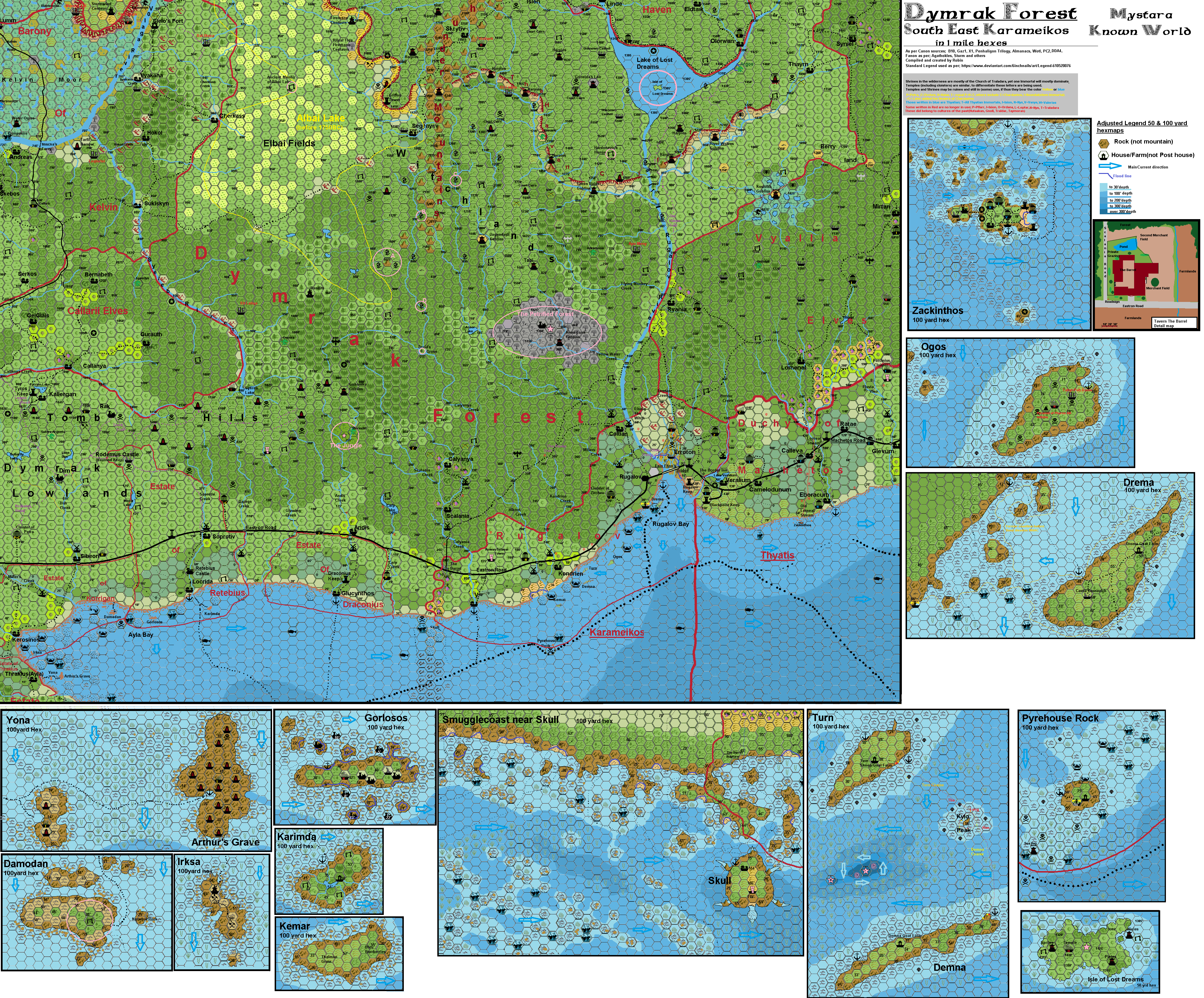
External sources: For this post I have borrowed from the following resources from the Vaults of Pandius:

The main description: http://www.pandius.com/dymrakf.html

The accompanying map: http://pandius.com/dymrak_forest_by_6inchnails_ddaqgvd.png

Deep in the heart of the Dymrak Forest of eastern Karameikos a vicious horde of goblins has lurked for centuries, scaring, attacking and raiding anyone near by. Even during the ancient past of Traldar this place was considered cursed and troublesome, with the human Traldar tribes leaving it alone. Any human entering these dark and twisted woods could expect to wind up dead with goblin arrows in their backs. 

When the Empire of Thyatis expanded westwards from their homeland they tried to settle here, but the goblins were having none of it. Although defeated when caught in open battle, the goblins tried to avoid confronting the Thyatians head-on but used guerilla warfare to great effect, particularly raiding settlements of the expanding Empire. There was one particularly brutal battle where the Rugalov River meets the Lake of Lost Dreams where the goblins did in fact defeat a Thyatian regiment in battle by dint of overwhelming numbers as well as attacking from all directions at once. Bones of the fallen can still be found today among the forest litter. Thyatian ruins of abandoned farmsteads, watchtowers and the like can still be found in the forest. Some of these have been incorporated into goblin outposts. 

The Goblins and other Races
Image by Sam Wood from D&D 3E
Monster Manual

Humans of Rugalov Village & Keep: The Karameikos humans view the goblins as dangerous bandits - not capable of overrunning their settlements but enough to kill travellers and steal livestock. The humans are wary of goblins but have no respect for them - goblins are disgusting, violent, untrustworthy. Goblins in turn view the humans as usually soft and easy to kill unless prepared, and also foolishly naive, actually expecting goblins to tell the truth and keep promises. There are frequent skirmishes and violent encounters between the two sides. 

Gnomes of the Haven Hills: Although only a few hundred strong, the gnomes of the Haven Hills are fierce opponents of the goblins, second only to the elves, with both their warriors and tricksters taking on goblins where odds seem reasonable. They are rivals in many ways, both being excellent miners and excavators. The goblins view the gnomes with a fierce hatred bordering on obsession. Similar to the humans of Rugalov, the gnomes view the goblins as disgusting, treacherous bandits. 

Callarii Elves & Sylvan Folk: These are actually the most frequent opponents of the goblins. Goblins and elves frequently clash, and elves will always try to kill any goblins they catch out in the open though they are loathed to go down into their dark lairs. Sylvan folk including dryads, pixies, sprites and nixies avoid goblins altogether though a few of the braver individuals may try to play tricks and pranks on the goblins. The wiser fey creatures discourage this as spiteful and angry goblins have been known to burn and chop down patches of forest where these pranks were pulled. 

Orcs & other chaotic humanoids: Orcs, kobolds and bugbears have all been encountered by the goblins in the Dymrak. Because the goblins are so often fighting humans, elves and gnomes they are prepared to consider other chaotic creatures as potential allies or at least mercenaries. Such humanoids are approached with caution but with a goblin leader ready to parlay. Sometimes this goes well and the band of orcs or bugbears join the goblins, usually temporarily, adding much-needed muscle to goblin fighting strengths. But often things degenerate into a brawl, so goblins never approach such humanoids solo - they always bring enough tribal warriors to defend themselves and drive off the intruders if necessary. 

Drezzalnith the Toxic: This large female green dragon dominates the northern part of the Dymrak Forest. Most goblins stay away from her though when they do interact the goblins either try to flee or act as submissively as possible. Drezzalnith has been around long enough to know that such small creatures can be useful and although she hates elves and gnomes, she will usually spare goblins especially if they bring her food, gold and information. As such several tribes have agreed to serve her when called upon. 

Goblin Social Structure 

The Goblins of Dymrak Forest are not one single hierarchy, but a confederacy of smaller tribes. They share the same language and culture but they owe very little loyalty to each other, only teaming up in times of severe danger from a common enemy. These goblin tribes are led by warriors supported by shamans - the bigger the tribe, the more of these leaders can be found. A tribe will usually be defended by typical goblin infantry, with hand-axes, shields and leather armour, but the larger a tribe is, the more specialised troops it can field - goblin archers, wolf-riding cavalry and even stealthy scouts. 

Goblins inevitably form a hierarchy, with the stronger ruling the weak, and generally males dominate the females and cubs. Note that if a goblin female can prove her worth through shamanic magic or combat prowess she may gain some status though there will always be some misogyny from more conservative members of the tribe. 

Goblin religion is led by the shamans. Exactly who or what the shamans worship varies from tribe to tribe though most acknowledge Maglubiyet as their patron deity. There are some minor goblin demigods with narrower portfolios, essentially the same as those worshipped in Zugguth Peak, though their worshippers within the Dymrak Forest are few and far between.  

Other goblins beyond the Dymrak Forest are of little interest to these tribes. Most are entirely ignorant, though the more powerful chiefs are vaguely aware of other tribes of goblins beyond Karameikos, including the Broken Lands and Zugguth Peak in southern Rockhome. There is no significant exchange of information, trade or military support. 

The goblin tribes include:

  • Green Raiders Tribe: known for their bitter hatred of elves, both Callarii and Vyalla. Despite their chaotic alignment, the Green Raiders can be surprisingly loyal and disciplined, partly due to the strong influence of shamans of Maglubiyet.   
  • Jaggadash Tribe: The most frequent raiders of human settlements, and also among the sneakiest and stealthiest of goblins. They are also the most prone to a variant of lycanthropy causing infected goblins to turn into giant weasels. 
  • Kloss-Lunk Tribe. Due to their copper, zinc and malachite mines they are the wealthiest tribe but they also clash with gnomes. In return they have thrown their lot in with a green dragon, Drezzalnith the Toxic. 
  • Kosivikh Tribe: The most bloodthirsty and aggressive. Their shamans are believed to be Chaos Cultists, viewing Maglubiyet as being too restrained and moderate. 
  • River Wolves Tribe. As their name suggests they have many wolf-riders. They are also river-warfare specialists, with a fleet of canoes and coracles. They will roam eastwards across the river into the territory of Vyalla elves. 
There are other smaller tribes beyond these big five, usually with 150-300 goblins each. Any fewer than 100 are unlikely to survive - inter-goblin warfare does occur if a chief of a more powerful tribe sees an opportunity to either conquer and incorporate or simply exterminate a smaller rival. Some outposts of the larger tribes were once independent tribes who have been taken over. 

Goblin Infrastructure

Nearly all the goblin lairs and outposts are underground. Goblins are naturally nocturnal, only emerging into the forest at night, sheltering in caves and tunnels during the irritating day. A goblin tribe will typically consist of a central large lair where up to a hundred goblins may reside, and many (perhaps a dozen) smaller outposts perhaps several miles from the central lair. These outposts typically hold 20 or so goblins. Despite their distance from the main lair, they often have tunnels running under the forest to the main lair, allowing goblins to move between outposts and main lairs without being seen or suffering sunburn. Goblins are also very skilled at setting booby traps to ensnare, kill and maim any intruders - they have learnt from their cousins in Zugguth Peak. Most of these traps are in their lairs to defend against intruders but they do occasionally set traps within the forest, either to catch intruders or food. 

Goblins are skilled miners when motivated, and the goblins in general are self-sufficient in iron and bronze that they forge into weapons. These goblin mines may sometimes be extensions of lairs when a valuable seam or vein is serendipidously found while excavating new rooms or passages. Other mines are the reason for outposts being established - the ore is found and a mine is started, then living quarters and defences are added later on. The Dymrak Forest is dotted with mines, some of which are still occupied by goblin miners, while others have been abandoned to less intelligent denizens. 

Food supply is a combination of hunting in the forest and growing fungi in cavernous chambers in their lairs. This is usually sufficient, though when forest game and fungal farms run low, hungry goblins can get desperate and launch serious assaults on human towns including Rugalov village and surrounding farmlands. Livestock are the primary targets, but humans can be eaten if seasoned properly.